

Dental Implants in
Pimple Saudagar, Pune
Replace one tooth, several teeth, or a full arch with a personalised implant treatment plan for a natural look, stronger bite and long-term confidence.
Chat on WhatsApp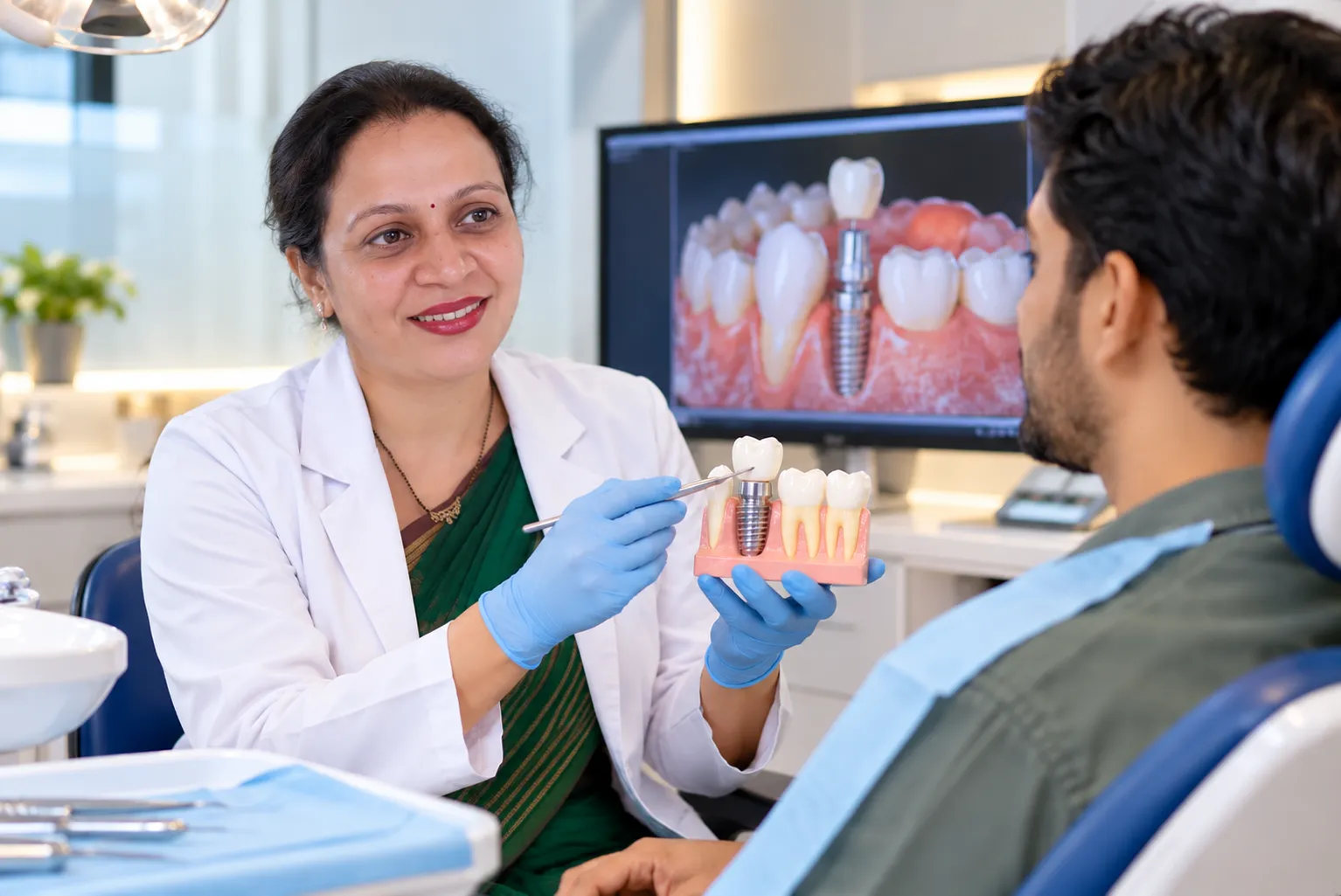
Practice
A Stronger Smile
for a Brighter Tomorrow
12+
Years Experience
8,000+
Happy Patients
4.9
Patient Rating (Google)
“The implant treatment was completely painless and the care I received was outstanding.”
– Anjali R., Pune
Which Solution is Right for You?
What a Missing Tooth Actually Costs You Day to Day
Beyond the gap itself, a missing tooth tends to show up in small everyday frustrations. Here’s what an implant addresses, one problem at a time.
 The Problem
Avoiding your favourite foods
A fixed replacement tooth
An implant-supported crown functions like a natural tooth, so eating doesn't need to be planned around the gap.
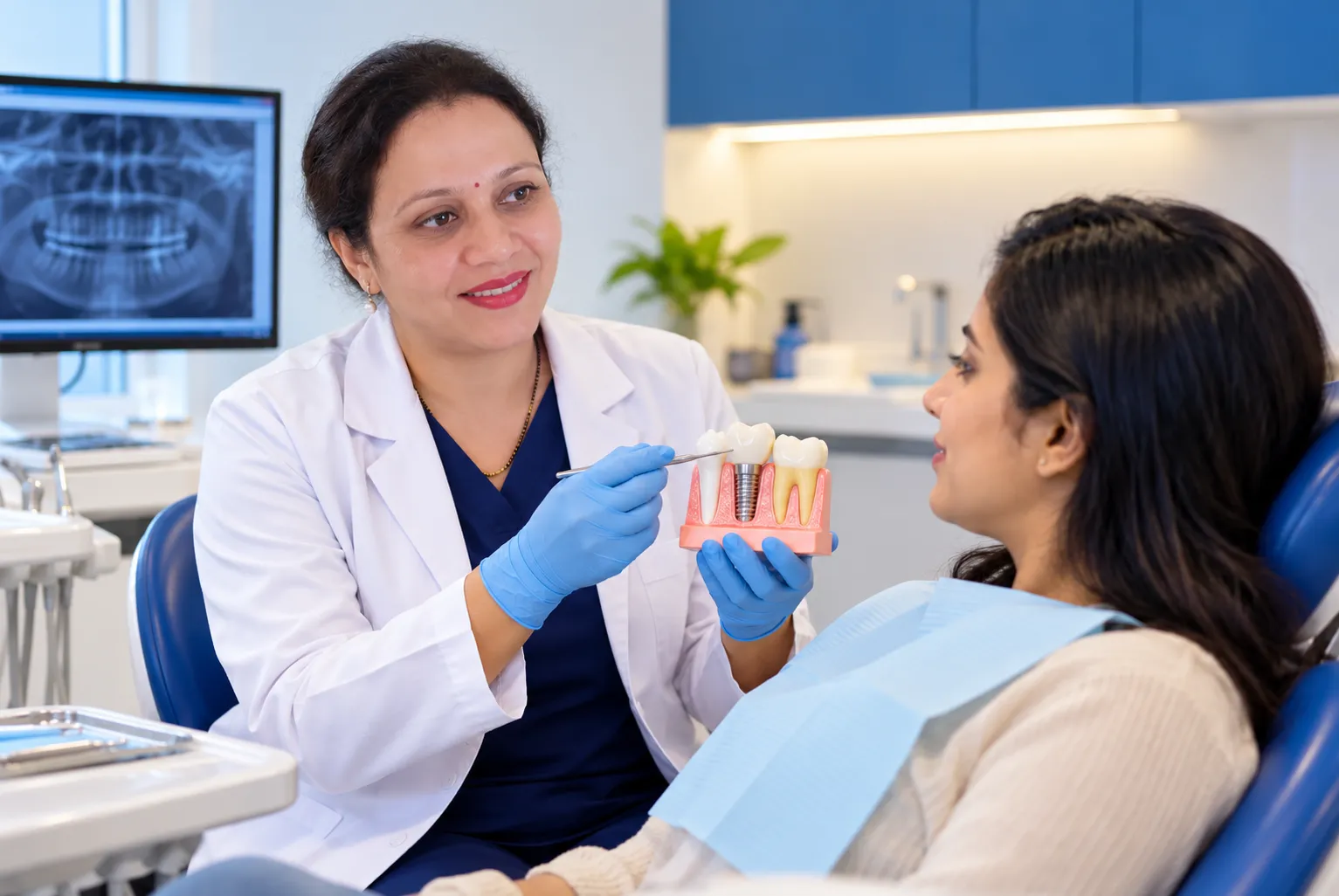
A missing tooth can make chewing on one side difficult, so meals become something to work around instead of enjoy.
 The Problem
Covering your smile in photos
A smile you don't have to think about
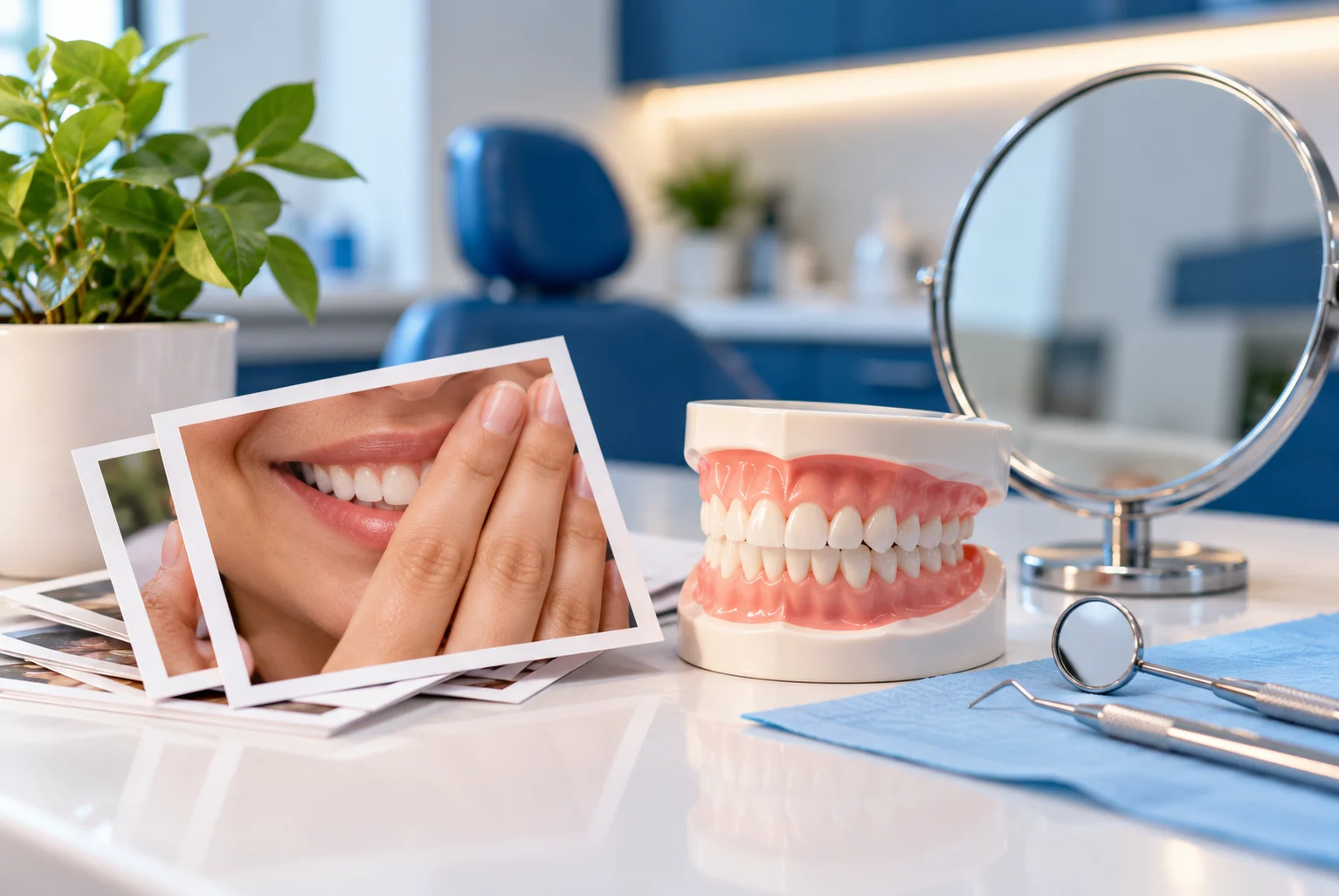
Once healed, an implant crown blends in with surrounding teeth — nothing to hide or hold back.
A visible gap can make ordinary moments — laughing, talking, being photographed — feel self-conscious.
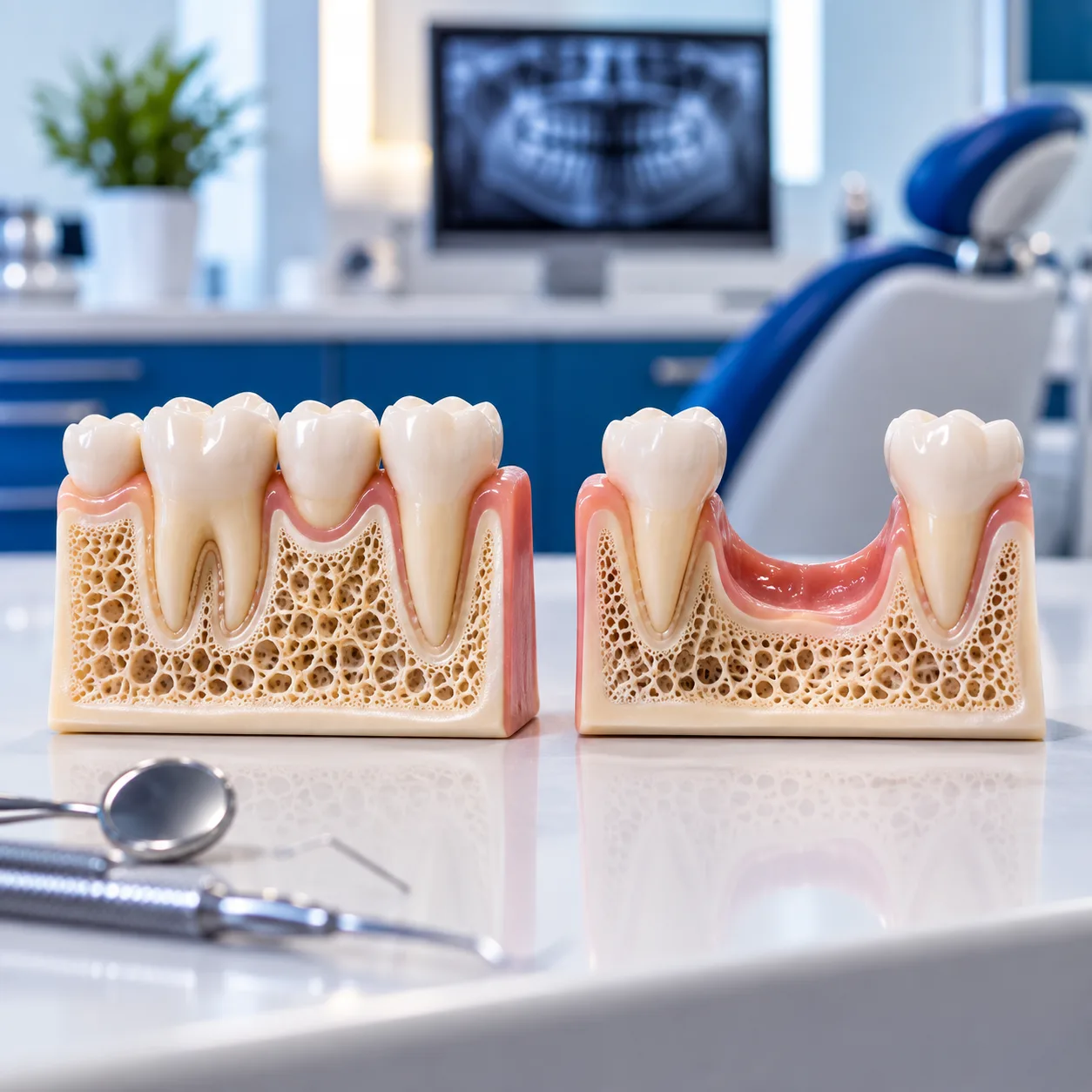 The Problem
Watching the jawbone change shape
A root that keeps the bone active
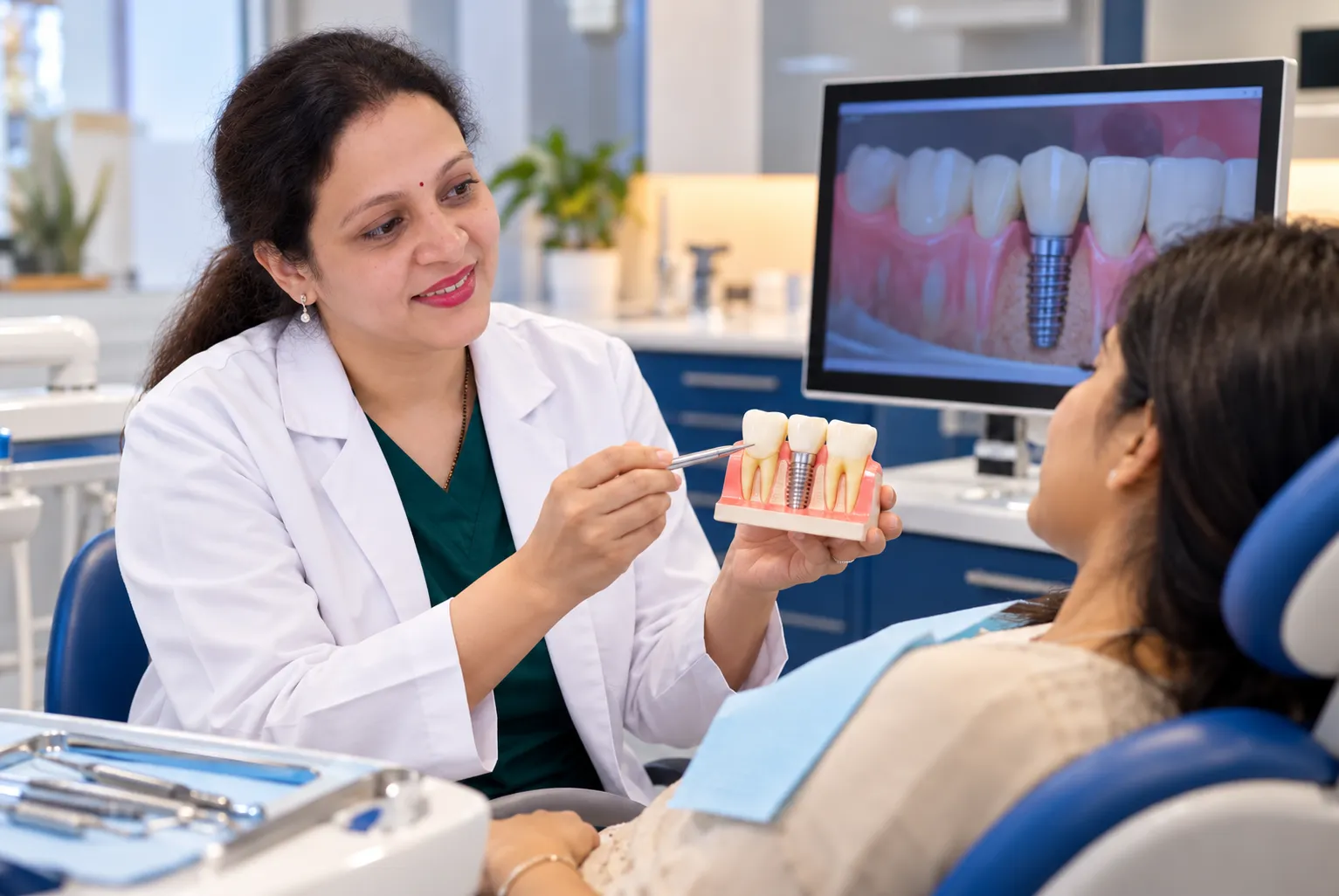
An implant replaces the tooth root itself, which can help maintain the bone at that site the way a natural root would.
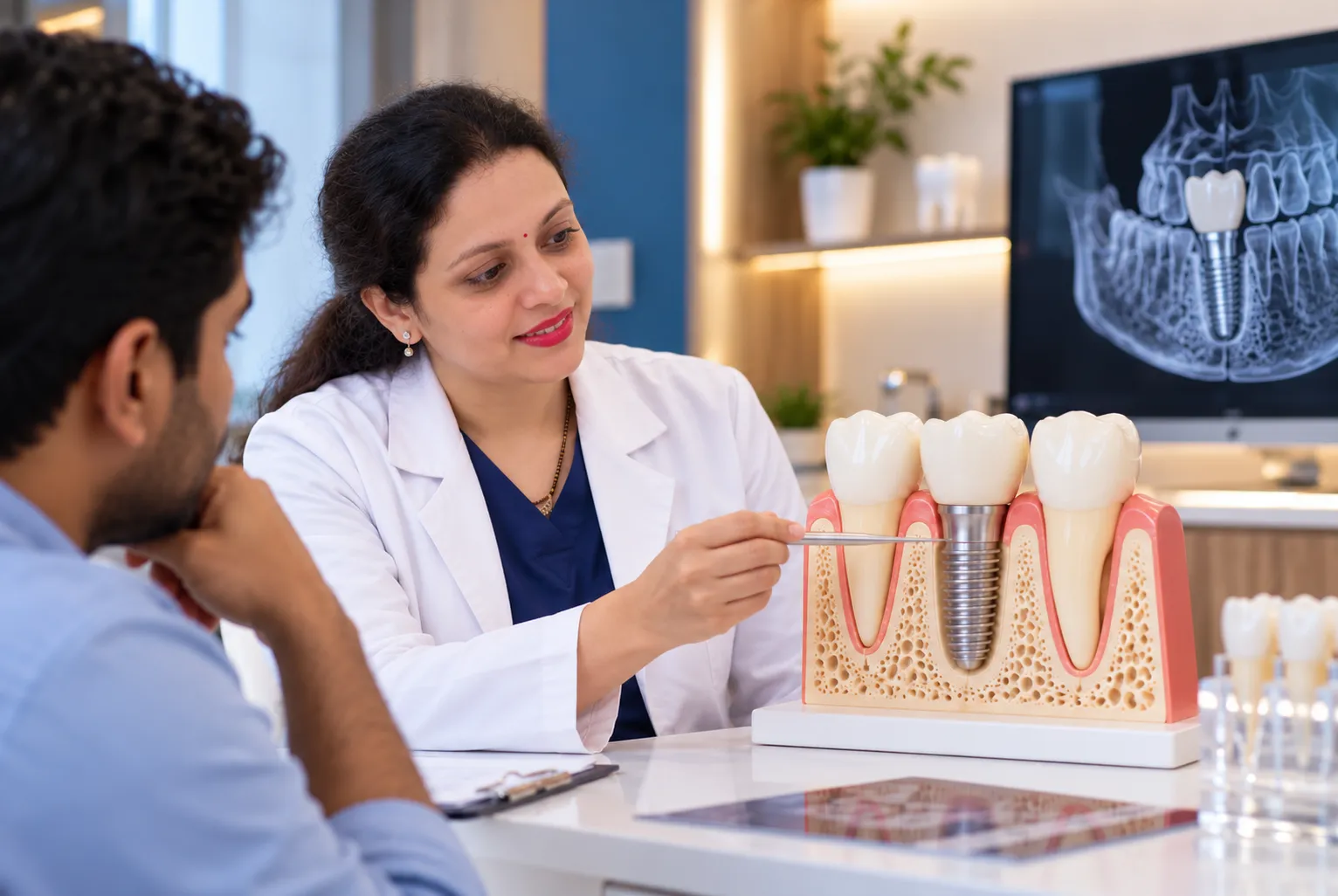
Without a tooth root to stimulate it, the jawbone at that site can gradually lose density over time.
 The Problem
A bridge that means cutting healthy teeth
Neighbouring teeth left untouched
An implant stands on its own in the jawbone, so adjacent healthy teeth don't need to be filed down to support it.

A conventional bridge is anchored by reducing and crowning the teeth next to the gap — even if they're otherwise healthy.
What Happens When a Tooth Is Missing?
A missing tooth can affect chewing, shift the bite over time, and — because the jawbone that once supported the tooth root is no longer stimulated — gradually change the shape of the jaw and surrounding gum tissue. Replacing a missing tooth is one way to address these changes, alongside other options such as a bridge or denture.
What Is a Dental Implant?
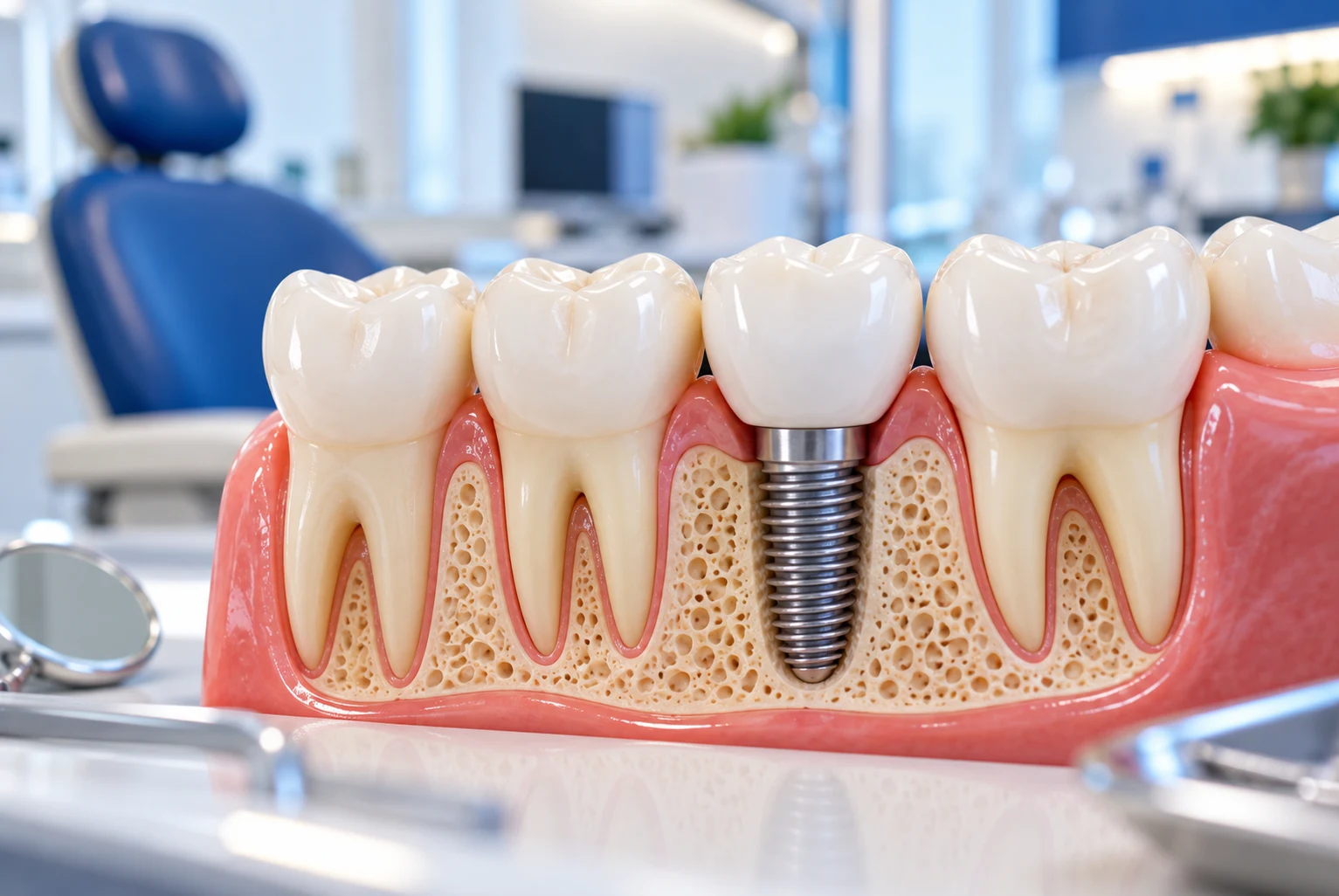
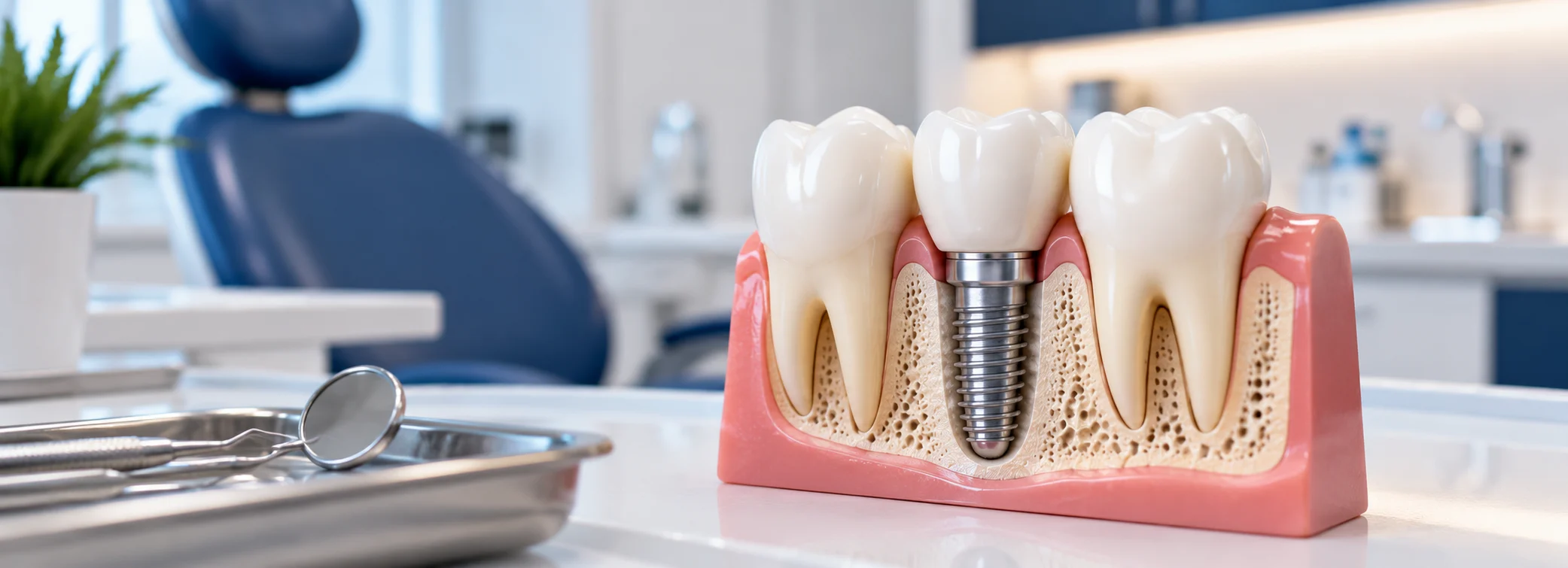
A dental implant is a small titanium or zirconia post surgically placed into the jawbone, where it acts as an artificial tooth root. Over a period of healing, the bone fuses to the implant surface — a process called osseointegration. Once healed, an abutment (connector) is attached, and a custom crown, bridge or denture is fitted on top.
Which Type of Implant Treatment Applies to You?
The right option depends on how many teeth are missing, bone volume, gum health and your own preferences — assessed at consultation, not assumed in advance.
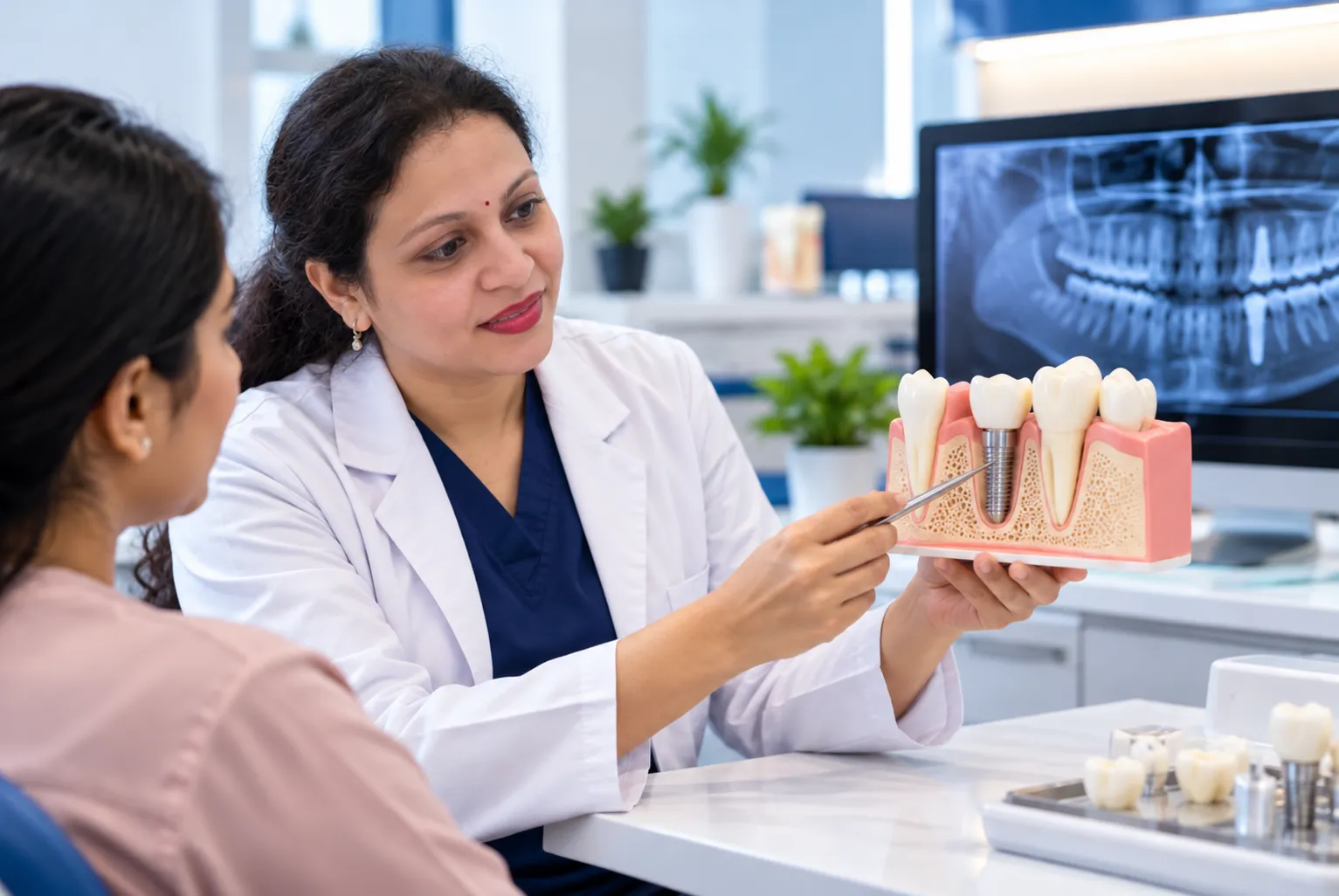
Single implant + crown
One implant replaces one missing tooth's root, topped with a crown. Neighbouring healthy teeth are left untouched.
Multiple implants / implant bridge
Several adjacent missing teeth can be replaced with an implant-supported bridge, without needing one implant per gap.

Implant-supported overdenture
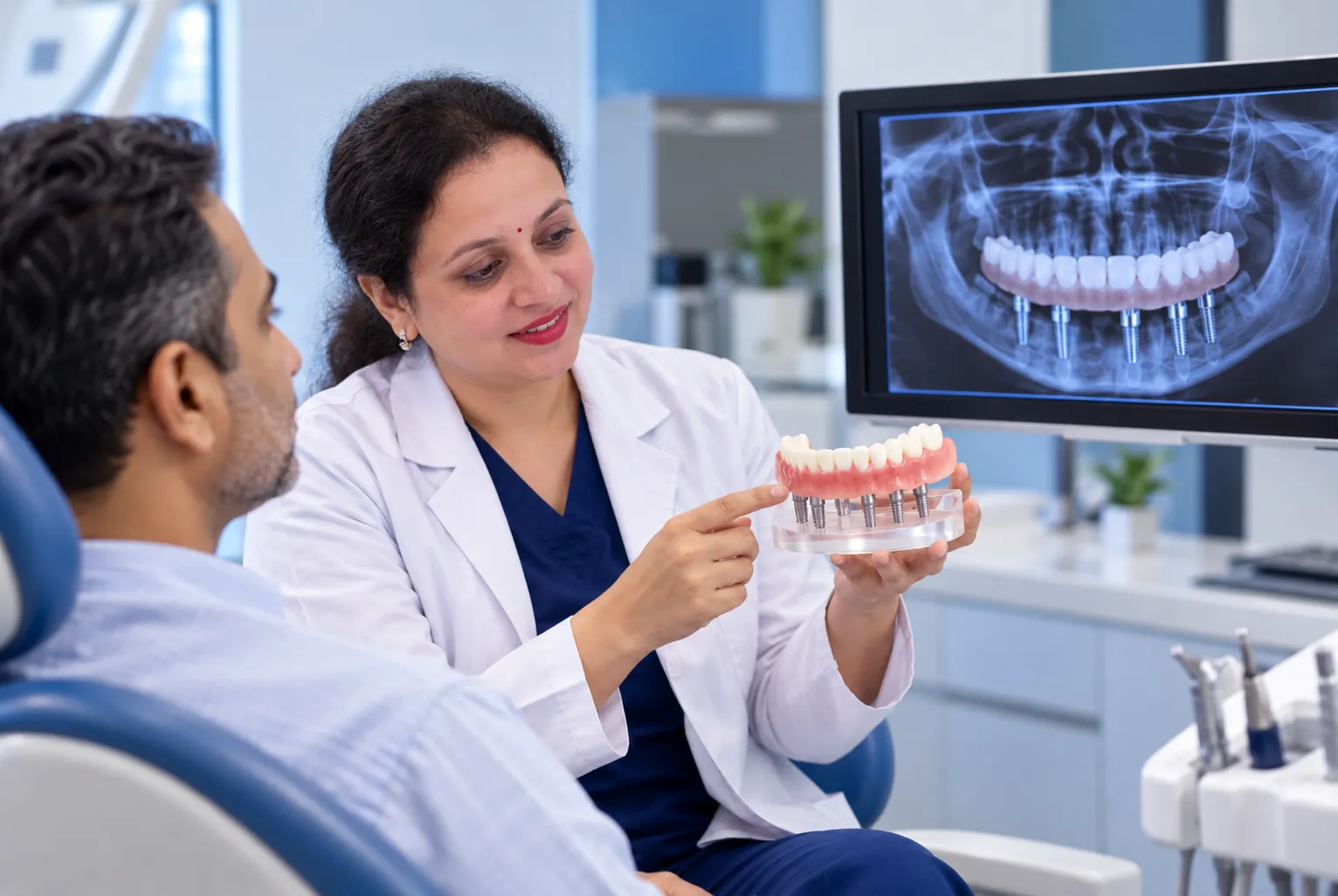
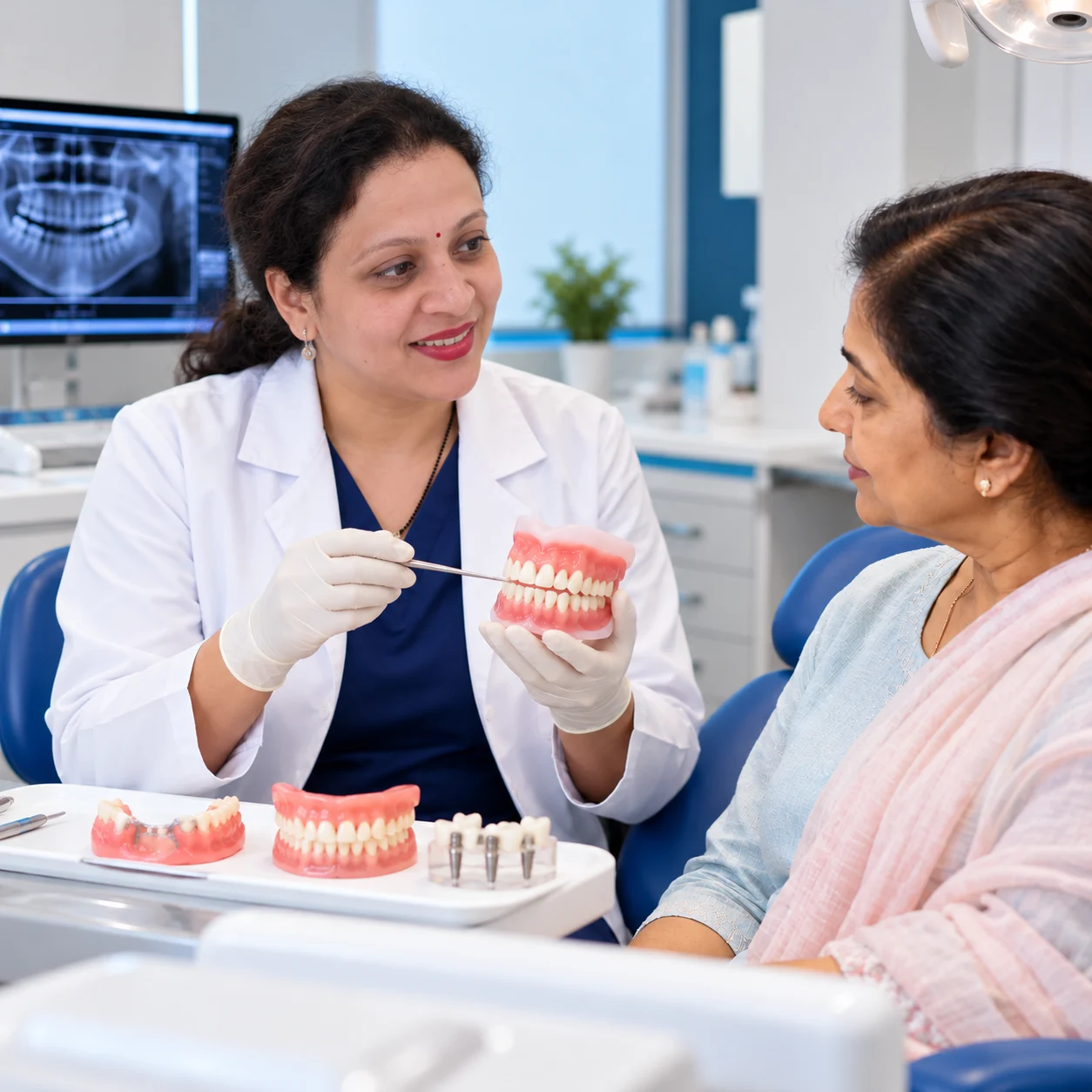
For patients missing most or all teeth who want more stability than a conventional removable denture offers.
Fixed full-arch options
For a full arch of missing or failing teeth, a fixed prosthesis anchored on implants — offered when clinically suitable.
Implant Materials and Diagnostic Imaging
General information on materials and imaging commonly used in implant dentistry. Ask at your consultation which specific materials and imaging are used for your case.

Implant fixtures
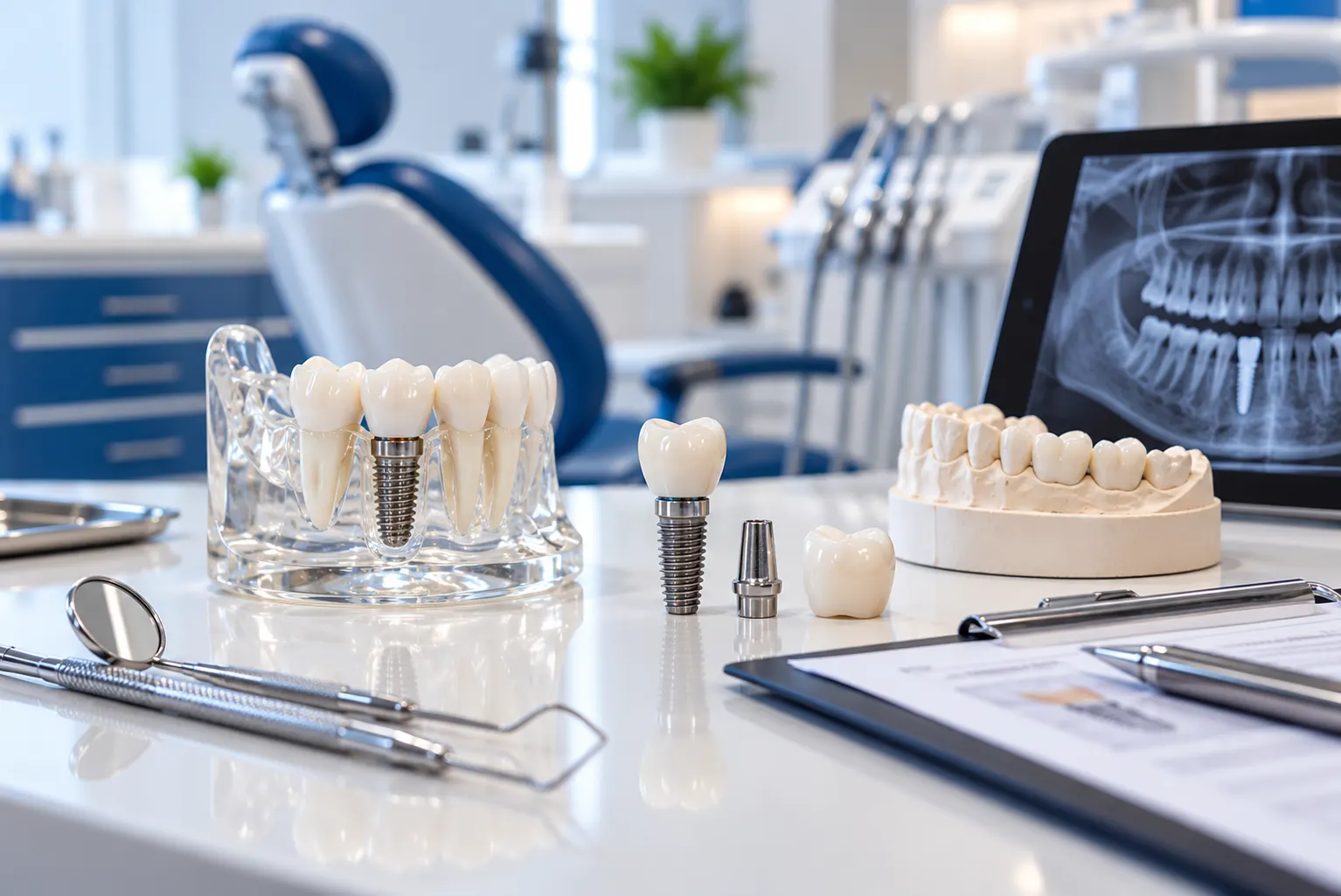
A titanium or zirconia post that replaces the tooth root, shown here on a demonstration model alongside its crown.

Clinical instruments
Precision instruments used for examination and treatment planning, sterilised before each use.

Diagnostic imaging
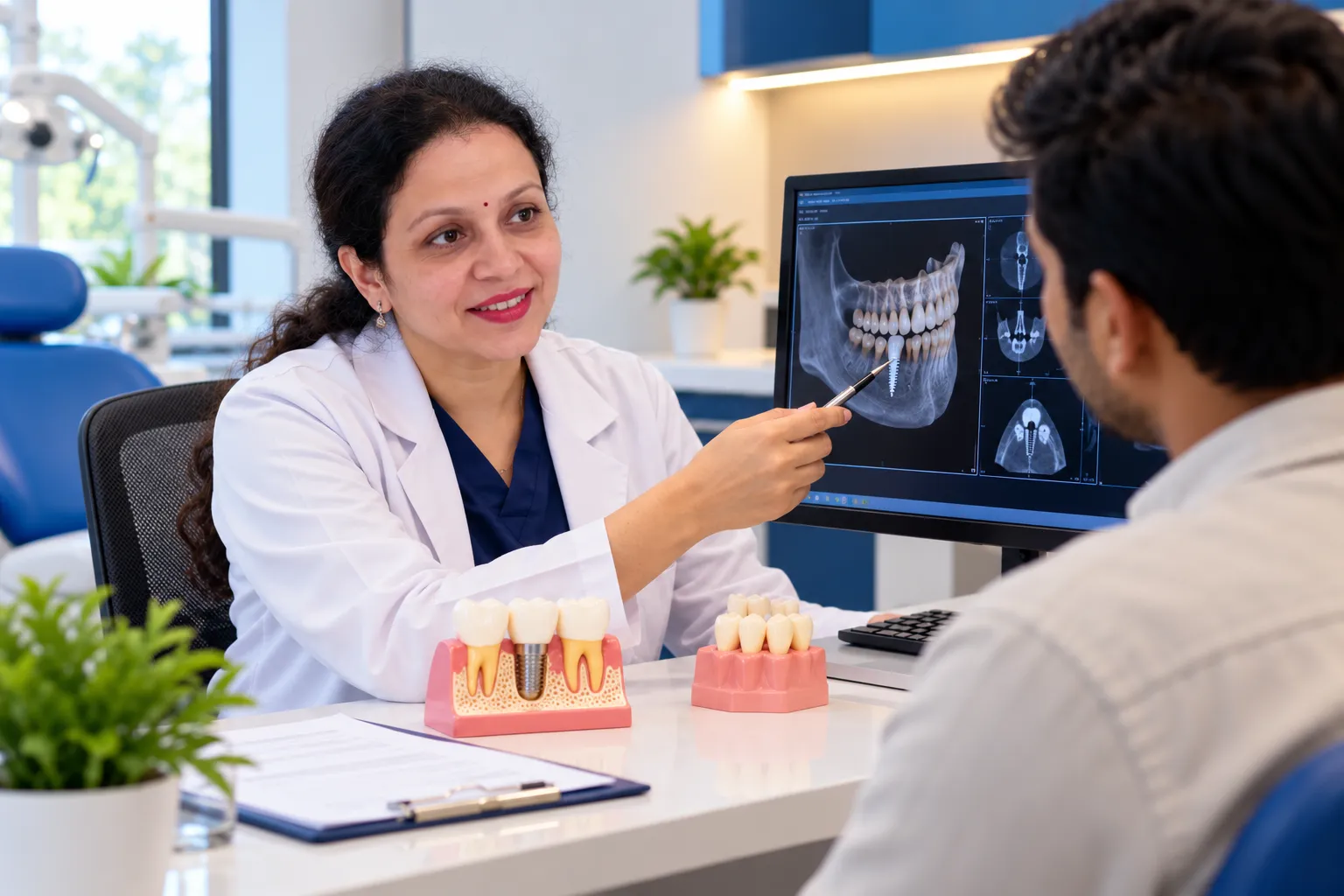
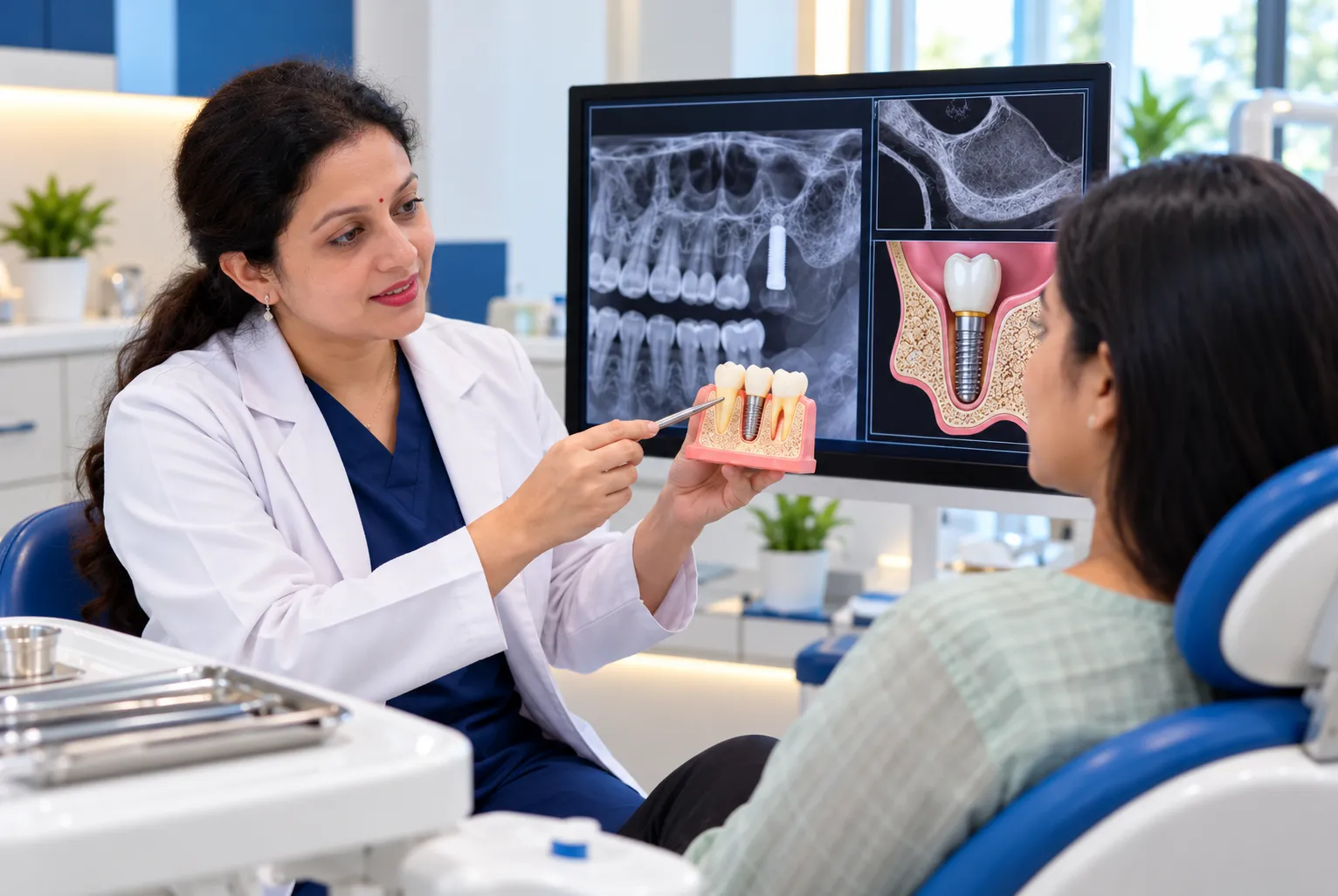
Dental X-rays, and CBCT (3D imaging) when clinically indicated, help assess bone volume and plan implant position before surgery.
Who May Be a Candidate — and Who Should Wait
Suitability is always assessed individually. These are general guidelines, not a substitute for an in-person examination.
Often Suitable
Needs Assessment First
What Happens During Dental Implant Treatment
Five stages, from first consultation to long-term review — each one explained before it happens, not after.
Consultation & imaging
We review your dental and medical history, take a clinical exam and digital X-rays (CBCT when indicated) to assess bone, gum and nerve anatomy.
Clear assessment. No surprises.
Treatment plan & estimate
You receive a personalised plan in writing — what's proposed, why, expected timeline and cost — before anything is scheduled.
Your plan. Our transparency.
Implant placement
The implant is placed under local anaesthesia in a short surgical appointment. We use guided techniques for precision and safety.
Safe, precise and comfortable.
Healing & restoration
The jawbone naturally fuses to the implant (osseointegration), then an abutment and custom crown or prosthesis are fitted and checked for a natural bite and appearance.
Strong foundation for a natural smile.
Review & maintenance
Follow-up reviews and regular hygiene visits help maintain your implant and overall oral health for years to come.
Long-term support. Lasting smiles.
Does Dental Implant Surgery Hurt?
Implant placement is carried out under local anaesthesia, so the treatment area is numbed throughout the procedure. It is common to experience some soreness, mild swelling or discomfort for a few days afterwards, which can usually be managed as advised by the clinic. Every patient’s experience differs, and any concerns should be discussed before treatment begins.
What If I Don’t Have Enough Bone?
If imaging shows insufficient bone volume or density at the planned site, a bone graft or sinus lift may be recommended before or during implant placement. Not everyone needs this — it depends entirely on individual anatomy.
How Long Do Dental Implants Last?
These figures come from published, population-level research — not from this clinic’s own case records. Individual outcomes depend on your bone, gum health, general health and how well the implant is maintained.
≈95%
Implant-level survival at 10+ years
Systematic review of single-tooth implants (527 implants / 9 long-term studies)
89.5%
Original single-crown survival at 10+ years
Same review — crowns can need replacement even when the implant remains stable
96.4%
10-year implant-level survival, traditional analysis
Howe, Keys & Richards, J Dent 2019 (95% CI 95.2–97.5%)
93.2%
10-year survival, adjusted for follow-up loss
Same study — shown to illustrate why estimates vary by method
Figures are drawn from peer-reviewed systematic reviews and consensus statements (see Sources at the foot of this page). “Survival” means the implant remained in place, which is not the same as freedom from every complication.

Risks and Possible Complications
As with any surgical procedure, dental implant treatment carries risks. These are disclosed here so you can make an informed decision, not to discourage treatment that may be appropriate for you.
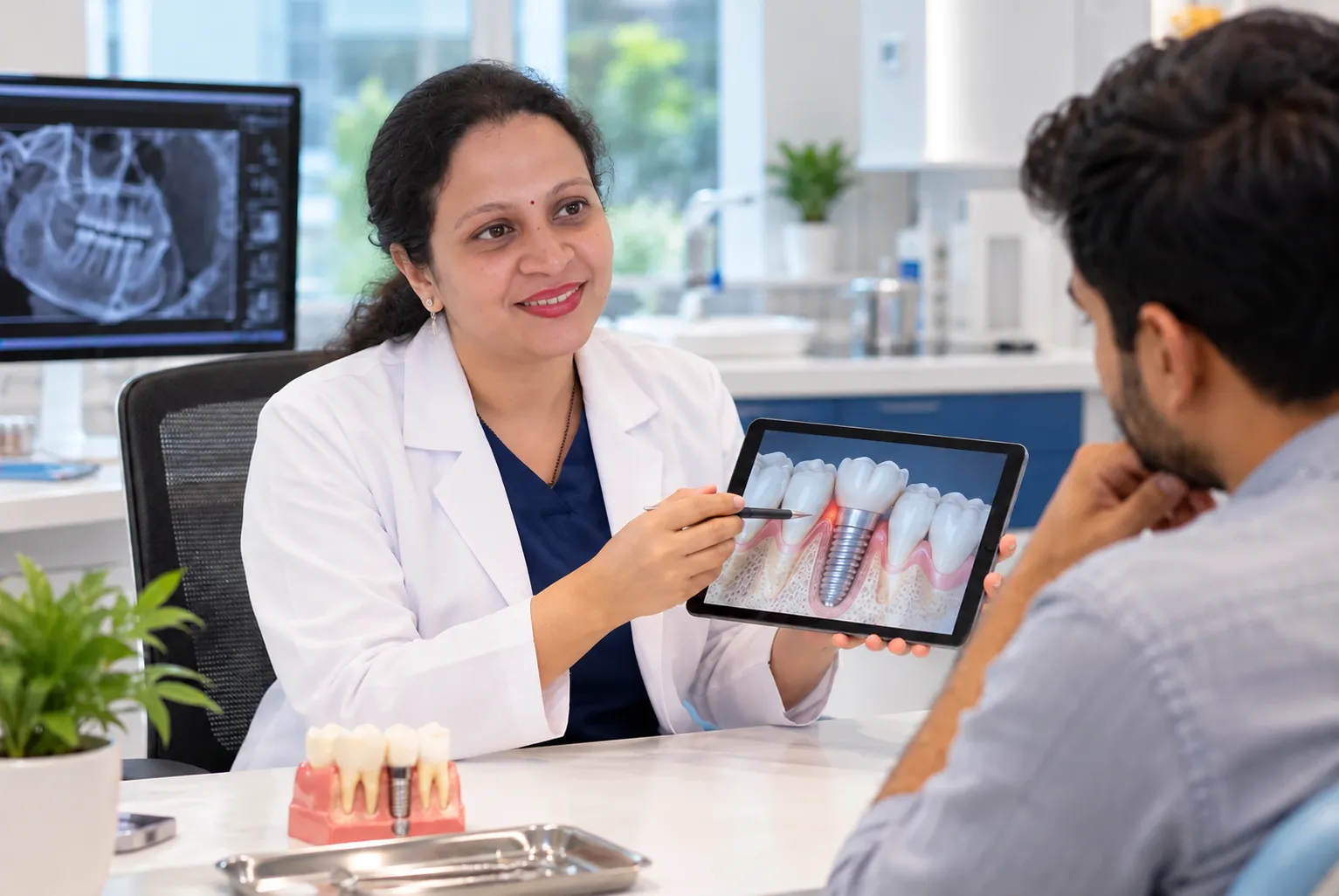
Recovery and Long-Term Care
Healing timelines vary by individual and by site. These are general phases — your clinician will confirm what to expect for your specific case.
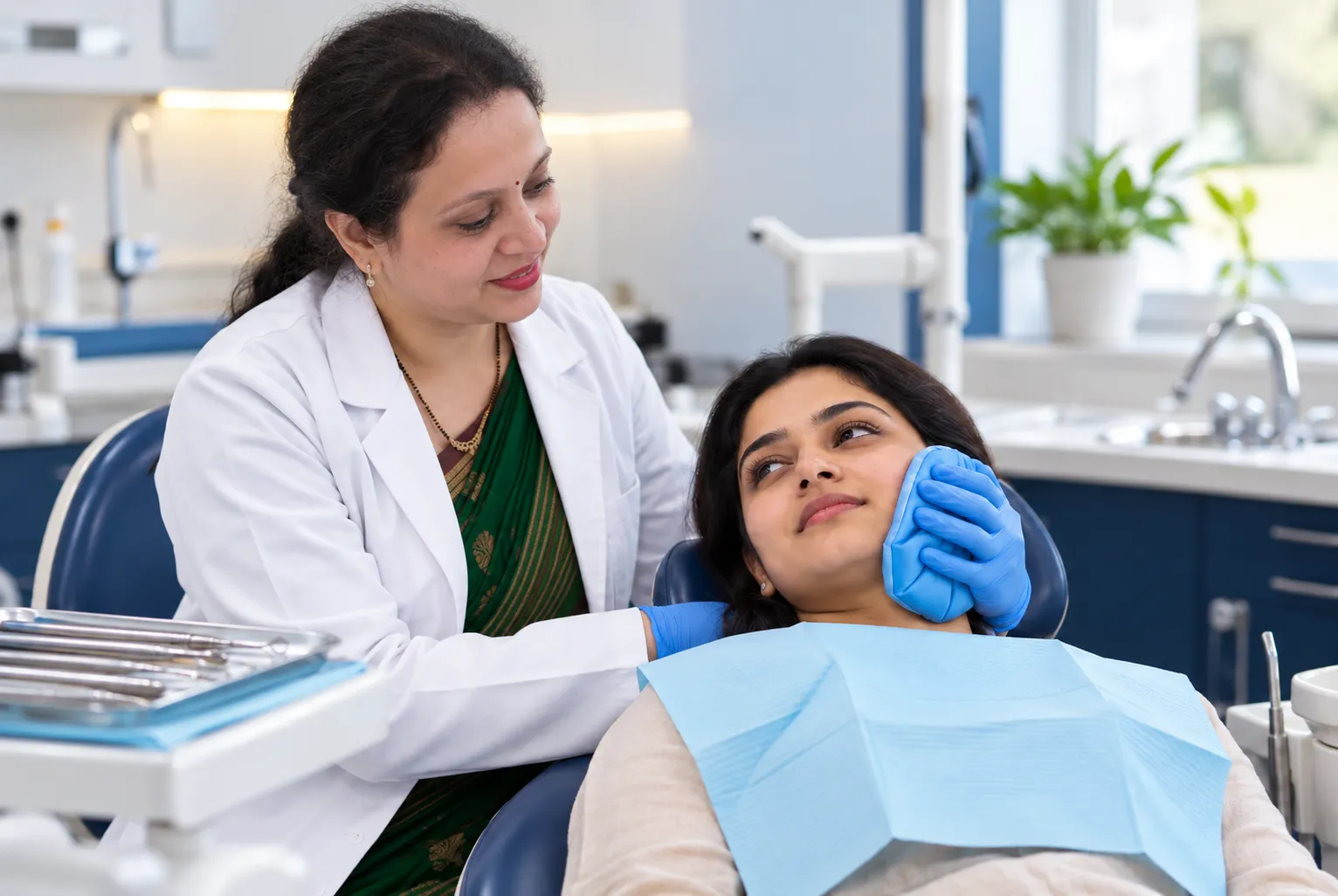
First 24 hours
Mild bleeding, swelling and tenderness are common. Rest, a cool compress and soft foods are usually advised.
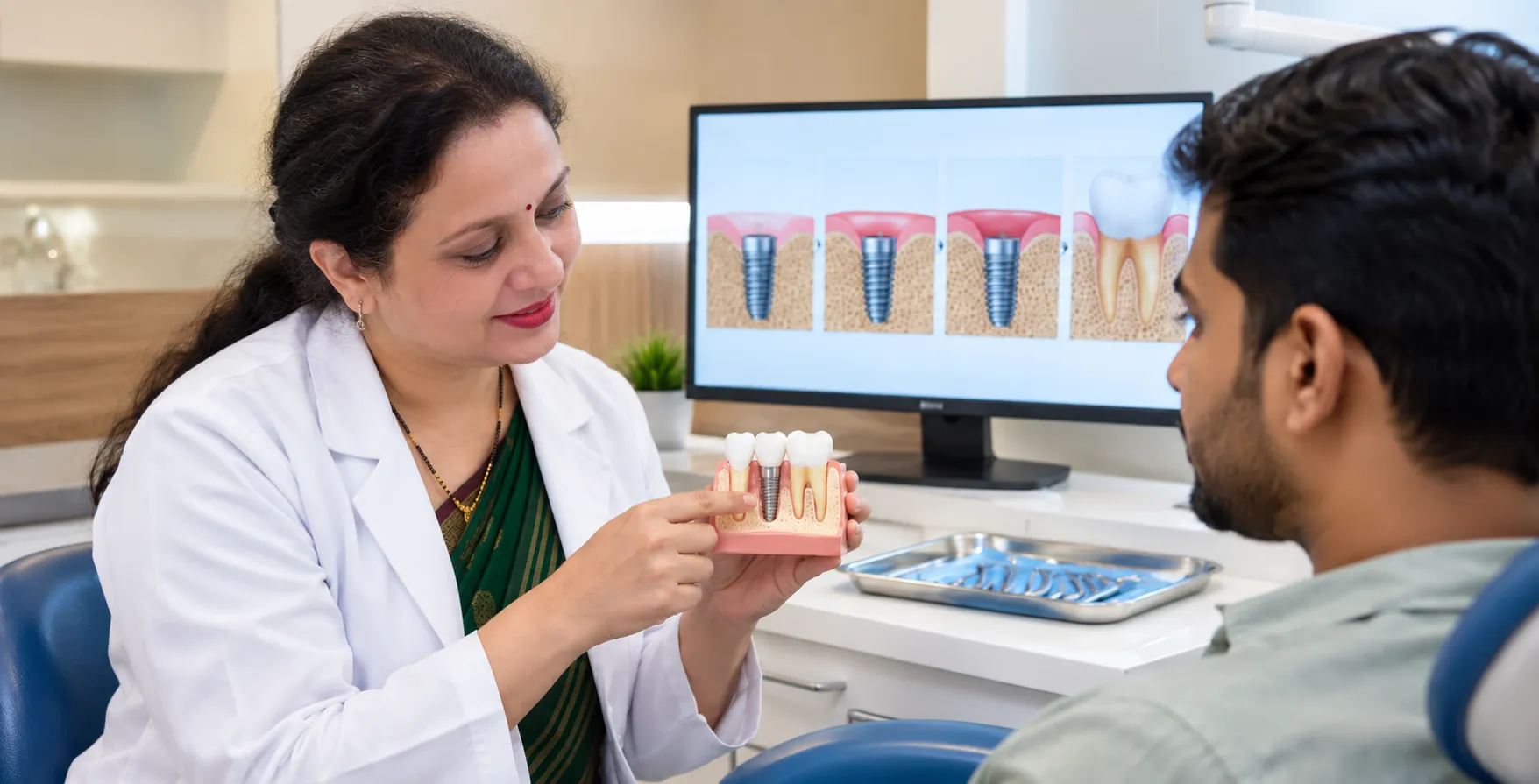
First week
Swelling typically eases within a few days. Gentle oral hygiene around the site and avoiding smoking support healing.
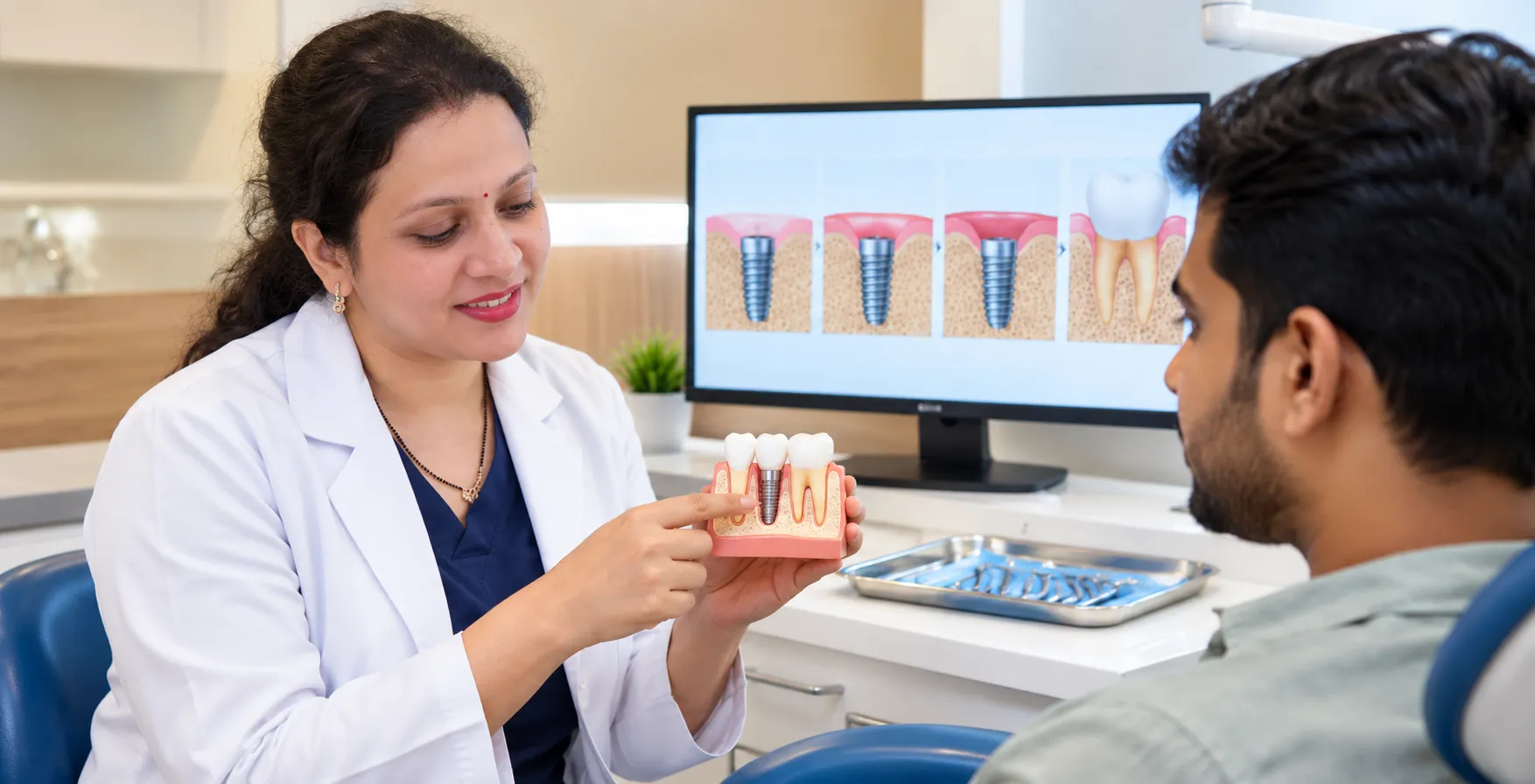
Healing phase
Osseointegration continues over the following weeks to months before the abutment and crown stage — your clinician will confirm readiness with a review.
Long-Term Maintenance
Brushing, interdental cleaning around the implant, and regular professional reviews support long-term implant health. Because peri-implantitis can develop without noticeable symptoms in its early stages, routine check-ups matter even when everything feels fine.
Implant vs Bridge vs Denture
Treatment choice depends on individual clinical assessment — bone volume, gum health, bite, adjacent teeth, budget and personal preference. This table is for orientation only, not a recommendation of one option over another.
| Option | Suitable For | Advantages | Limitations | Treatment Time | Maintenance |
|---|---|---|---|---|---|
| Single implant + crown | One missing tooth, adequate or augmentable bone | Neighbouring teeth not altered; fixed replacement | Requires surgery; healing time; peri-implantitis risk over time | Weeks to months (site-dependent) | Brushing, interdental cleaning, regular reviews |
| Tooth-supported bridge | Gap with neighbouring teeth that could support crowns | No surgery; typically faster | Neighbouring healthy teeth must be prepared and crowned | Usually 2–3 visits | Floss threaders or interdental brushes under the bridge |
| Removable partial denture | Several gaps; prefers a non-surgical option | Lower cost; reversible; no surgery | Less stable; can place load on remaining teeth | A few visits | Remove and clean daily |
| Implant-supported overdenture | Most or all teeth missing, wants more stability than a conventional denture | More retention and stability than a removable denture | Still removable; attachment components need servicing | Several months | Attachment maintenance over time |
| Fixed full-arch on implants | Most/all teeth missing or failing, sufficient bone | Fixed, non-removable full-arch replacement | Higher complexity and cost; demanding hygiene routine | Several months of planning and treatment | Professional maintenance and hygiene visits |
Single implant + crown
- Suitable For
- One missing tooth, adequate or augmentable bone
- Advantages
- Neighbouring teeth not altered; fixed replacement
- Limitations
- Requires surgery; healing time; peri-implantitis risk over time
- Treatment Time
- Weeks to months (site-dependent)
- Maintenance
- Brushing, interdental cleaning, regular reviews
Tooth-supported bridge
- Suitable For
- Gap with neighbouring teeth that could support crowns
- Advantages
- No surgery; typically faster
- Limitations
- Neighbouring healthy teeth must be prepared and crowned
- Treatment Time
- Usually 2–3 visits
- Maintenance
- Floss threaders or interdental brushes under the bridge
Removable partial denture
- Suitable For
- Several gaps; prefers a non-surgical option
- Advantages
- Lower cost; reversible; no surgery
- Limitations
- Less stable; can place load on remaining teeth
- Treatment Time
- A few visits
- Maintenance
- Remove and clean daily
Implant-supported overdenture
- Suitable For
- Most or all teeth missing, wants more stability than a conventional denture
- Advantages
- More retention and stability than a removable denture
- Limitations
- Still removable; attachment components need servicing
- Treatment Time
- Several months
- Maintenance
- Attachment maintenance over time
Fixed full-arch on implants
- Suitable For
- Most/all teeth missing or failing, sufficient bone
- Advantages
- Fixed, non-removable full-arch replacement
- Limitations
- Higher complexity and cost; demanding hygiene routine
- Treatment Time
- Several months of planning and treatment
- Maintenance
- Professional maintenance and hygiene visits
Dental Implant Cost: What’s Included
Implant fees depend on the number of implants, the materials used, whether bone grafting or a CBCT scan is needed, and the type of final restoration (single crown, bridge, or full-arch prosthesis). Because of this, a fair quote can only be given after an examination.
Typically Included in a Quote
- • Consultation and treatment planning
- • The implant fixture itself
- • The abutment (connector)
- • The final crown, bridge, or prosthesis
- • Follow-up review appointments
Often Billed Separately — Ask Explicitly
- • CBCT / 3D imaging scan
- • Bone grafting or sinus lift
- • Tooth extraction, if needed first
- • A temporary tooth during healing
When comparing quotes from different clinics, ask what is and isn’t included in the headline price — a lower starting figure often excludes items listed above.
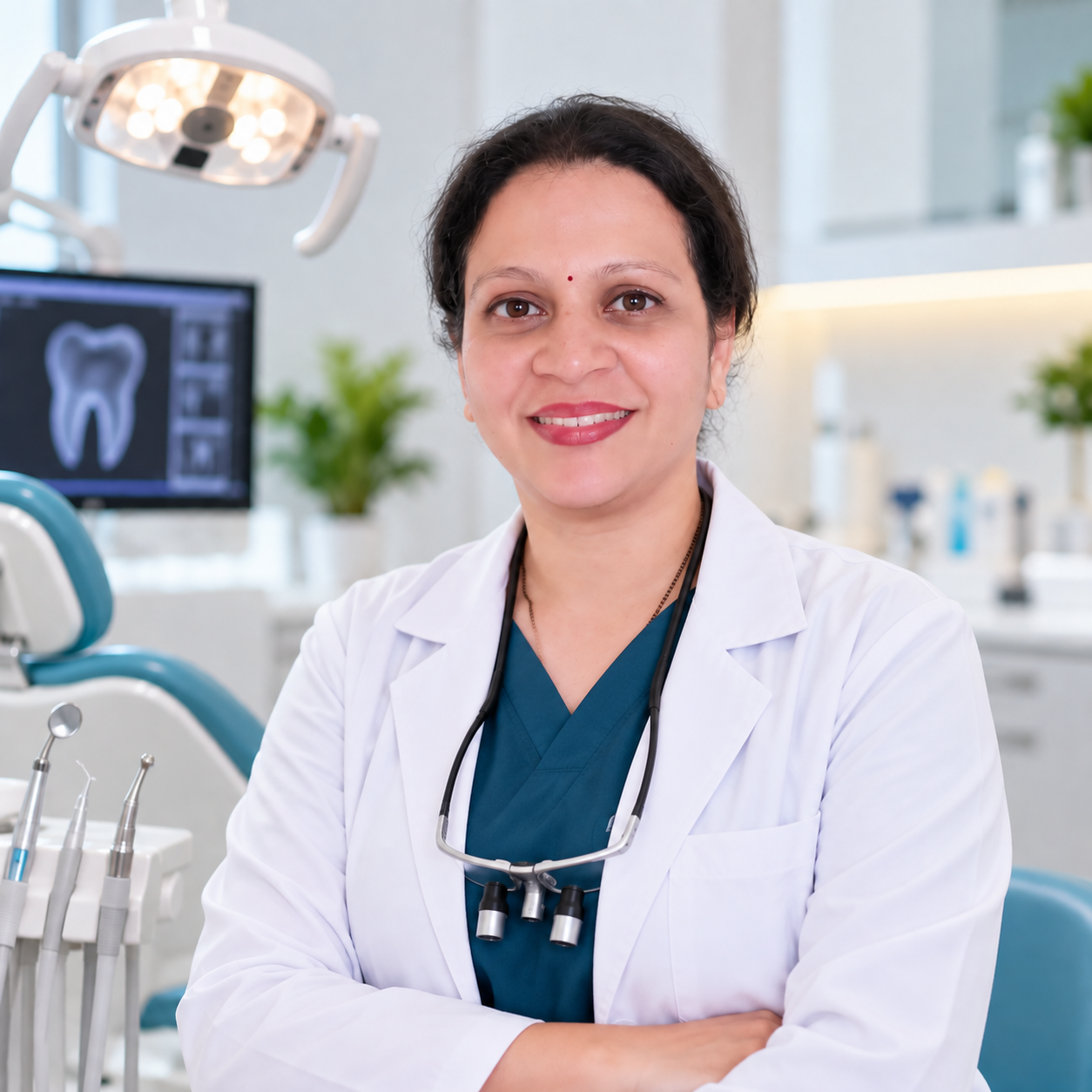
Meet Dr. Kashmira Jathar, BDS
Dr. Kashmira Jathar has practised dentistry since 2007 (20+ years) and is registered with the Maharashtra State Dental Council (Reg. No. A-14093 M). She is a member of the Indian Dental Association.
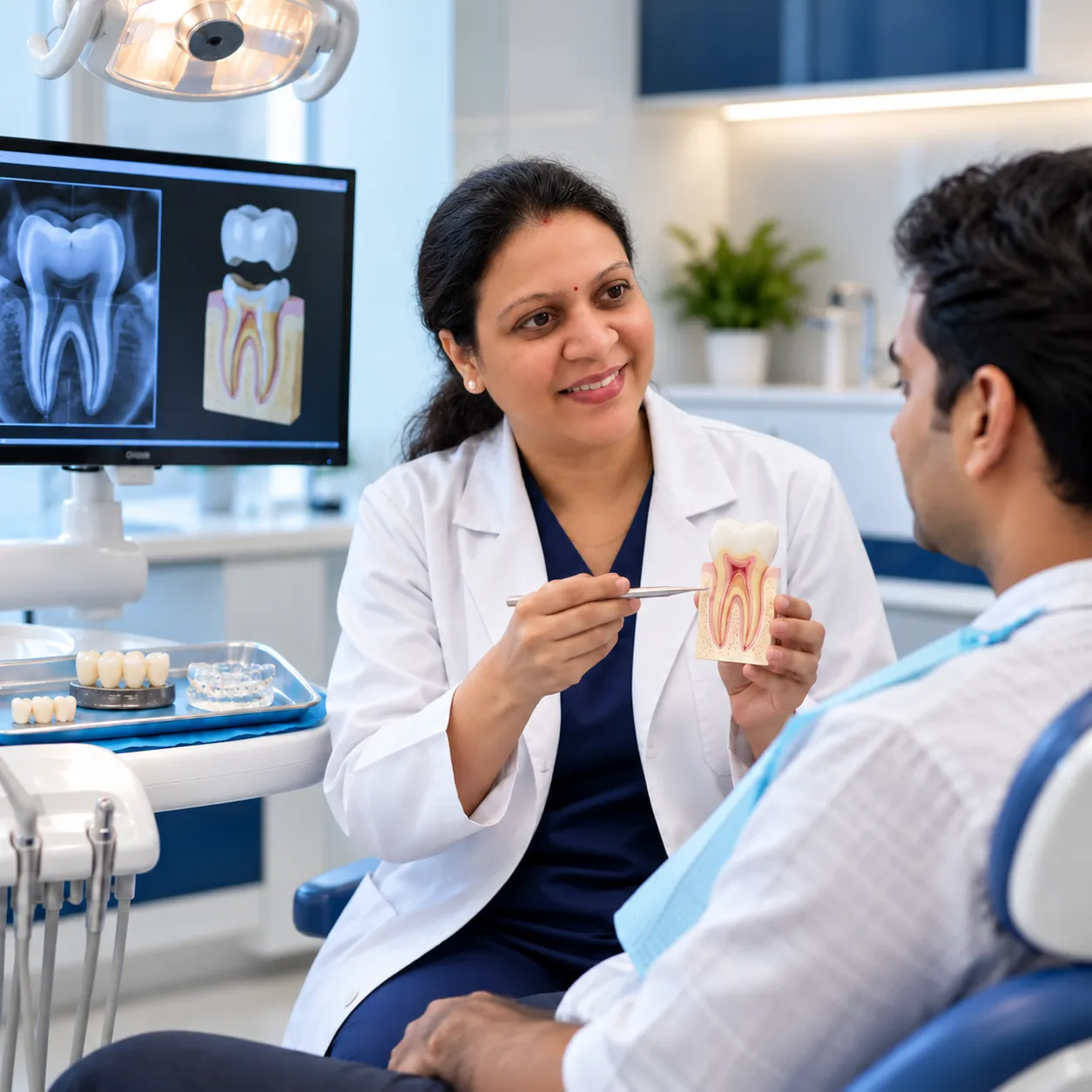
Every implant case starts with a full examination and imaging review, followed by a written treatment plan explained in plain language before any procedure is scheduled — so you understand what is proposed, why, and what it involves.
Dental Implant FAQs
Implant fees vary by case complexity, the number of implants, materials and whether bone grafting is needed. Ask for a written, itemised estimate at your consultation — it should state what is included (implant, abutment, crown) and what is not (CBCT scan, grafting, extraction, temporary tooth).
Visiting the Clinic
Elegance Smile Studio is located in Pimple Saudagar, Pune, serving patients across Pimpri-Chinchwad and the surrounding areas.
Related Services

Book an Implant Consultation
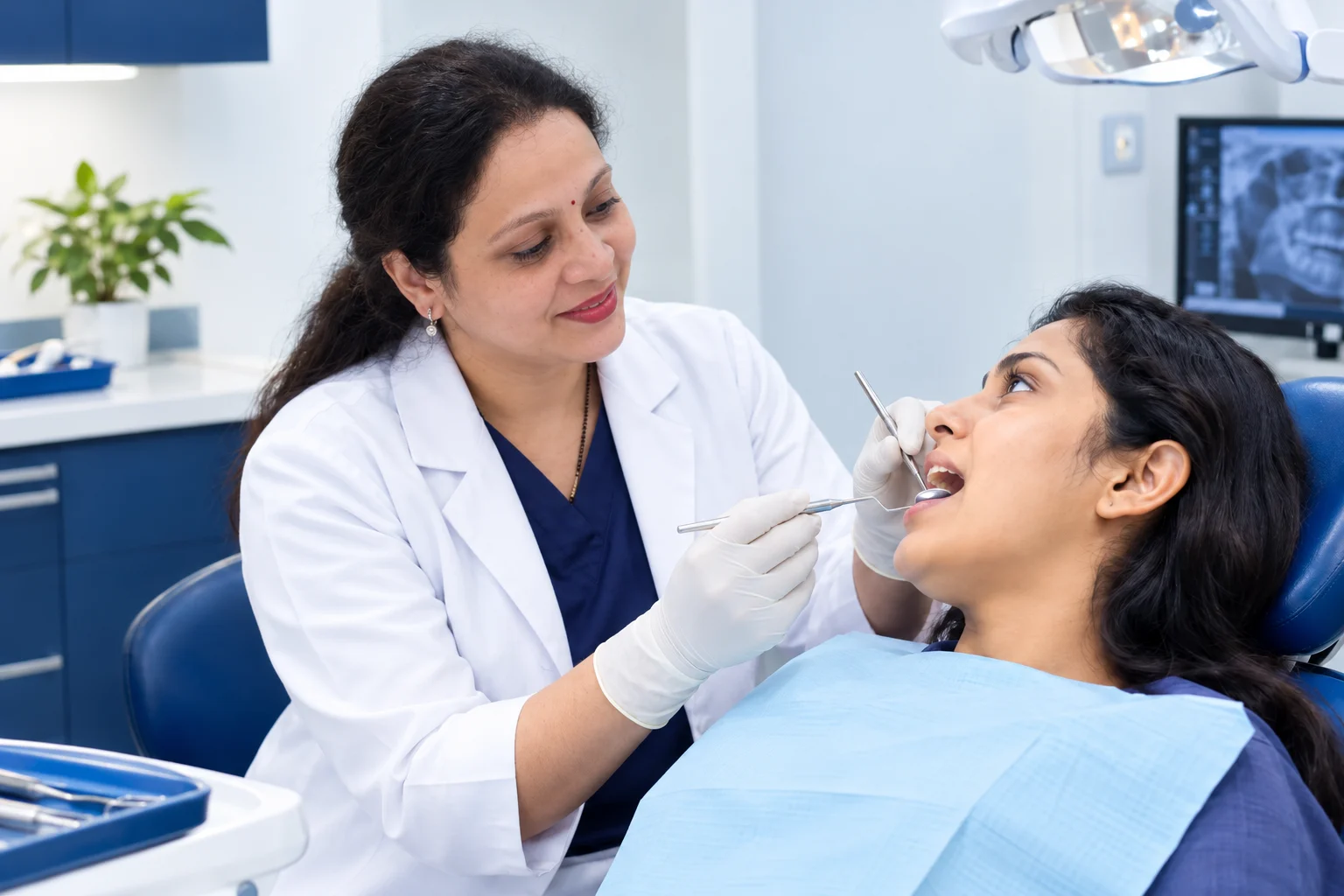
A dental examination and imaging determine whether implants are appropriate for you. Call or WhatsApp to arrange a consultation with Dr. Kashmira Jathar, BDS.
Sources & Review
Clinical figures on this page are drawn from: Howe, Keys & Richards, “Long-term (10-year) dental implant survival,” J Dent 2019; ITI Consensus Statements on implant-supported prostheses; a systematic review of single-tooth implant survival; a peri-implantitis prevalence systematic review, BMC Oral Health 2022; and systematic reviews on smoking and implant failure. Risk information is informed by FDA public guidance on dental implant complications and ADA patient-education materials. These describe pooled research populations, not this clinic’s own outcomes. Page content reviewed by Dr. Kashmira Jathar, BDS.