

Dentures & Missing Teeth in
Pimple Saudagar, Pune
Replace missing teeth with complete, partial, flexible or implant-supported dentures planned around your teeth, gums, bone, bite, comfort and long-term needs.
Chat on WhatsApp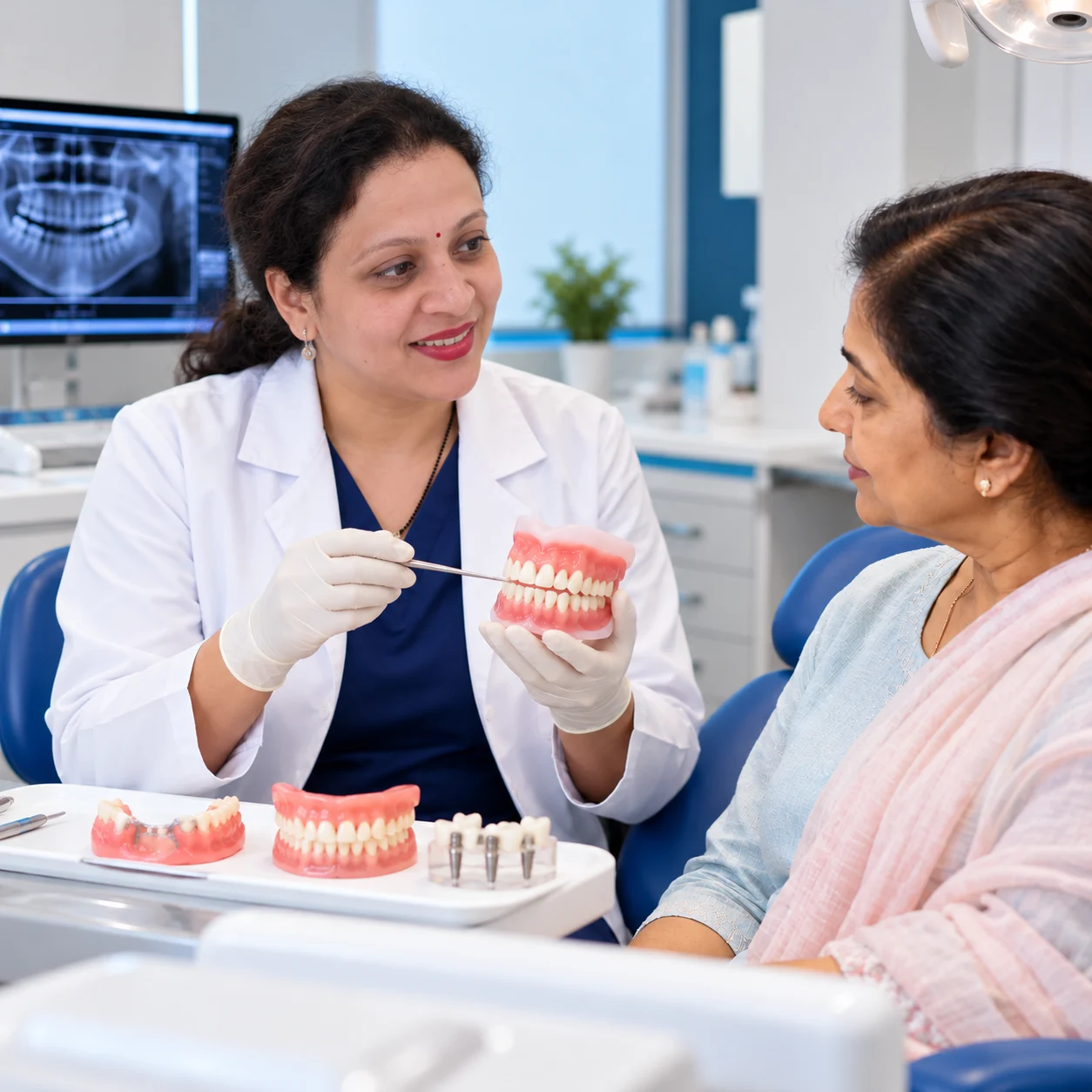
Practice
Your Denture Starts
With an Individual Assessment
4
Denture Treatment Options
2
Main Denture Types
1
Individual Treatment Plan
“The right denture depends on your missing teeth, remaining teeth, gums, bone, bite and individual treatment needs. Careful assessment helps determine the most suitable option.”
– Dr. Kashmira Jathar Dental Clinic
Which Denture Option Do You Need?
Signs You May Need a Denture Assessment
You don’t need to decide which denture is right for you before booking. An individual assessment helps determine the appropriate option.
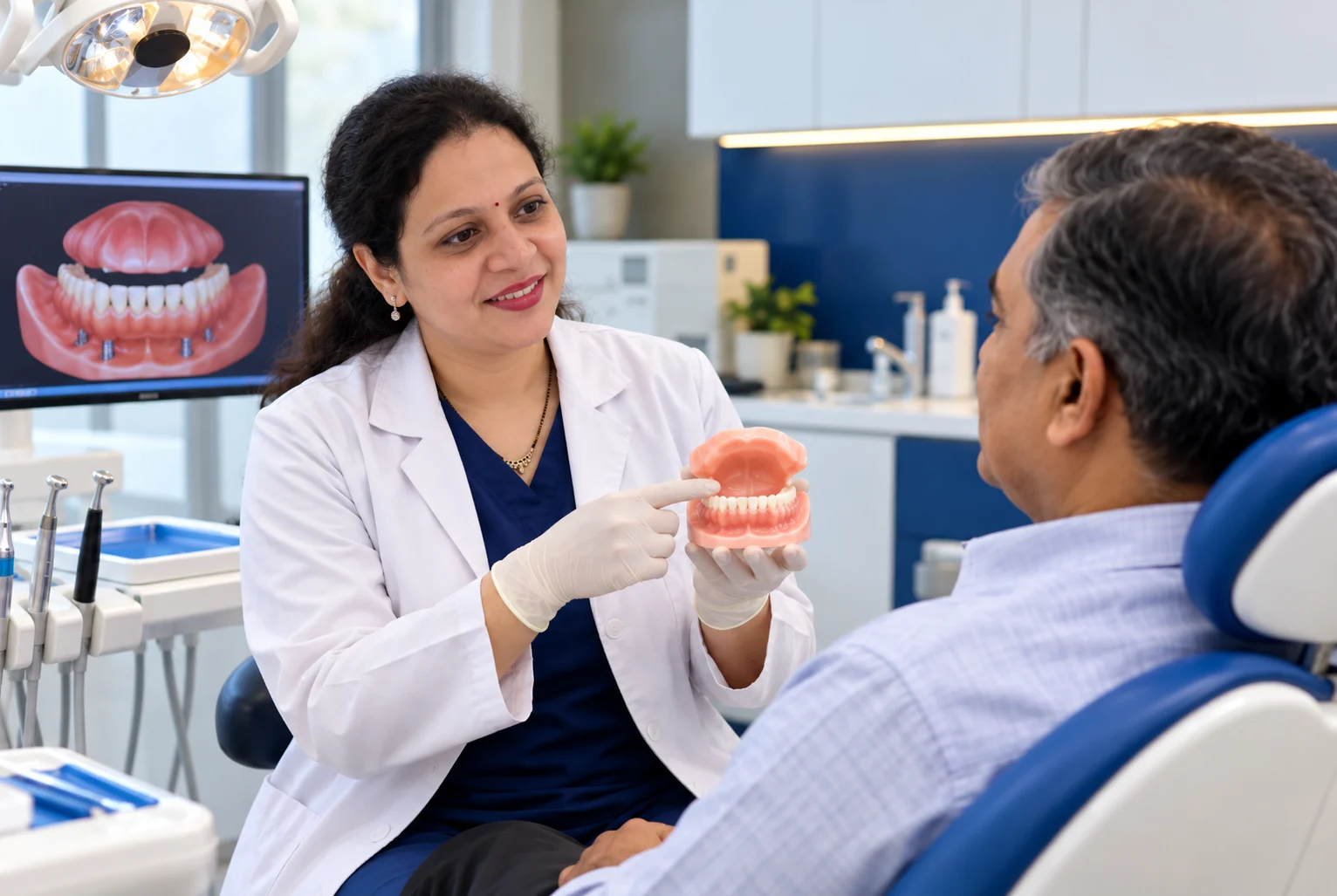 The Problem
You are missing all teeth in an arch
A complete denture assessment
The ridge, gums, bone resorption, saliva, tongue, facial and lip support, jaw relationship, speech and existing denture concerns can be assessed before planning treatment.

Missing all teeth can affect chewing, speech, bite support and lip or facial support.
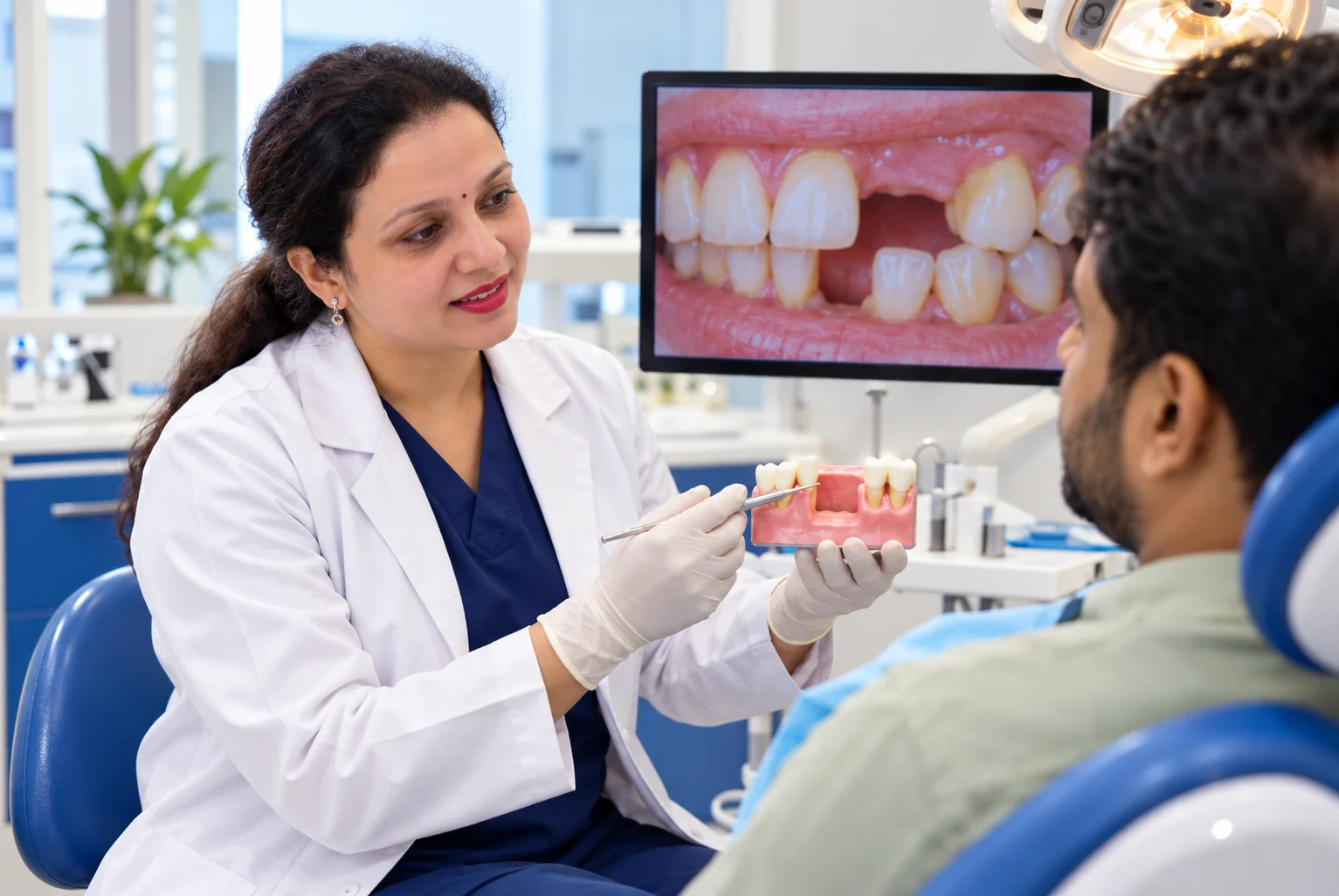 The Problem
You have several missing teeth but still have natural teeth
A partial denture assessment
The remaining teeth and surrounding tissues are assessed to determine whether an acrylic, cast metal, flexible or implant-assisted removable partial denture may be suitable.
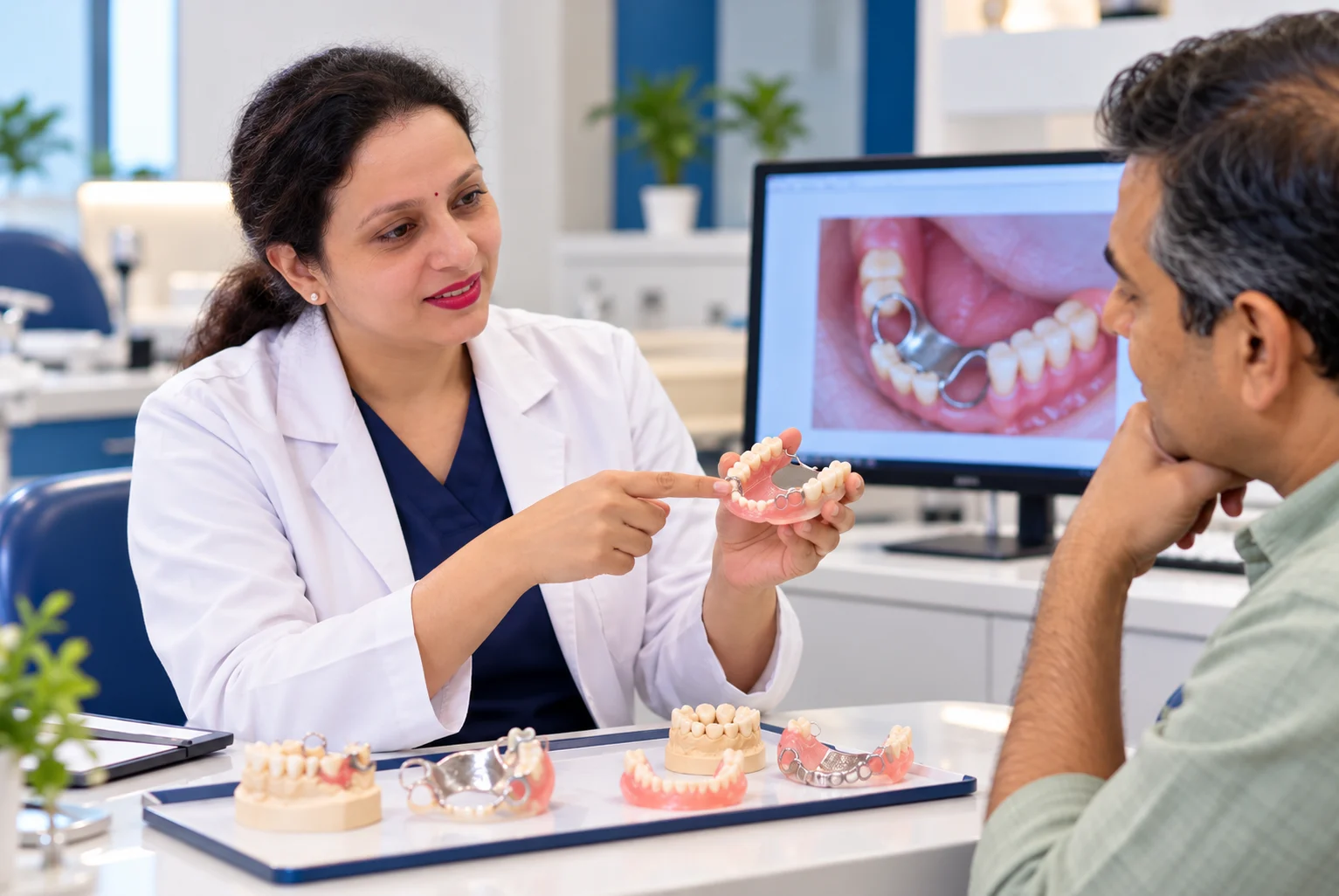
When some natural teeth remain, tooth position, gum health, mobility, bite, bone support and cleaning needs all influence the replacement plan.
 The Problem
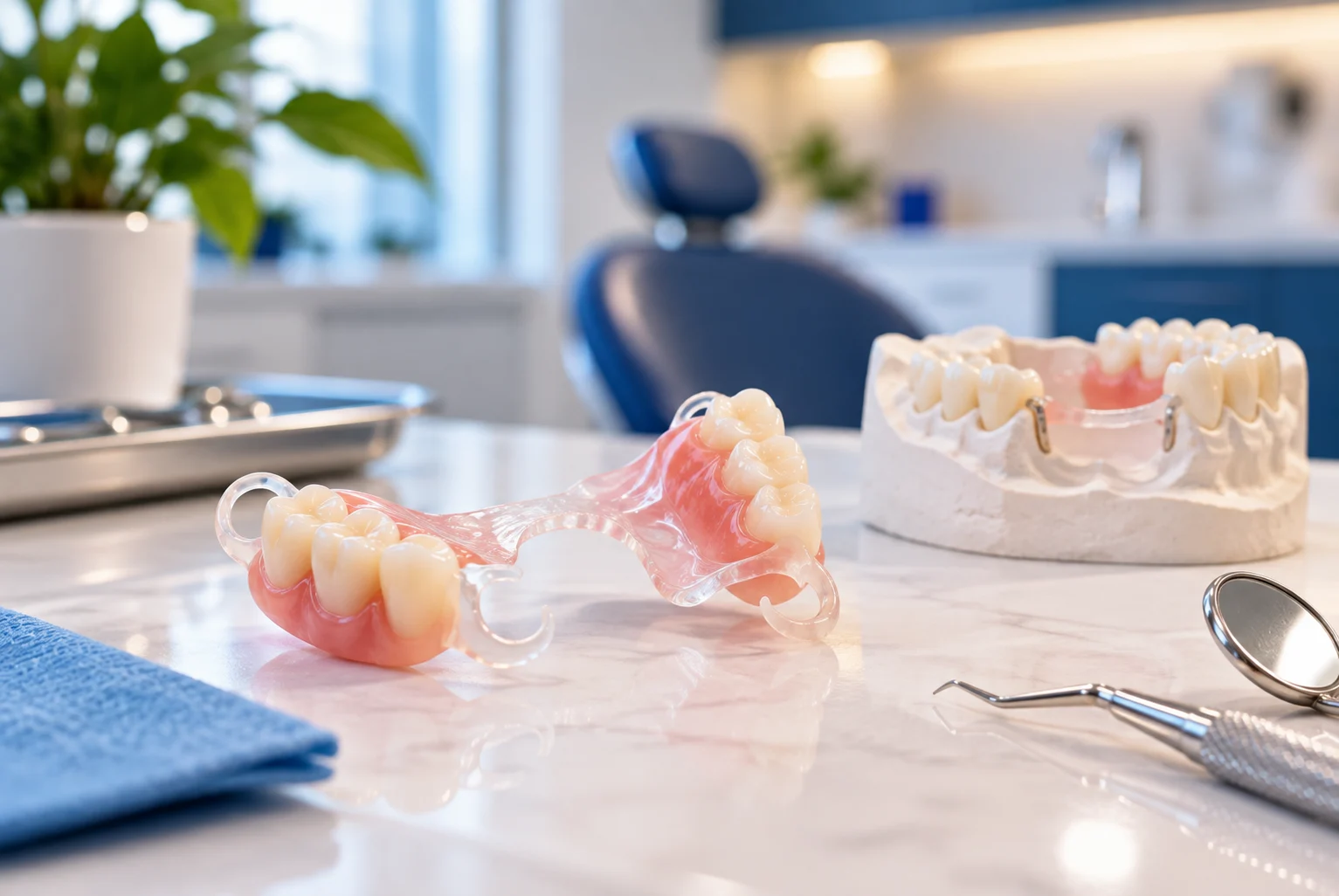
You want a less visible removable partial denture
A flexible denture assessment
Flexible thermoplastic dentures can be considered in selected partial cases, particularly when a less visible removable appliance is desired.
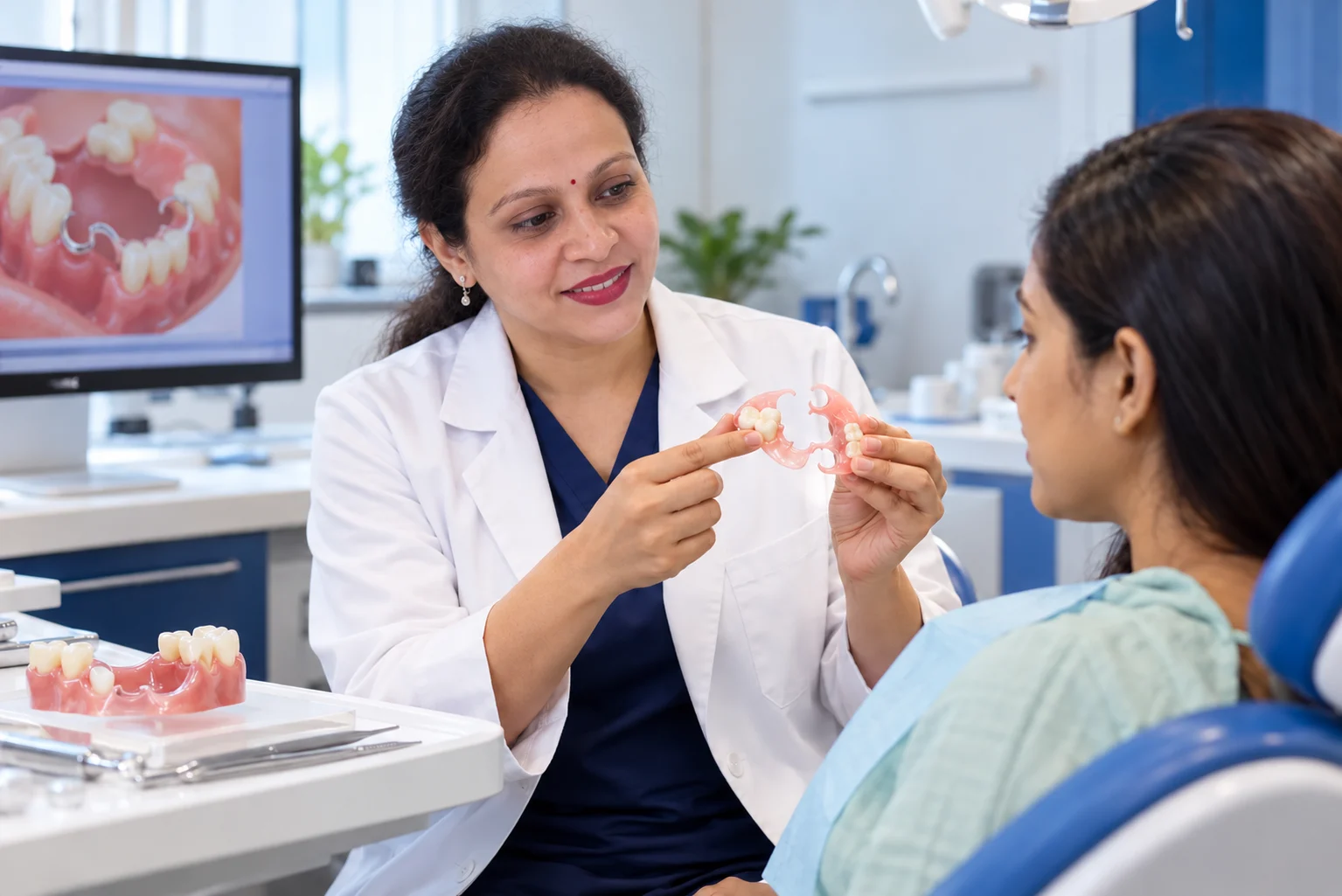
Some patients are concerned about visible metal clasps or want a removable option for selected missing-tooth situations.
 The Problem
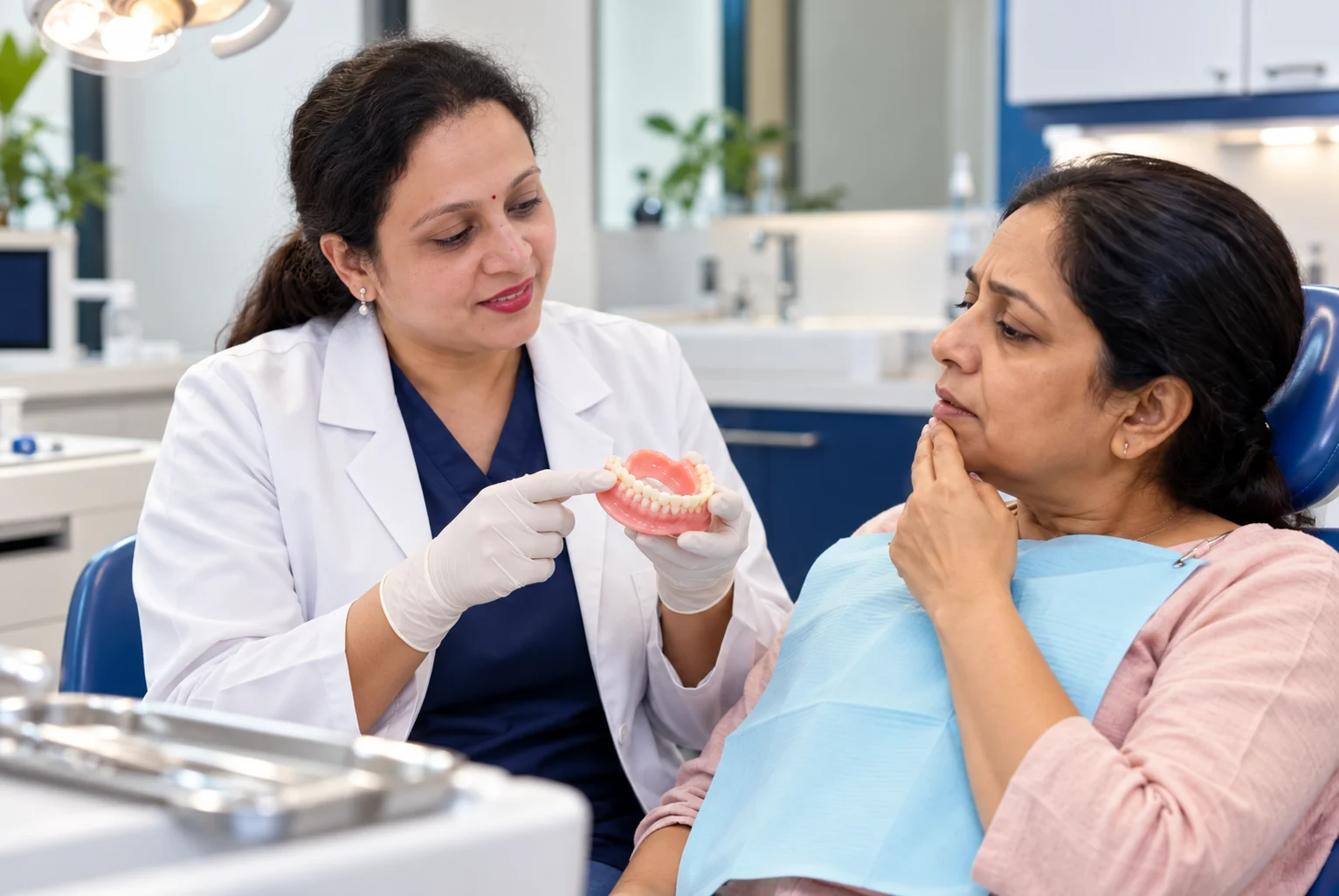
Your denture feels loose or uncomfortable
A denture fit and maintenance assessment
The denture, tissue-contacting surface, bite and surrounding tissues can be assessed to determine whether adjustment, relining, rebasing, repair or a new denture may be appropriate.
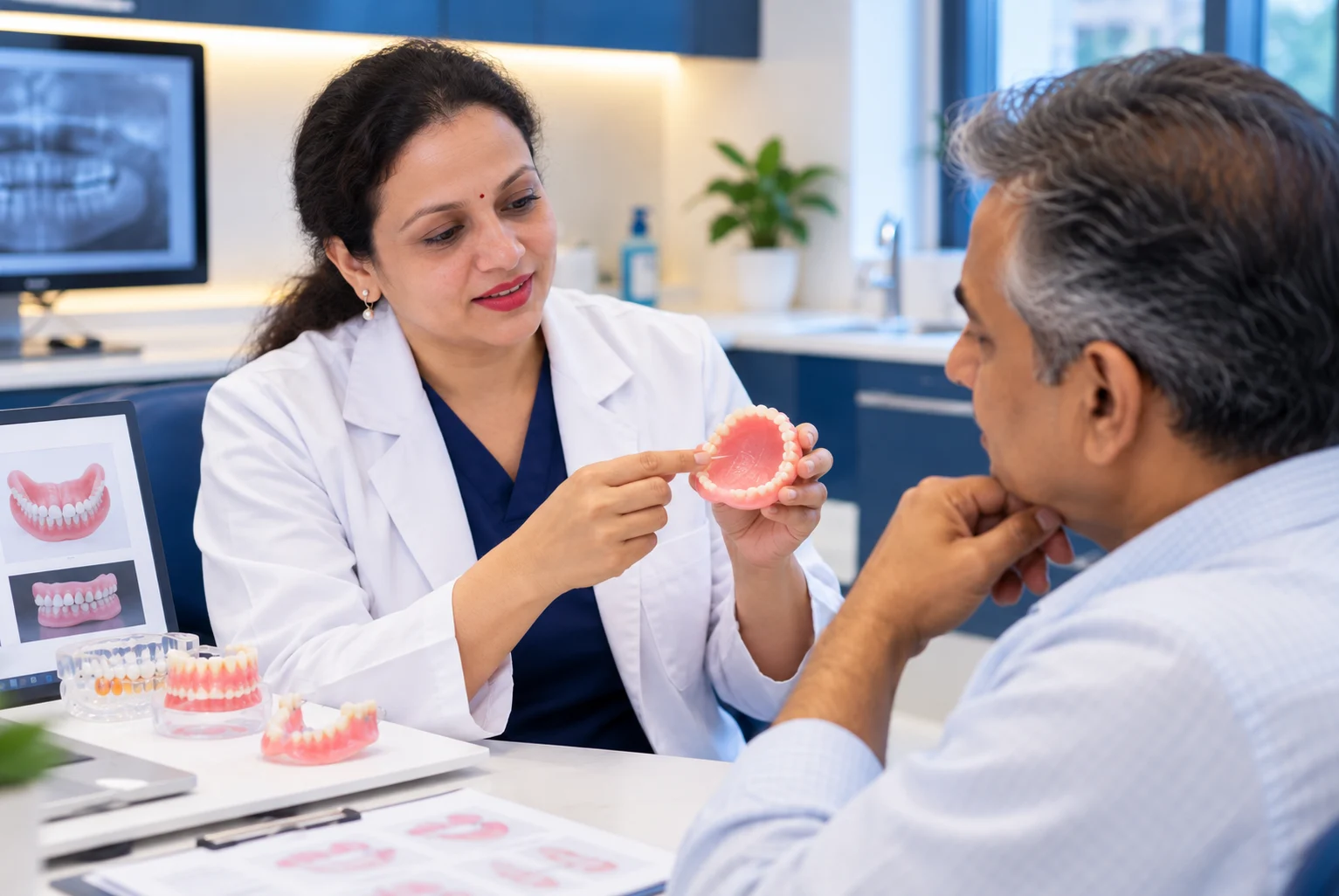
Denture fit can change as the ridge changes, and looseness, sore spots, worn teeth or a changed bite may affect comfort and function.
What Are Dentures & Missing Teeth Treatment Options?
Dentures can replace missing teeth with complete, partial, flexible or implant-supported options. The appropriate choice depends on the number of missing teeth, remaining teeth, gum and bone health, bite, aesthetics, comfort, medical factors, time and budget.
Denture Planning Can Consider
The right denture depends on your anatomy, number of missing teeth, remaining teeth, bone and gum health, bite, expectations and long-term maintenance needs.
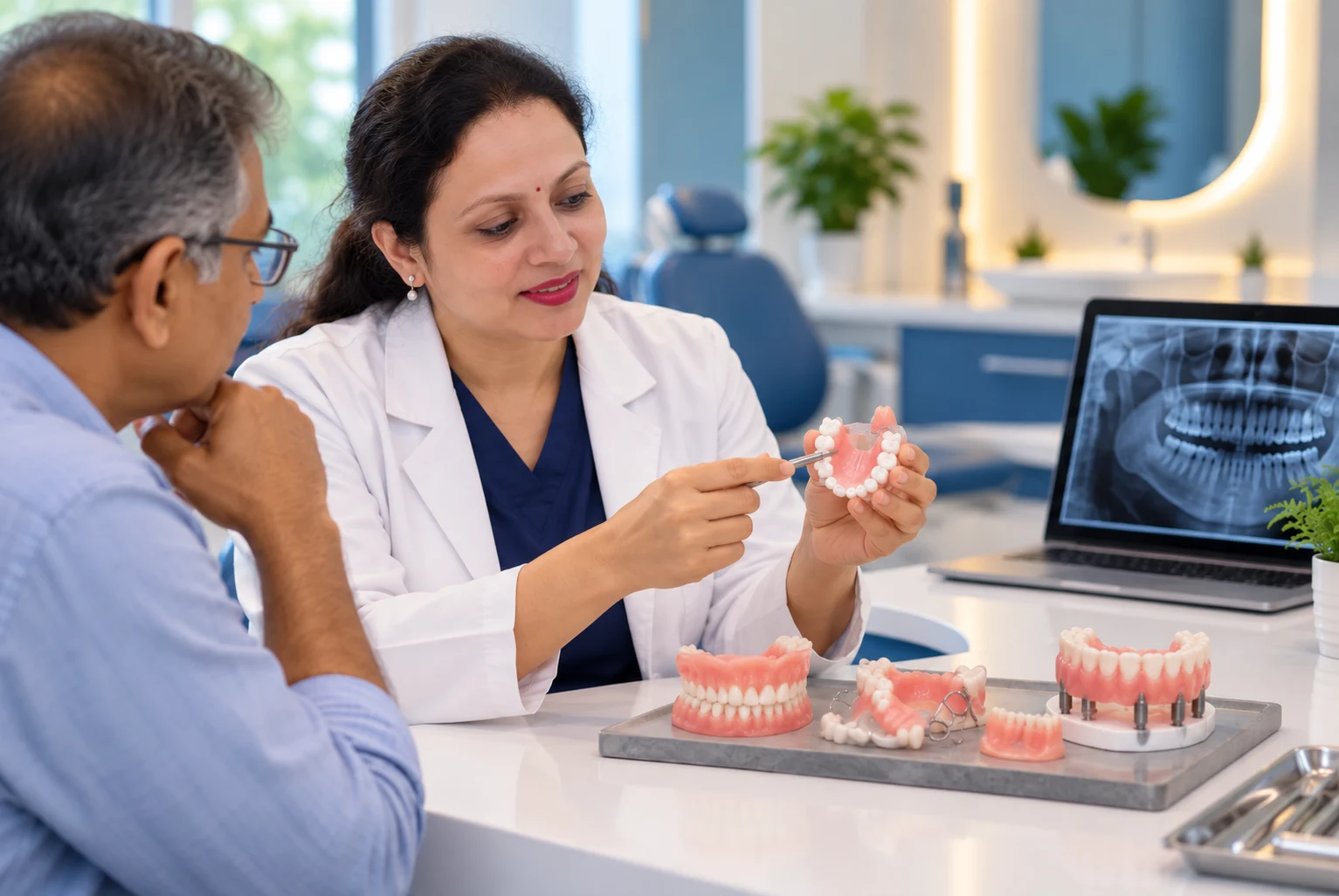
Denture Options for Missing Teeth
Complete, partial, flexible and implant-supported dentures can be considered according to your missing teeth, remaining teeth, gums, bone, bite, comfort, aesthetics and individual treatment needs.
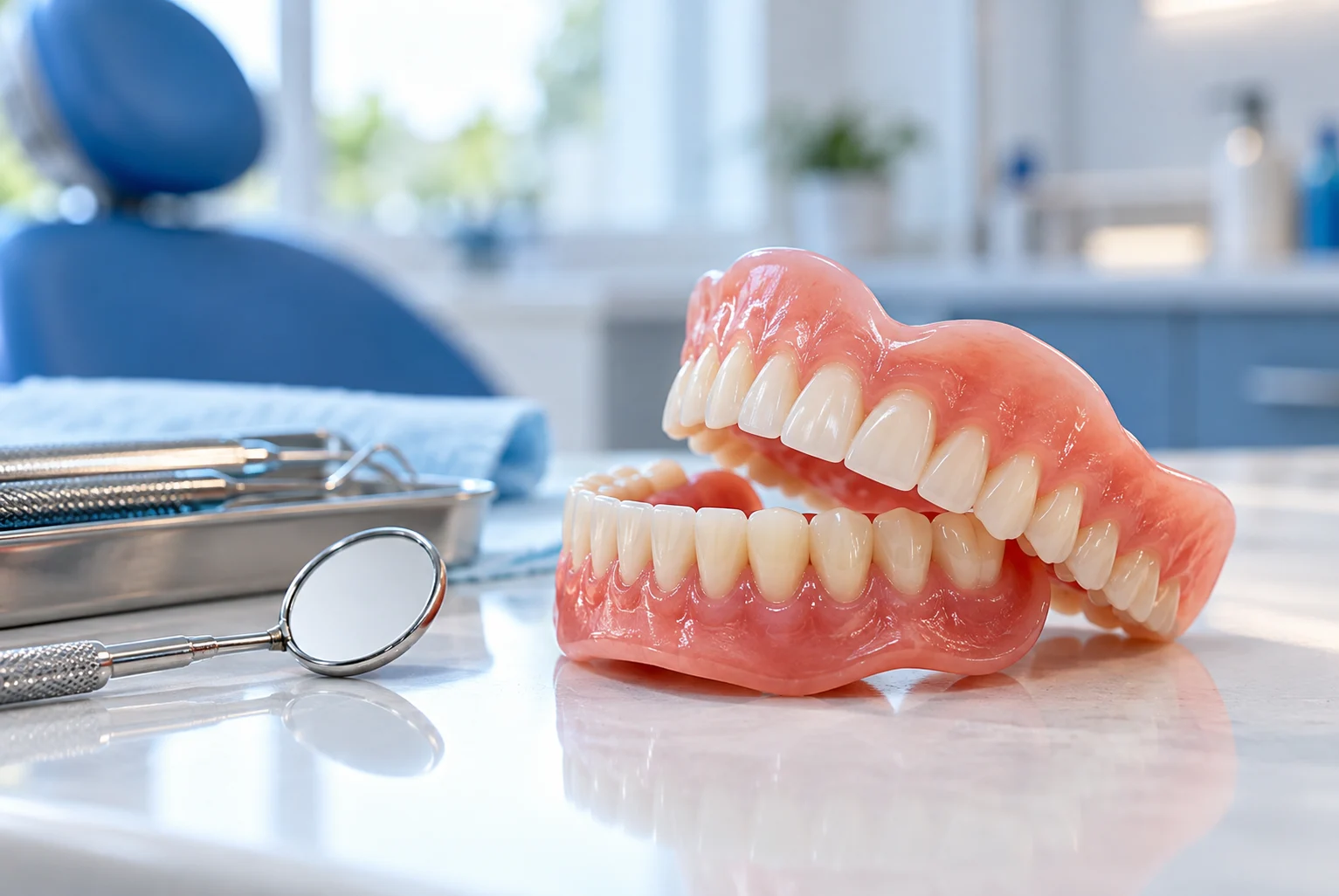
Complete Dentures
Complete dentures replace all teeth in one arch and can restore chewing, support speech and provide lip and facial support. Upper, lower or both arches can be planned according to individual needs.
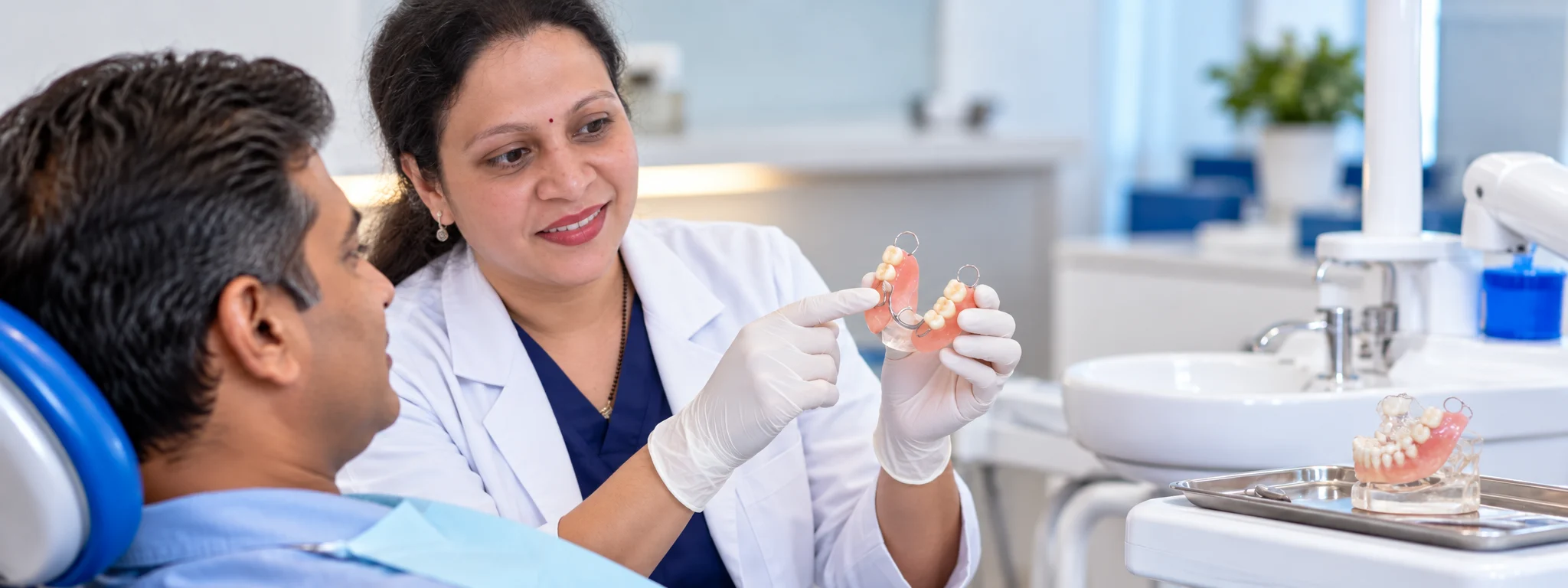
Partial Dentures
Partial dentures replace selected missing teeth while natural teeth remain. Planning considers remaining teeth, periodontal condition, mobility, tooth position, occlusion, bone support, caries risk, undercuts and aesthetics.

Flexible Dentures
Flexible dentures are removable thermoplastic appliances that may be considered for selected partial cases, including situations where less visible metal clasps are desired.

Implant-Supported Dentures
Implant-supported dentures or overdentures combine implants with a removable denture to improve retention and support. Attachment systems may include Locator, ball, bar-and-clip or magnet systems.
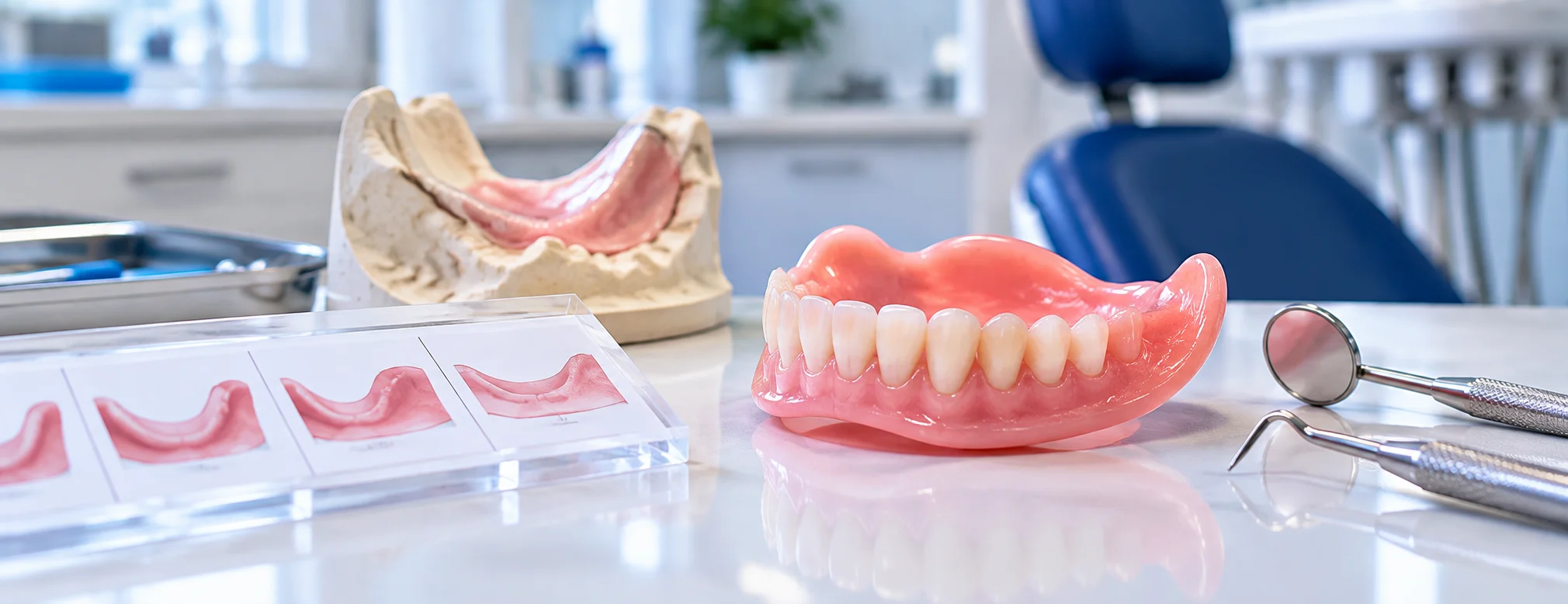
Denture Fit & Adjustment
Denture fit depends on ridge shape and height, saliva, muscle control, tongue position, denture extension, occlusion, base adaptation and tooth arrangement. Adjustments may be needed as tissues and fit change.
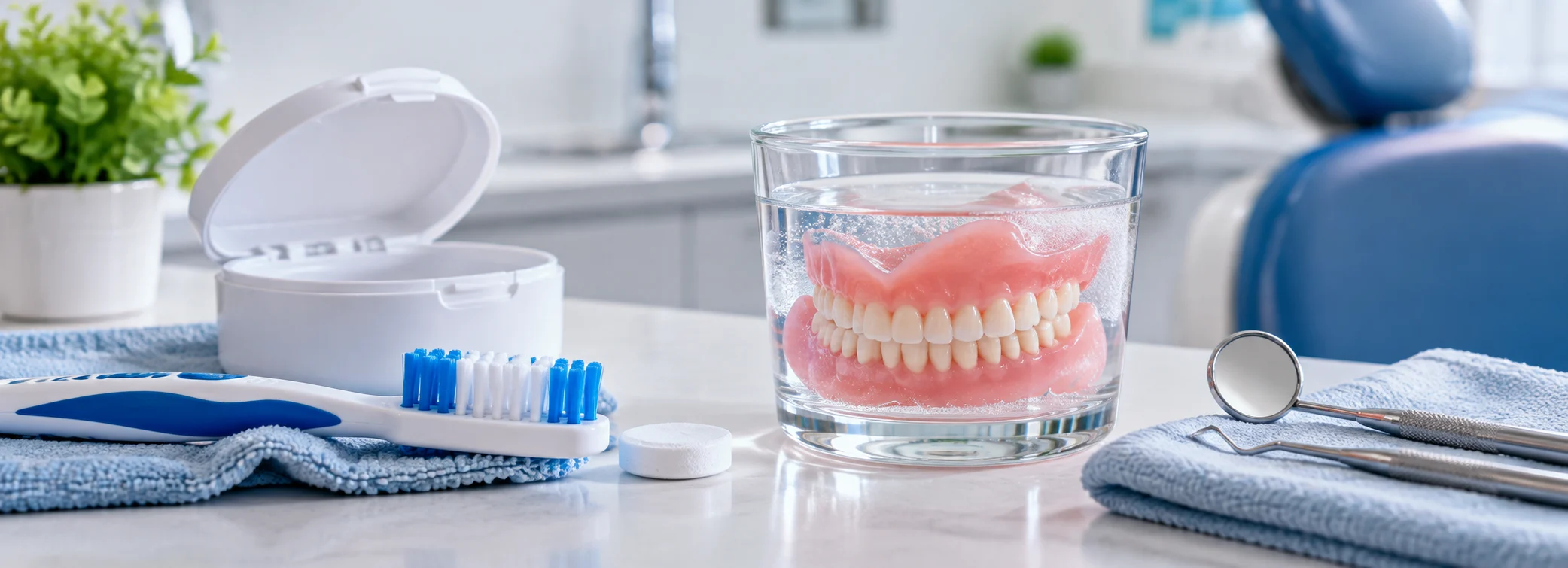
Denture Maintenance
Long-term care includes cleaning the denture, gums, tongue, remaining natural teeth and implant attachments where present, along with periodic examinations and replacement of worn attachment components when needed.
Planning the Right Denture for You
Denture planning may include clinical examination, periodontal assessment, X-rays when indicated, CBCT when 3D information is needed, intraoral scanning or impressions, occlusal analysis, photographs and assessment of remaining teeth and bone support.
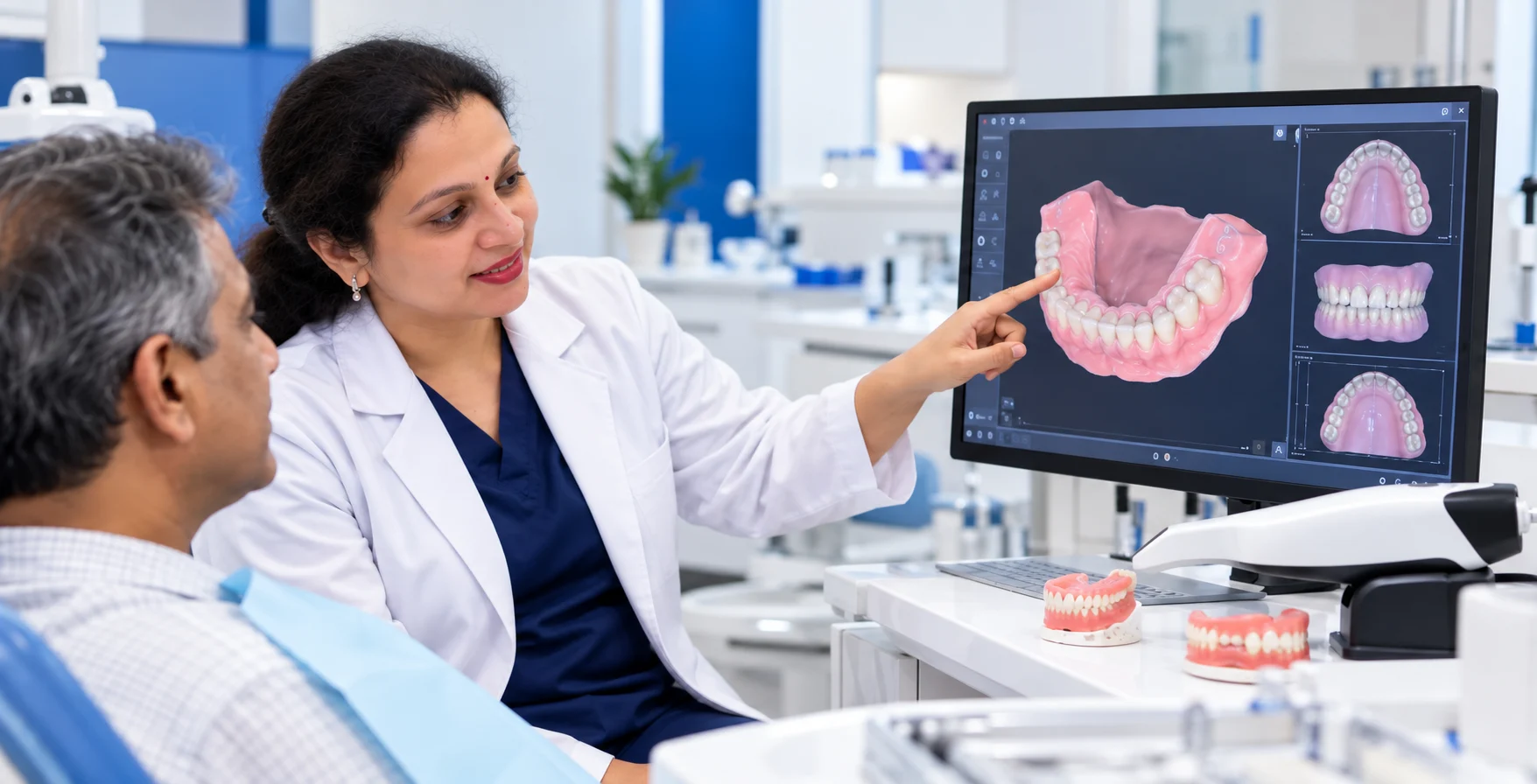
Digital Denture Workflows
Digital workflows may use systems such as 3Shape Dental System and Dentsply Sirona inLab as part of denture planning and laboratory work when appropriate.
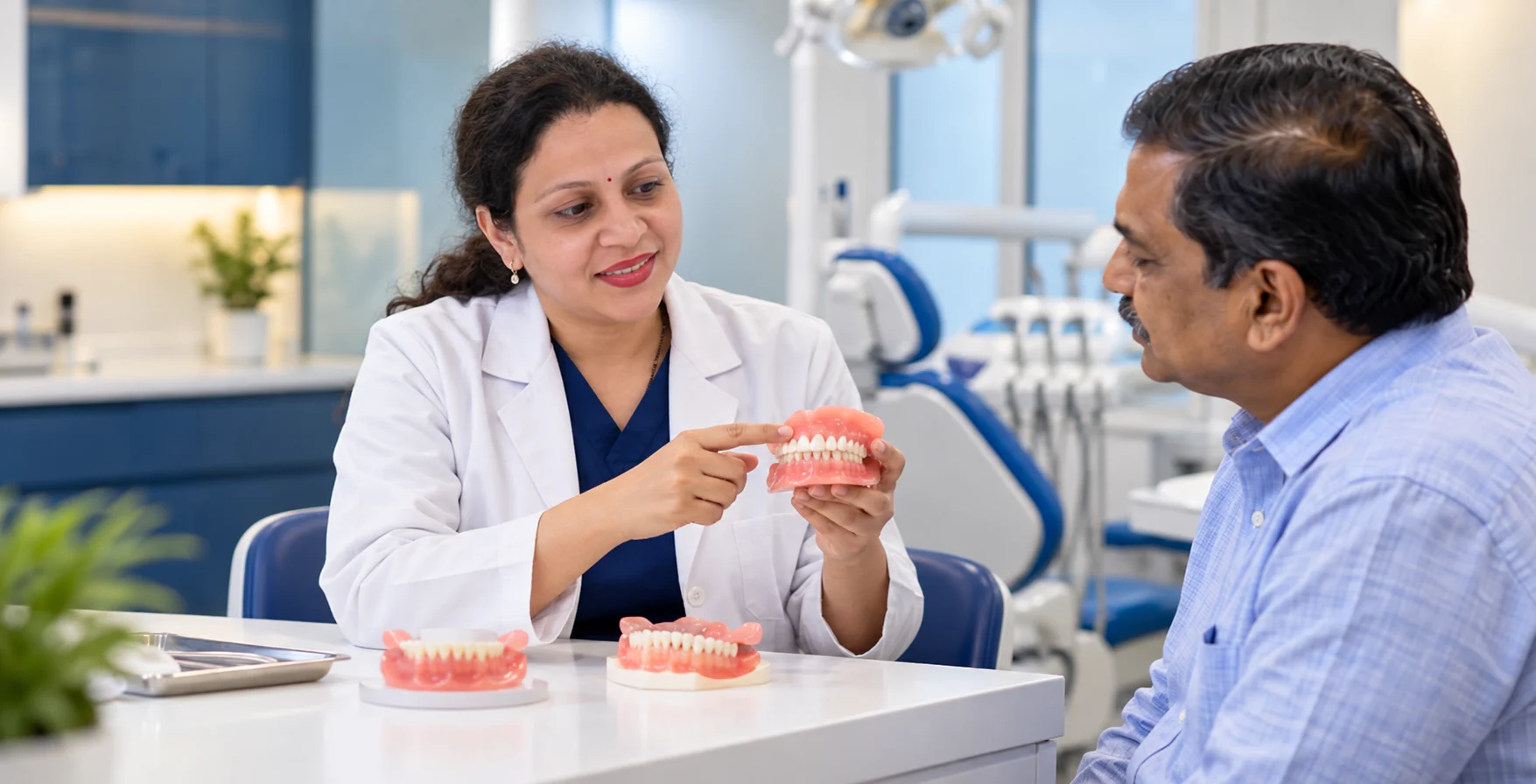
Denture Materials & Systems
Complete denture workflows may use materials and systems such as Ivoclar Ivotion, Ivoclar IvoBase and Dentsply Sirona Lucitone 199, depending on the planned restoration.
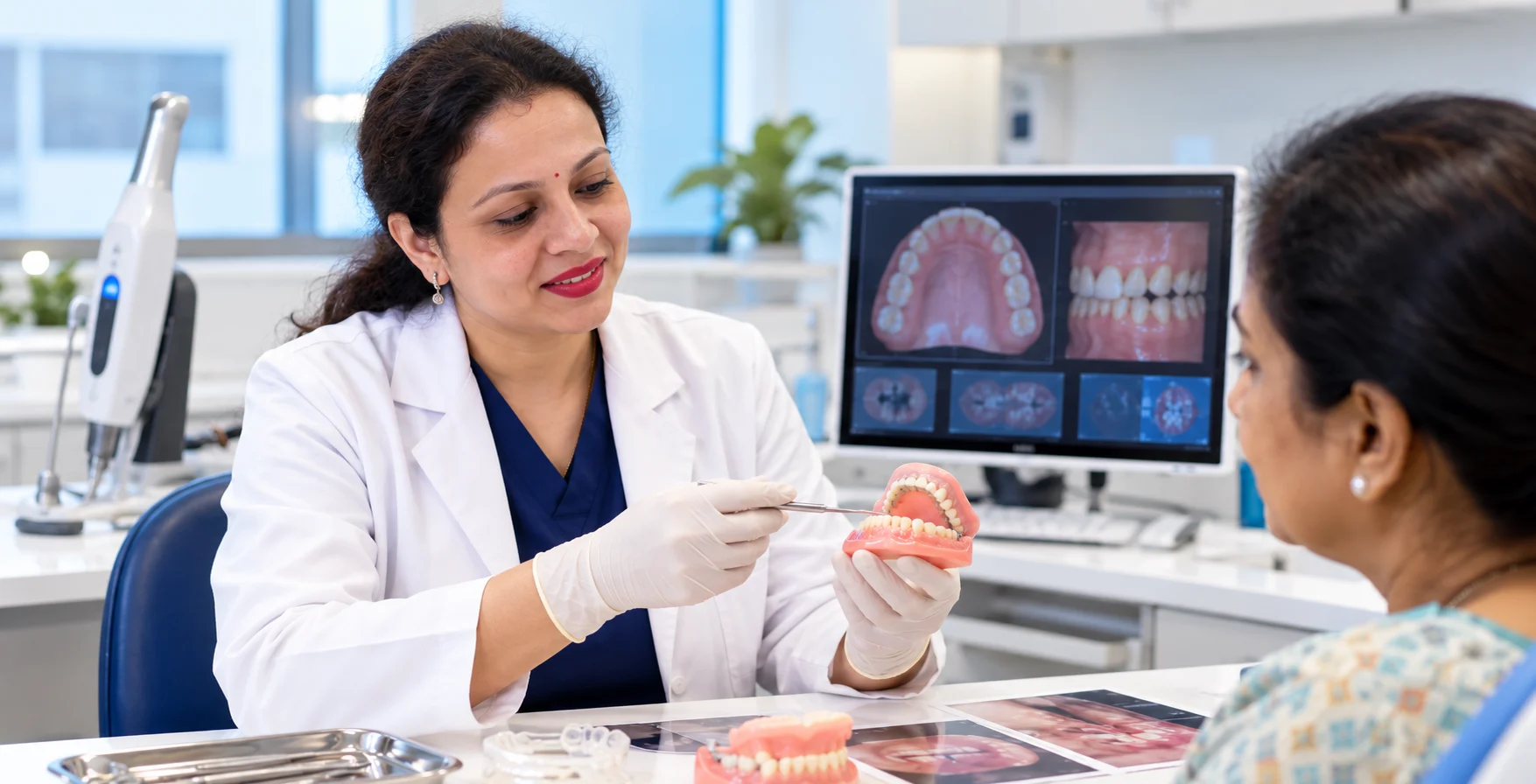
Clinical Records
Assessment and planning may include clinical examination, impressions or intraoral scanning, occlusal analysis, photographs and other records needed for accurate denture planning.
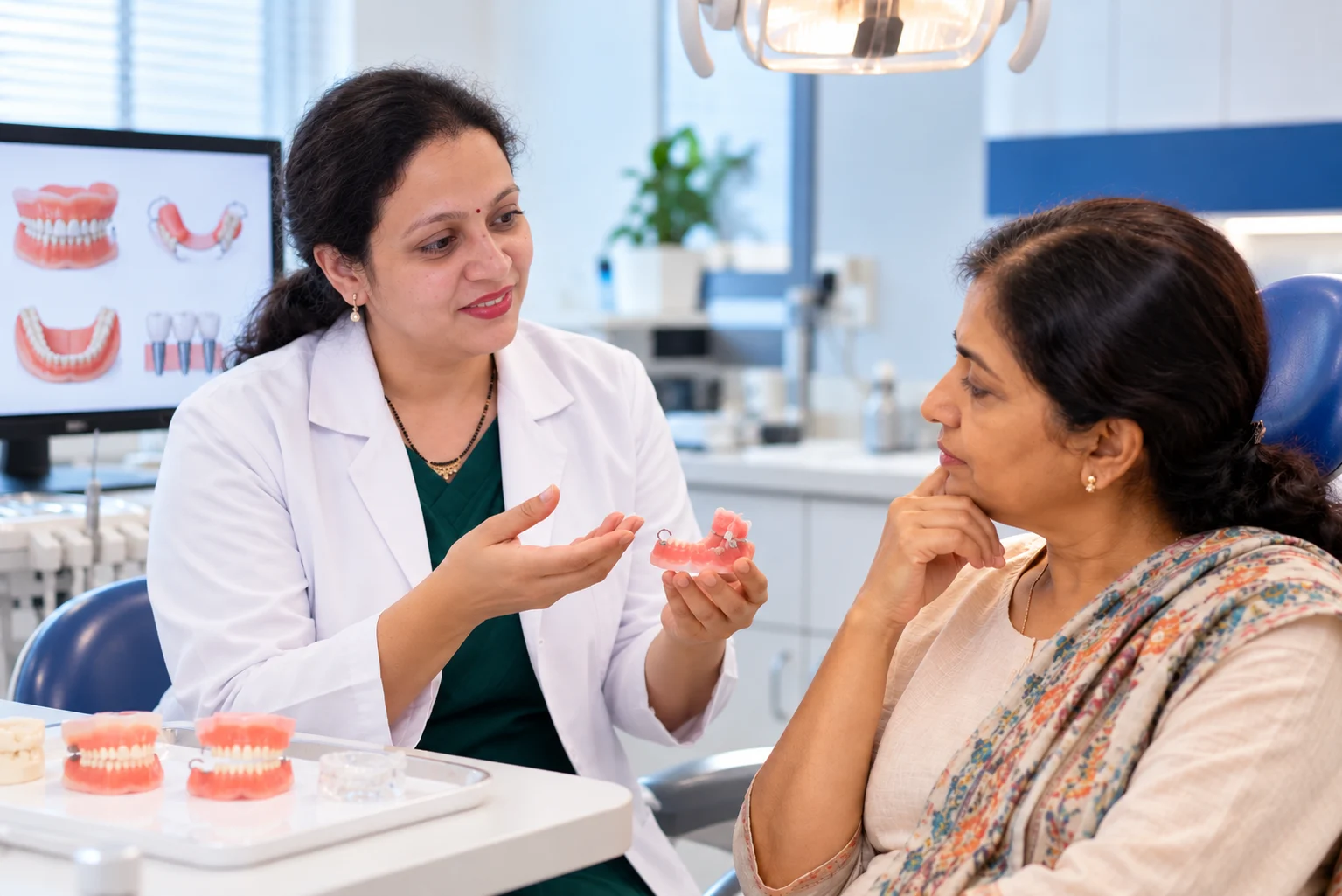
Worried About Dentures or Missing Teeth?
Choosing a denture can feel difficult when you are unsure about comfort, appearance, retention or the differences between treatment options. An assessment can help you understand the choices available for your individual situation.
If You’re Unsure About Dentures
If You Feel Concerned
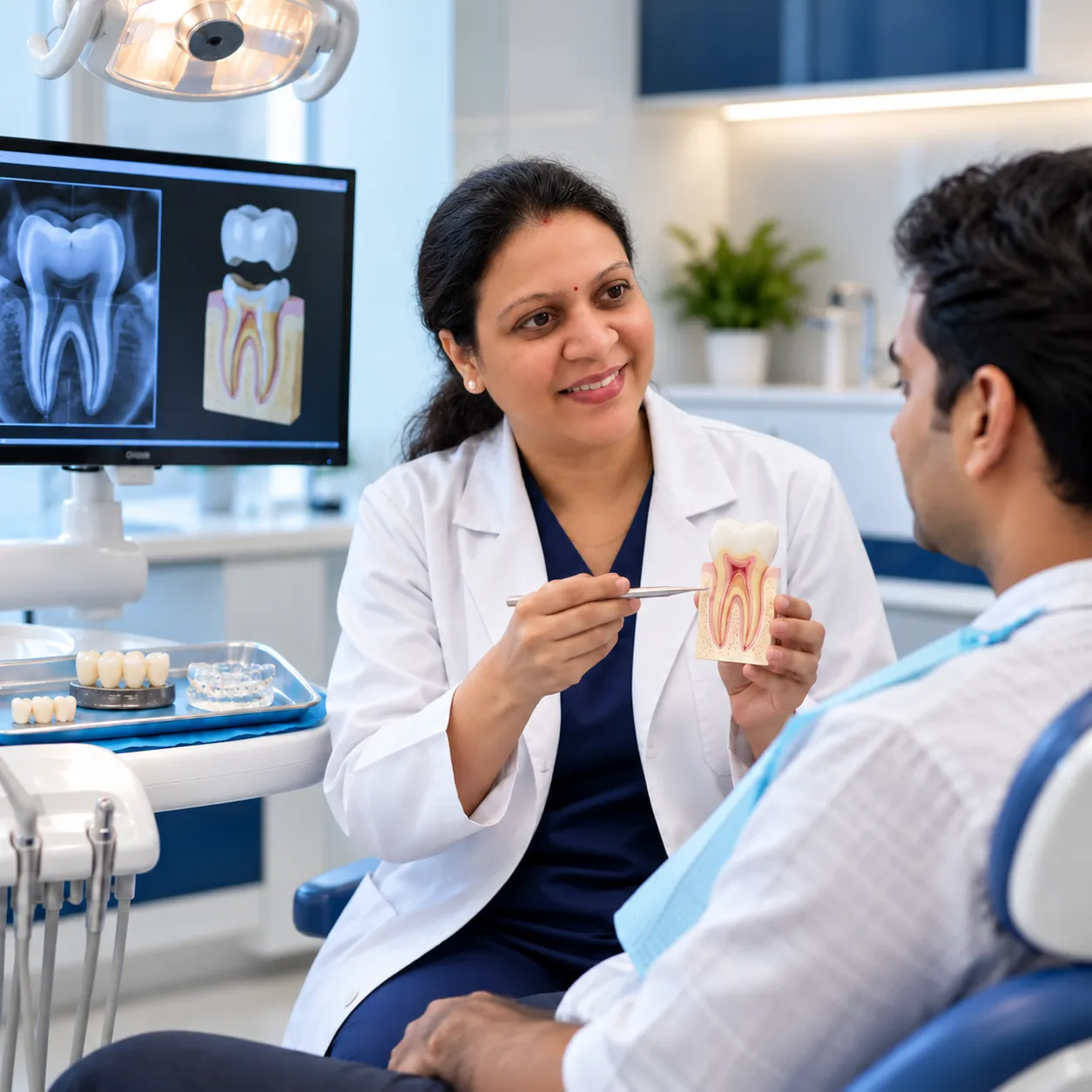
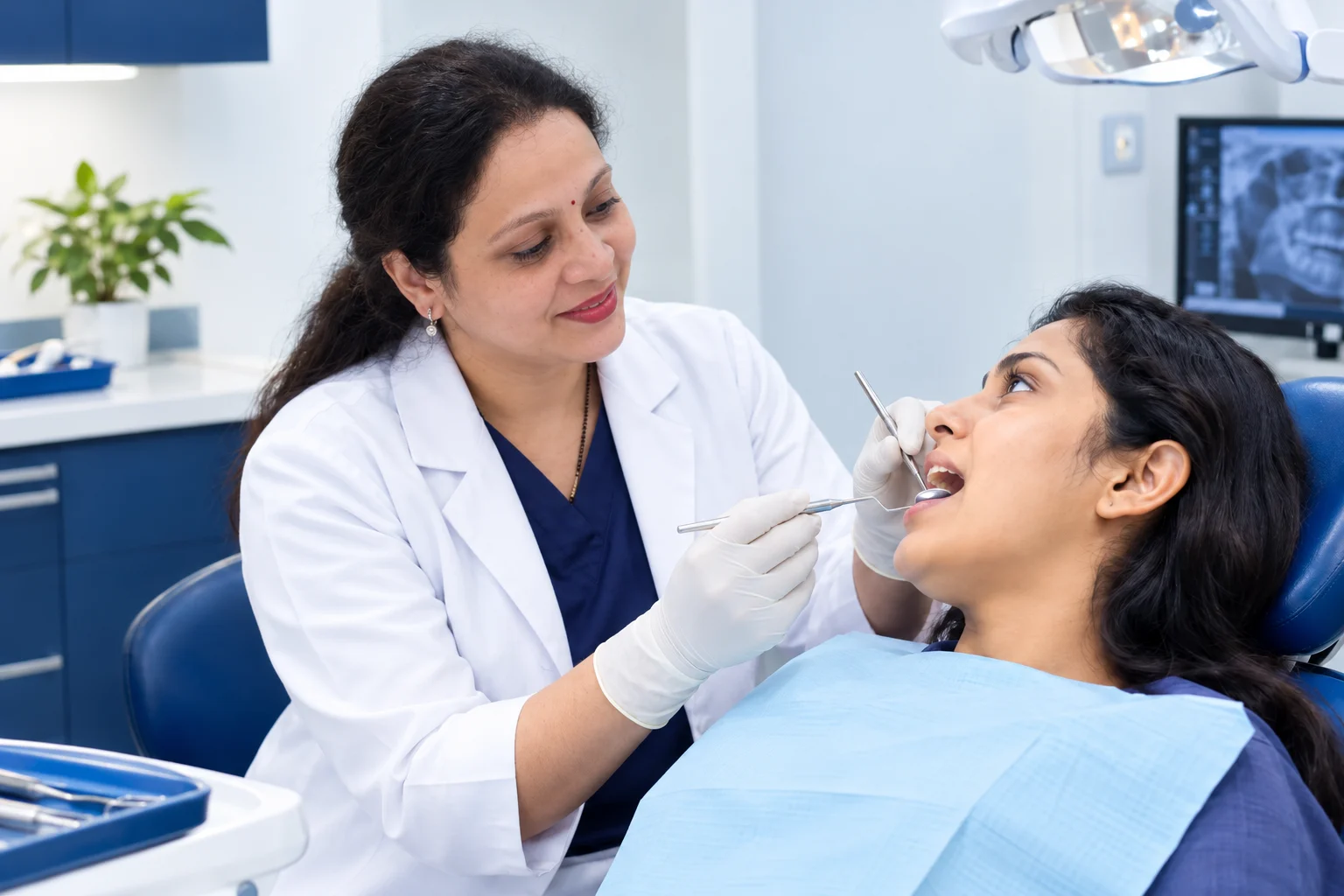
What Happens During a Denture Assessment
Seven stages, from discussing your missing teeth to planning the appropriate denture and long-term maintenance.
Discuss Your Concern
You explain why you've booked the appointment and describe any symptoms or concerns.
You're heard first. No assumptions.
Review Relevant Information
We ask about your dental history, general health, medications and previous treatment.
Full picture. Before we look.
Examine Teeth & Gums
A clinical examination assesses the condition of your teeth, gums and mouth.
Clear assessment. No surprises.
Investigate When Necessary
Dental X-rays or other appropriate investigations are recommended if additional information is needed.
Only when it adds information.
Explain the Findings
We explain what's been identified and what it may mean for your oral health.
Your findings. In plain language.

When Should You Consider Replacing Missing Teeth?
Missing teeth can affect chewing, speech, bite support and facial or lip support. A denture assessment helps determine which replacement options may be suitable for your individual situation.
Will I Need X-Rays or Other Records?
Depending on your case, assessment may include X-rays, panoramic imaging, CBCT when 3D information is needed, intraoral scanning or impressions, occlusal analysis and photographs.
Denture Problems That May Need Attention
Looseness, sore spots, worn artificial teeth, fractures, changes in bite and altered fit can affect denture comfort and function and may need assessment.
When Urgent Medical Care Is Needed
If you have severe swelling that affects breathing or swallowing, seek immediate medical attention. These symptoms require urgent medical care rather than waiting for a routine denture appointment.
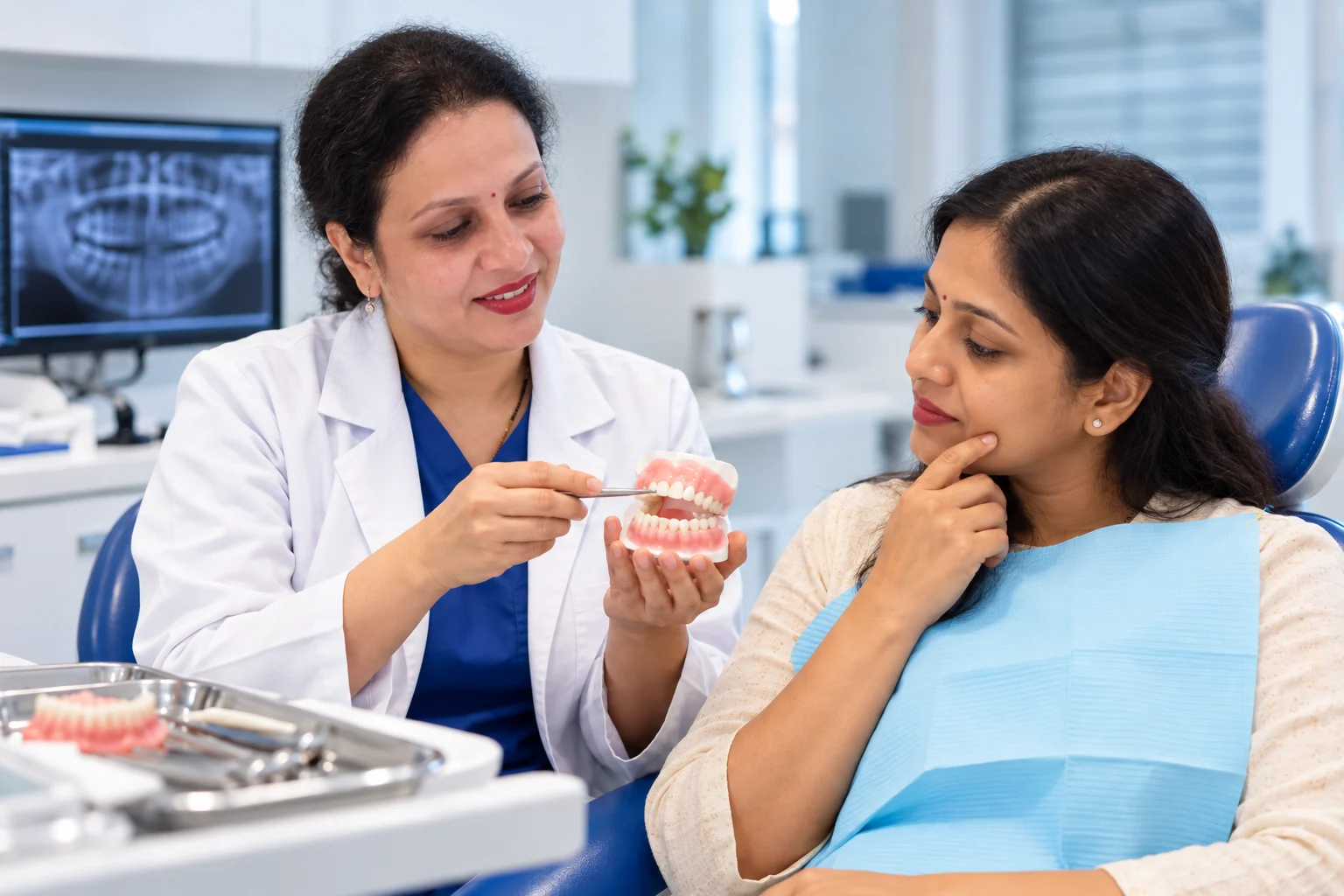
What Happens During a Denture Assessment?
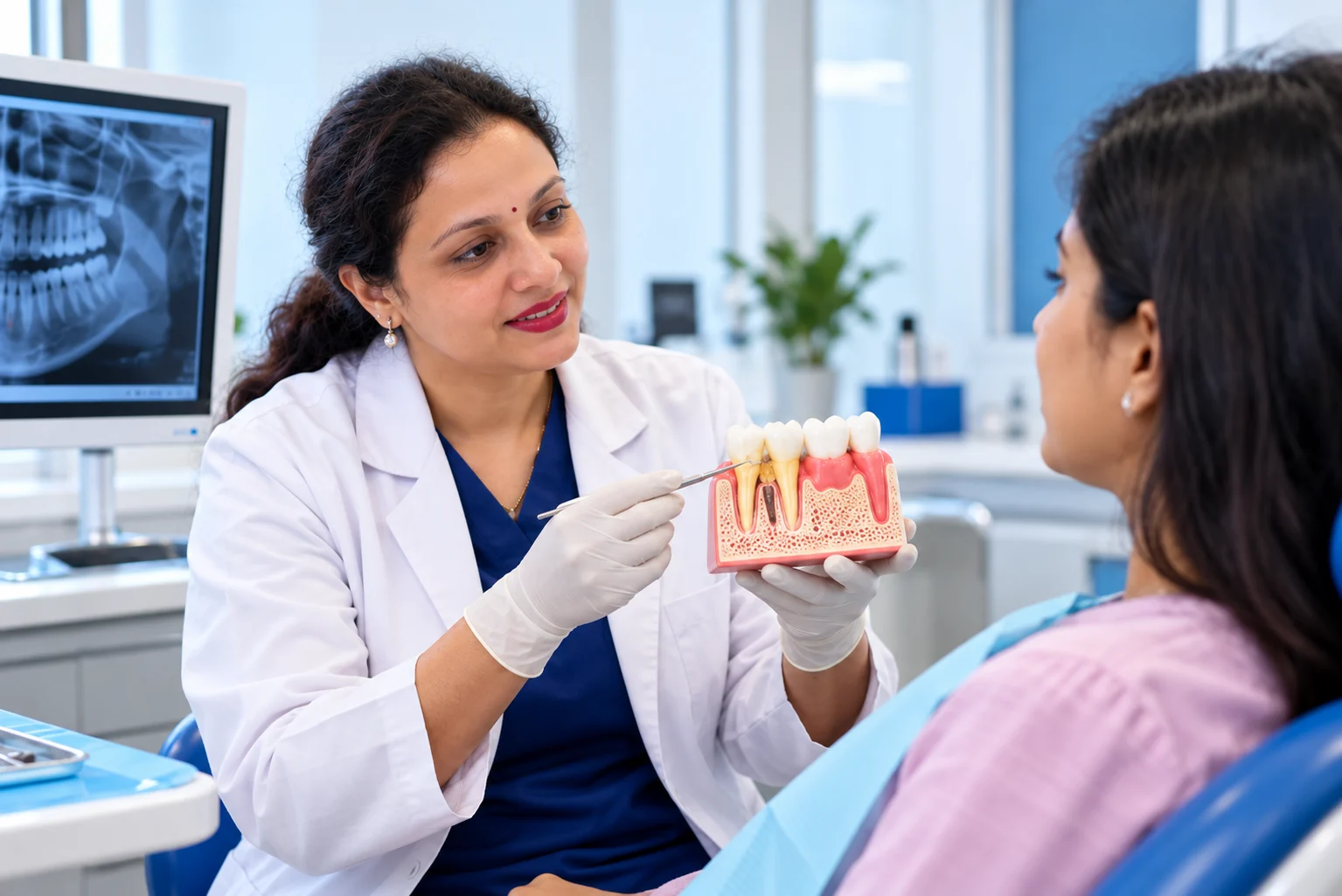
Denture treatment begins with an individual assessment of your missing teeth, remaining teeth, gums, bone, bite and expectations. The appropriate denture option and follow-up needs are then discussed.
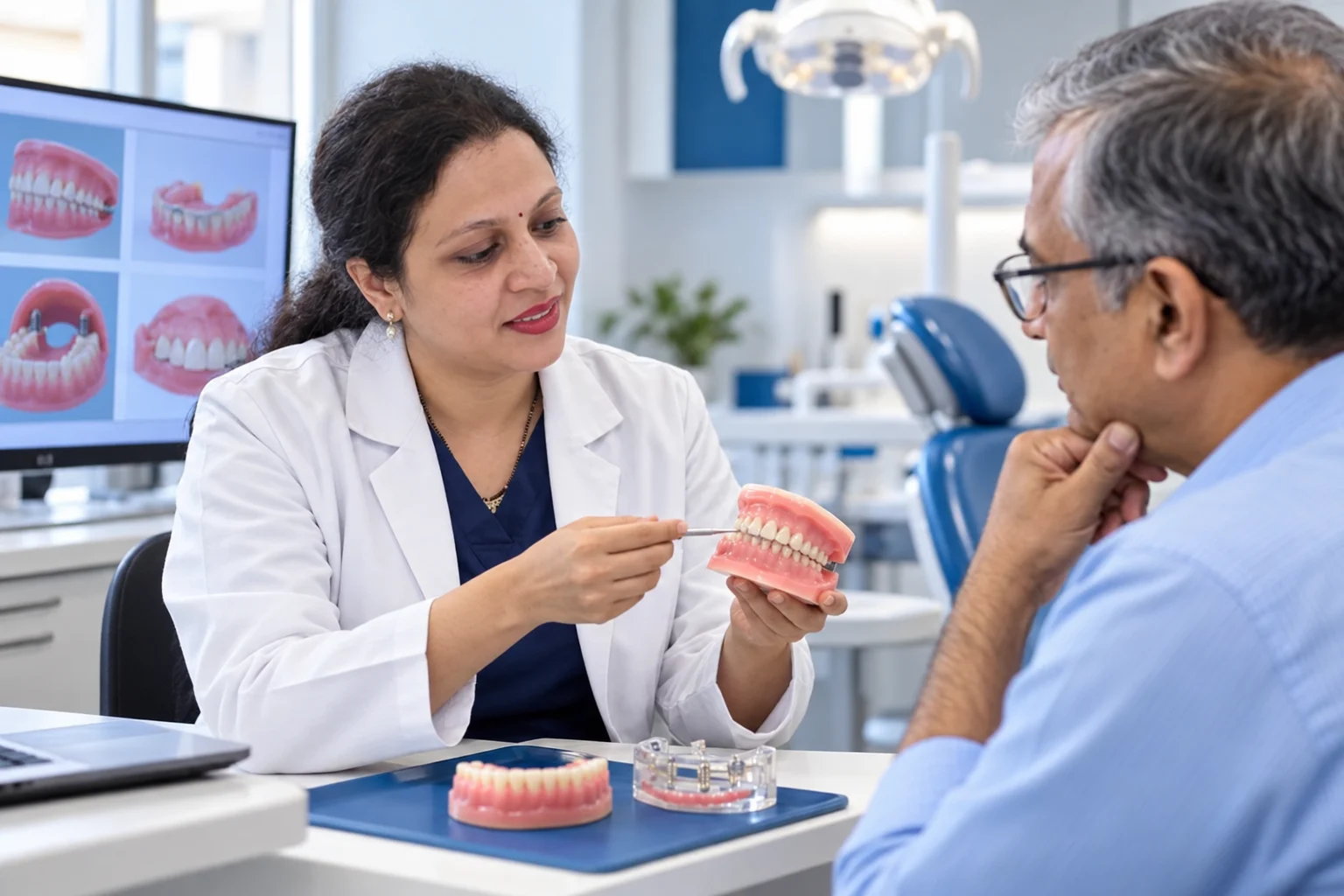
Discuss Your Missing Teeth
Explain which teeth are missing, any current denture problems, your comfort or appearance concerns and what you hope to achieve.
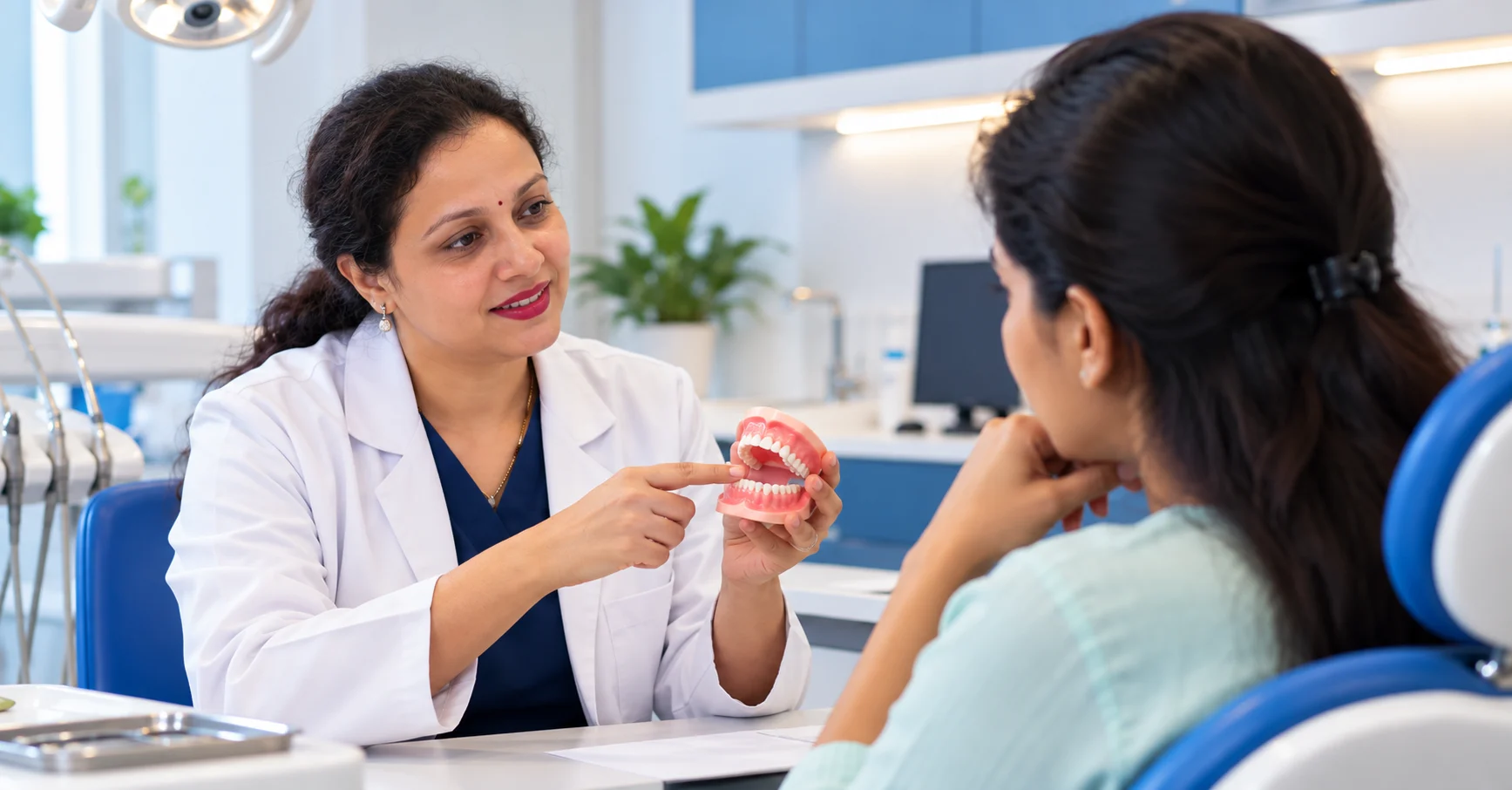
Assess Teeth, Gums & Bone
The assessment may include remaining teeth, periodontal condition, gum tissues, ridge shape, bone support, bite and other factors relevant to denture planning.
Plan the Denture
The appropriate option is discussed based on the number of missing teeth, remaining teeth, gum and bone health, bite, expectations, time and budget.
Assessment, Fit & Next Steps
If additional information is needed, X-rays, CBCT, intraoral scanning, impressions, photographs or occlusal records may be used. The findings help determine the appropriate denture design and follow-up plan.
Different Missing-Tooth Situations May Need Different Approaches
Missing teeth can be managed with complete, partial, flexible or implant-supported dentures, as well as other replacement options. The appropriate approach depends on your anatomy, remaining teeth, gums, bone, bite, expectations, time and budget.
| Option | Suitable For | Advantages | Limitations | Treatment Time | Maintenance |
|---|---|---|---|---|---|
| Complete Dentures | Patients who have lost all teeth in an upper or lower arch | Replaces an entire arch, can restore chewing and may improve speech and lip or facial support | Removable; lower dentures may move, bone continues to remodel and periodic adjustment may be needed | Depends on assessment, records, denture design and laboratory work | Cleaning, periodic examinations, adjustments, repair or replacement as needed |
| Partial Dentures | Patients with selected missing teeth and remaining natural teeth | Replaces missing teeth while retaining appropriate natural teeth | Suitability depends on remaining teeth, gums, bone, bite, cleaning needs and design | Depends on the number and position of missing teeth and the selected design | Denture and natural-tooth cleaning with periodic assessment and adjustment |
| Flexible Dentures | Selected partial cases where a flexible removable appliance may be appropriate | Flexible, removable and can reduce the visibility of metal clasps in selected cases | Not automatically better; may have limitations in rigidity, force distribution, adjustment, repair and relining | Depends on case assessment and appliance design | Cleaning, periodic assessment and management of fit or tissue movement |
| Implant-Supported Dentures | Patients seeking improved retention and support from an implant-retained removable denture | Combines implants with a removable denture to improve retention and support | Requires implant assessment and surgery; upper-jaw cases may be more demanding | Depends on implant planning, healing, records and prosthetic stages | Cleaning, gum and implant examinations, attachment checks, relining, repair and replacement of worn inserts when required |
| Denture Adjustment / Replacement | Patients with looseness, sore spots, worn teeth, fractures, bite changes or significant fit changes | Can improve fit and function when adjustment, relining, rebasing, repair or replacement is appropriate | A new denture may be needed when teeth are worn, fractures recur, the bite is wrong, the base is severely damaged or the ridge has changed substantially | Depends on whether adjustment, reline, rebase, repair or a new denture is required | Regular review helps identify changes in fit, wear and tissue health |
Complete Dentures
- Suitable For
- Patients who have lost all teeth in an upper or lower arch
- Advantages
- Replaces an entire arch, can restore chewing and may improve speech and lip or facial support
- Limitations
- Removable; lower dentures may move, bone continues to remodel and periodic adjustment may be needed
- Treatment Time
- Depends on assessment, records, denture design and laboratory work
- Maintenance
- Cleaning, periodic examinations, adjustments, repair or replacement as needed
Partial Dentures
- Suitable For
- Patients with selected missing teeth and remaining natural teeth
- Advantages
- Replaces missing teeth while retaining appropriate natural teeth
- Limitations
- Suitability depends on remaining teeth, gums, bone, bite, cleaning needs and design
- Treatment Time
- Depends on the number and position of missing teeth and the selected design
- Maintenance
- Denture and natural-tooth cleaning with periodic assessment and adjustment
Flexible Dentures
- Suitable For
- Selected partial cases where a flexible removable appliance may be appropriate
- Advantages
- Flexible, removable and can reduce the visibility of metal clasps in selected cases
- Limitations
- Not automatically better; may have limitations in rigidity, force distribution, adjustment, repair and relining
- Treatment Time
- Depends on case assessment and appliance design
- Maintenance
- Cleaning, periodic assessment and management of fit or tissue movement
Implant-Supported Dentures
- Suitable For
- Patients seeking improved retention and support from an implant-retained removable denture
- Advantages
- Combines implants with a removable denture to improve retention and support
- Limitations
- Requires implant assessment and surgery; upper-jaw cases may be more demanding
- Treatment Time
- Depends on implant planning, healing, records and prosthetic stages
- Maintenance
- Cleaning, gum and implant examinations, attachment checks, relining, repair and replacement of worn inserts when required
Denture Adjustment / Replacement
- Suitable For
- Patients with looseness, sore spots, worn teeth, fractures, bite changes or significant fit changes
- Advantages
- Can improve fit and function when adjustment, relining, rebasing, repair or replacement is appropriate
- Limitations
- A new denture may be needed when teeth are worn, fractures recur, the bite is wrong, the base is severely damaged or the ridge has changed substantially
- Treatment Time
- Depends on whether adjustment, reline, rebase, repair or a new denture is required
- Maintenance
- Regular review helps identify changes in fit, wear and tissue health
A Personalized Approach to Denture Care
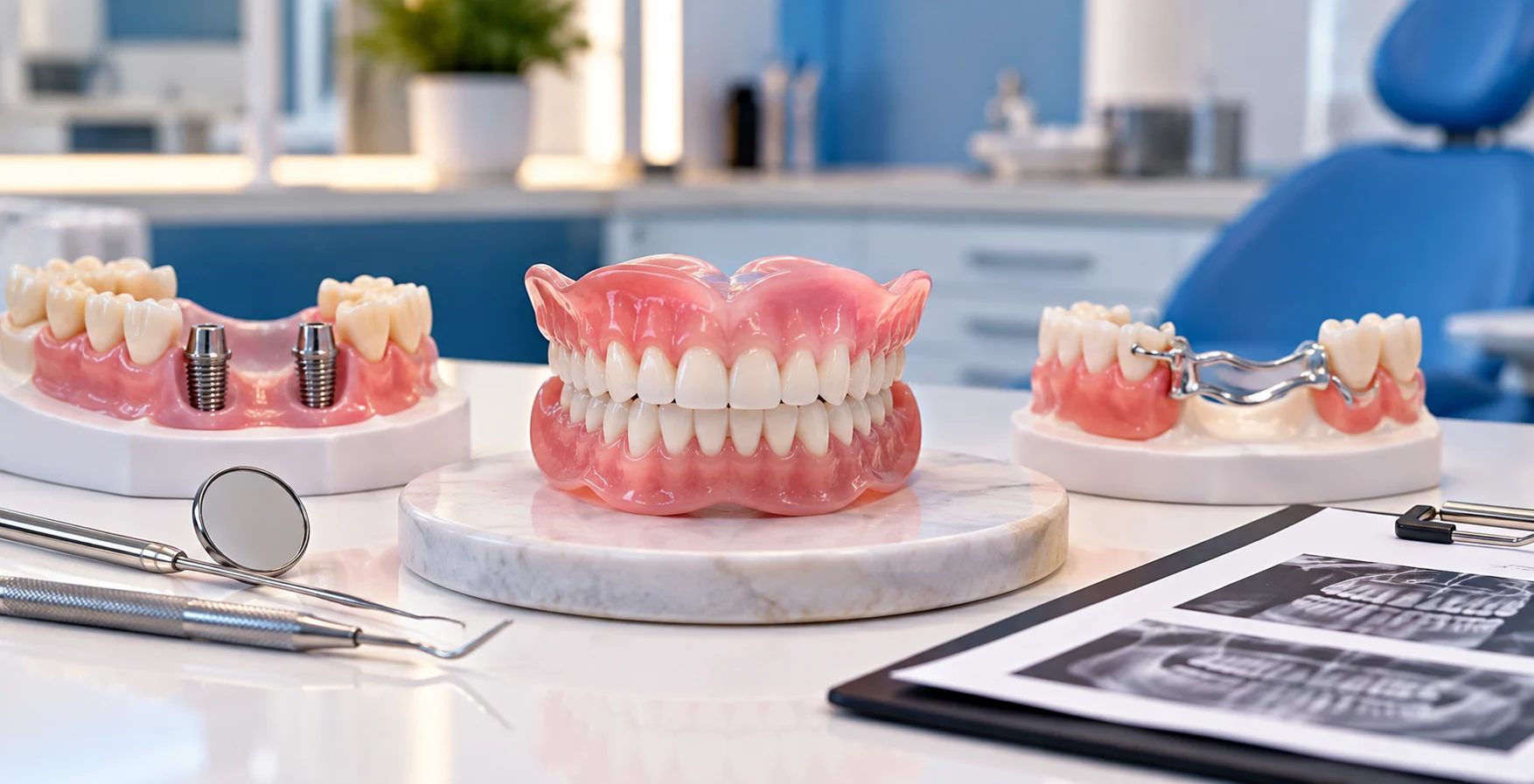
No two missing-tooth situations are exactly the same. Denture planning is influenced by the number of missing teeth, remaining teeth, gum and bone health, bite, facial support, aesthetics, medical factors, expectations, time and budget. For this reason, the denture should be planned after individual assessment.
Factors We Consider
- • Age
- • Oral hygiene
- • Previous dental treatment
- • Existing restorations
- • Dental history
- • Diet
Individual Denture Factors
- • Medical conditions
- • Medications
- • Risk of tooth decay
- • Gum health
- • Current symptoms
- • Clinical findings
Your denture should be based on your individual needs. At Dr. Kashmira Jathar Dental Clinic, denture planning focuses on understanding the missing teeth, remaining teeth, gums, bone, bite, comfort, aesthetics and long-term maintenance needs before selecting an appropriate option.
Meet Dr. Kashmira Jathar, BDS
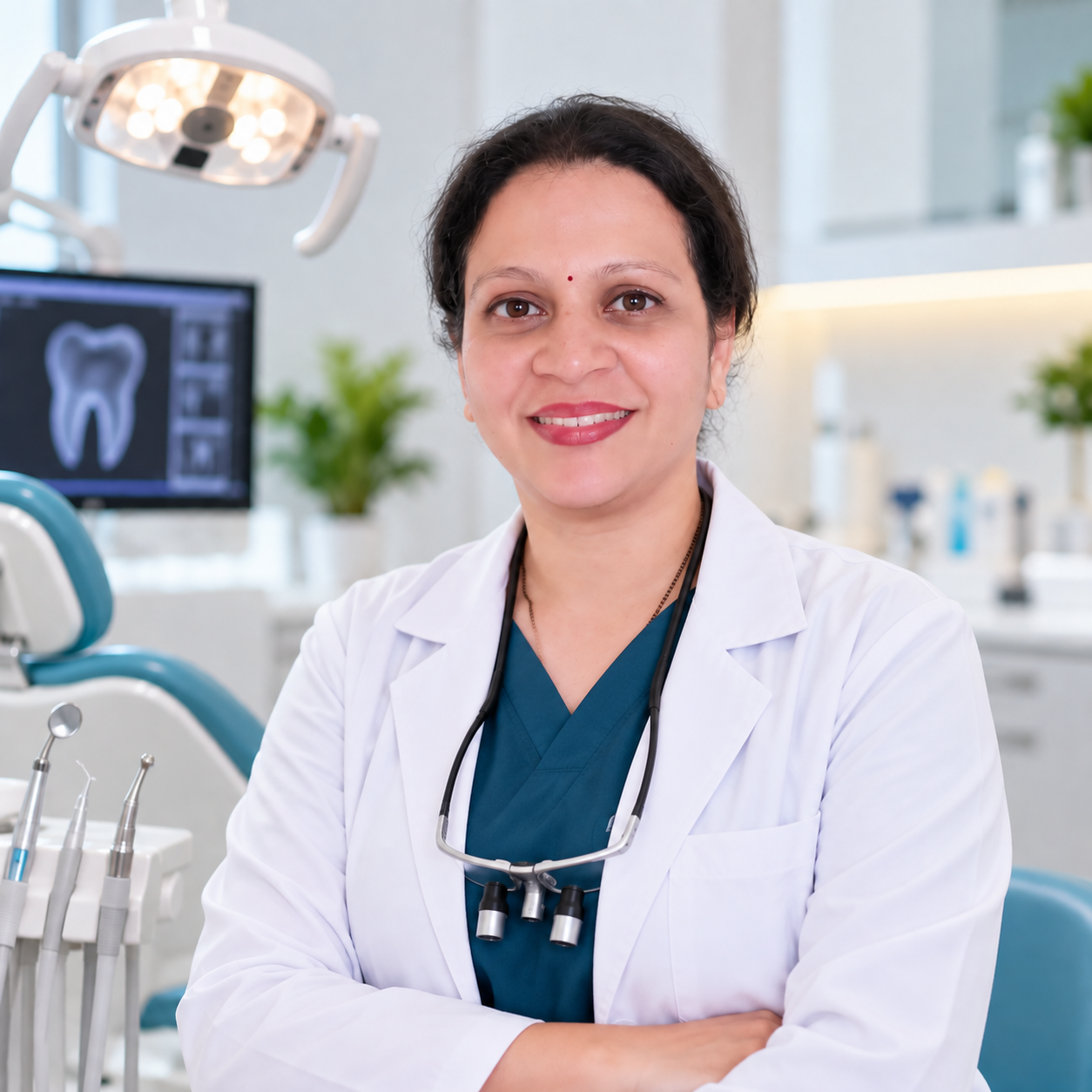
Dr. Kashmira Jathar is a BDS-qualified dentist with more than 20 years of dental practice experience, registered with the Maharashtra State Dental Council (Reg. No. A-14093 M, 2007). She is a member of the Indian Dental Association and the Saturday Club.
Her practice focuses on individual assessment and planning for missing teeth, including complete, partial, flexible and implant-supported denture options where appropriate.
Dentures & Missing Teeth FAQs
Dentures are removable dental appliances used to replace missing teeth. Depending on the situation, they may be complete, partial, flexible or implant-supported.
Visiting the Clinic
Elegance Smile Studio is located in Pimple Saudagar, Pune, serving patients across Pimpri-Chinchwad and the surrounding areas for missing-tooth and denture care.
Related Services

Book a Dentures & Missing Teeth Appointment
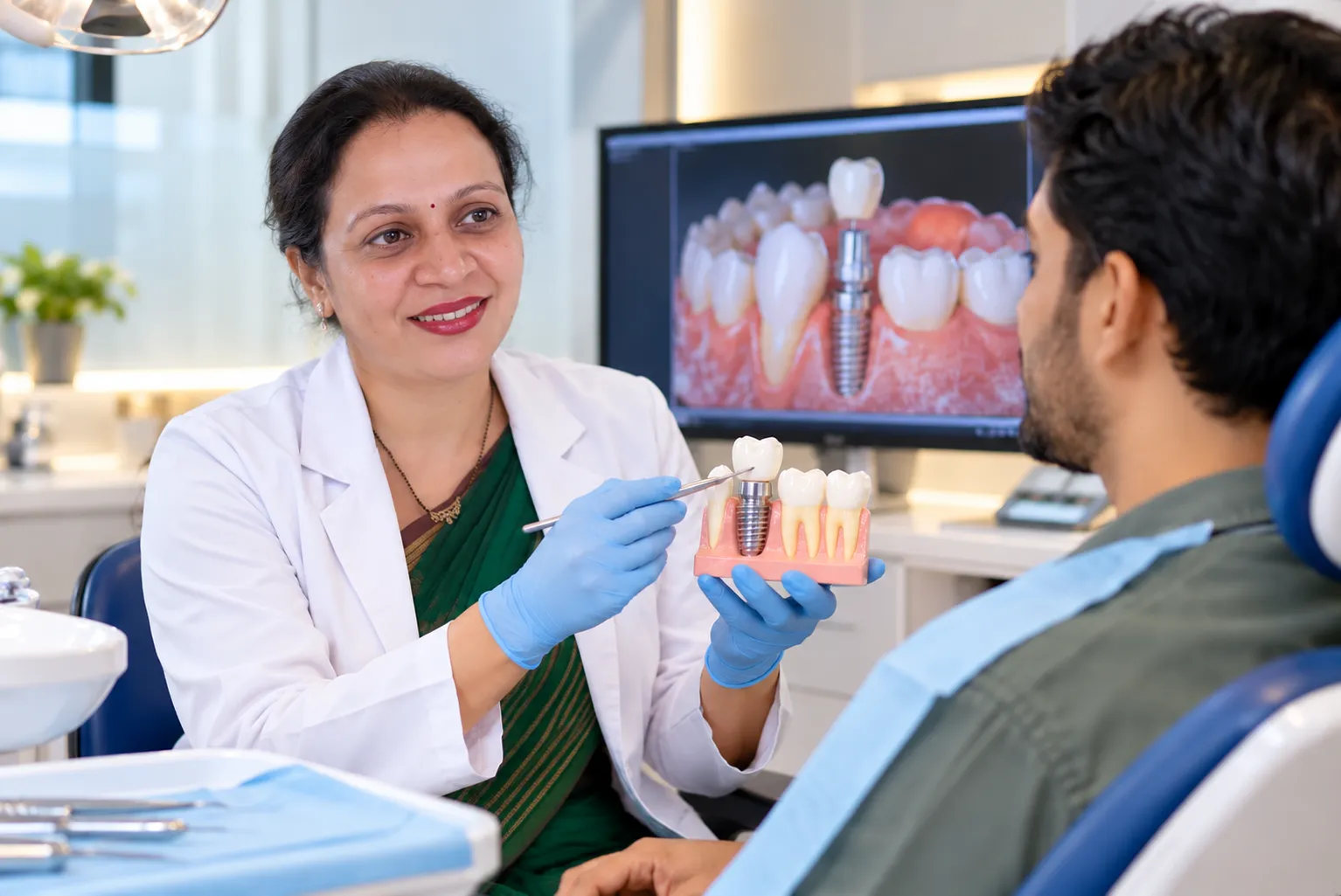
Whether you are missing one or several teeth, need a complete or partial denture, are considering a flexible or implant-supported option, or have an existing denture that needs attention, the first step is an individual assessment. Call or WhatsApp to arrange a consultation with Dr. Kashmira Jathar, BDS.
Sources & Review
Information on complete, partial, flexible and implant-supported dentures, denture fit, maintenance, relining, rebasing and treatment planning is based on the Dentures & Missing Teeth patient guide. Treatment suitability varies by individual anatomy, remaining teeth, gums, bone, bite, expectations and clinical findings. Page content reviewed by Dr. Kashmira Jathar, BDS.