

Pediatric Dentistry in
Pimple Saudagar, Pune
Gentle, preventive dental care for children from the first baby tooth through the teenage years, with care planned around their age, developing teeth, oral health and individual needs.
Chat on WhatsApp
Practice
Your Child's Dental Care
Starts With an Individual Assessment
20
Primary Teeth in Most Children
2×
Daily Brushing With Fluoride Toothpaste
7
First Orthodontic Evaluation By Age
“Children's dental care should be planned around their age, developing teeth, oral health, cavity risk and individual needs. Early preventive care can help children maintain healthy teeth as they grow.”
– Dr. Kashmira Jathar Dental Clinic
Which Pediatric Dental Care Do You Need?
Signs Your Child May Need a Dental Assessment
You do not need to know what treatment your child needs before booking. An individual assessment helps determine the appropriate next step.
 The Problem
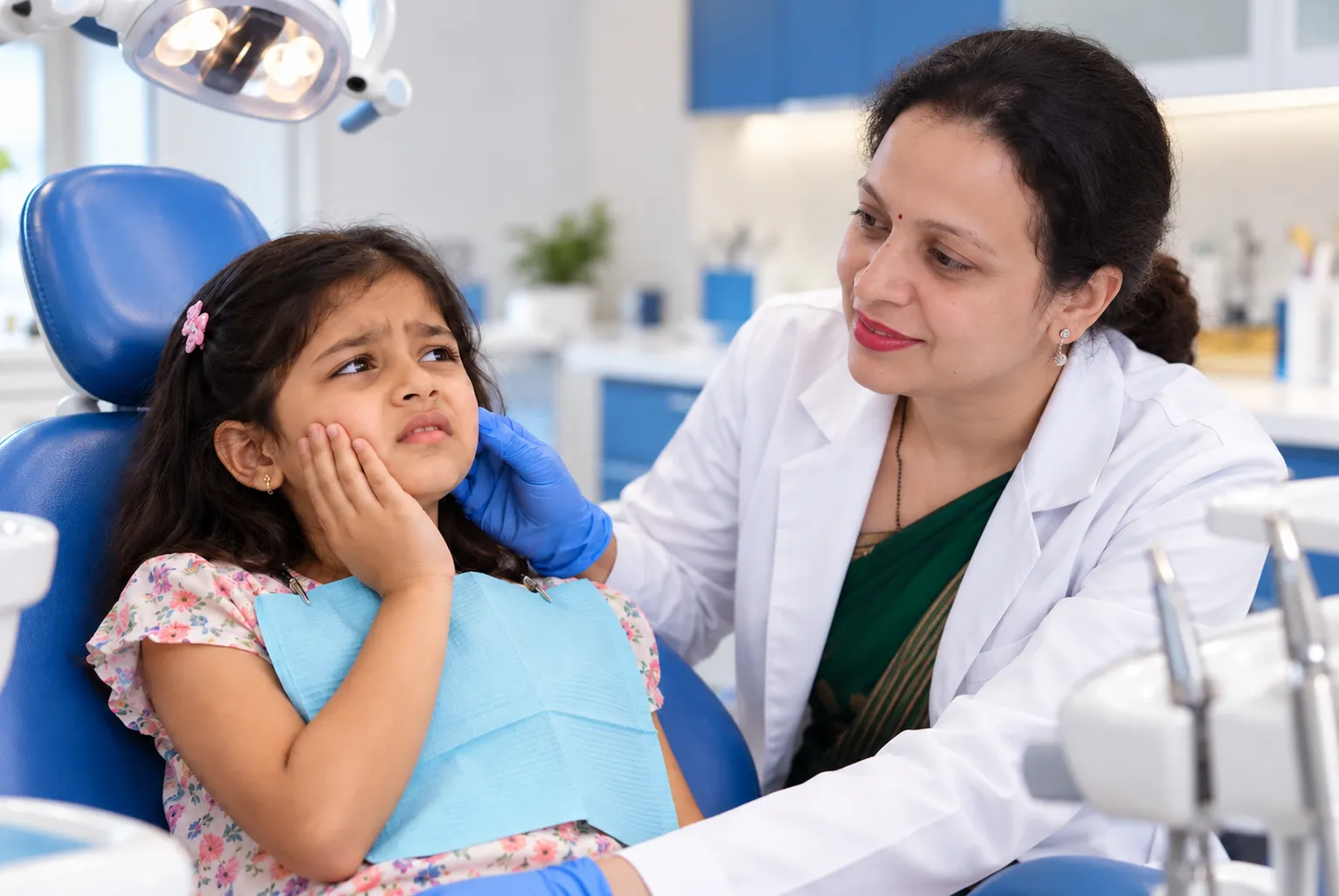
Your child has a toothache or sensitivity
A child-friendly dental assessment
The teeth, gums, developing bite and eruption pattern can be assessed at a pace suited to the child, with X-rays or other investigations only when clinically indicated.
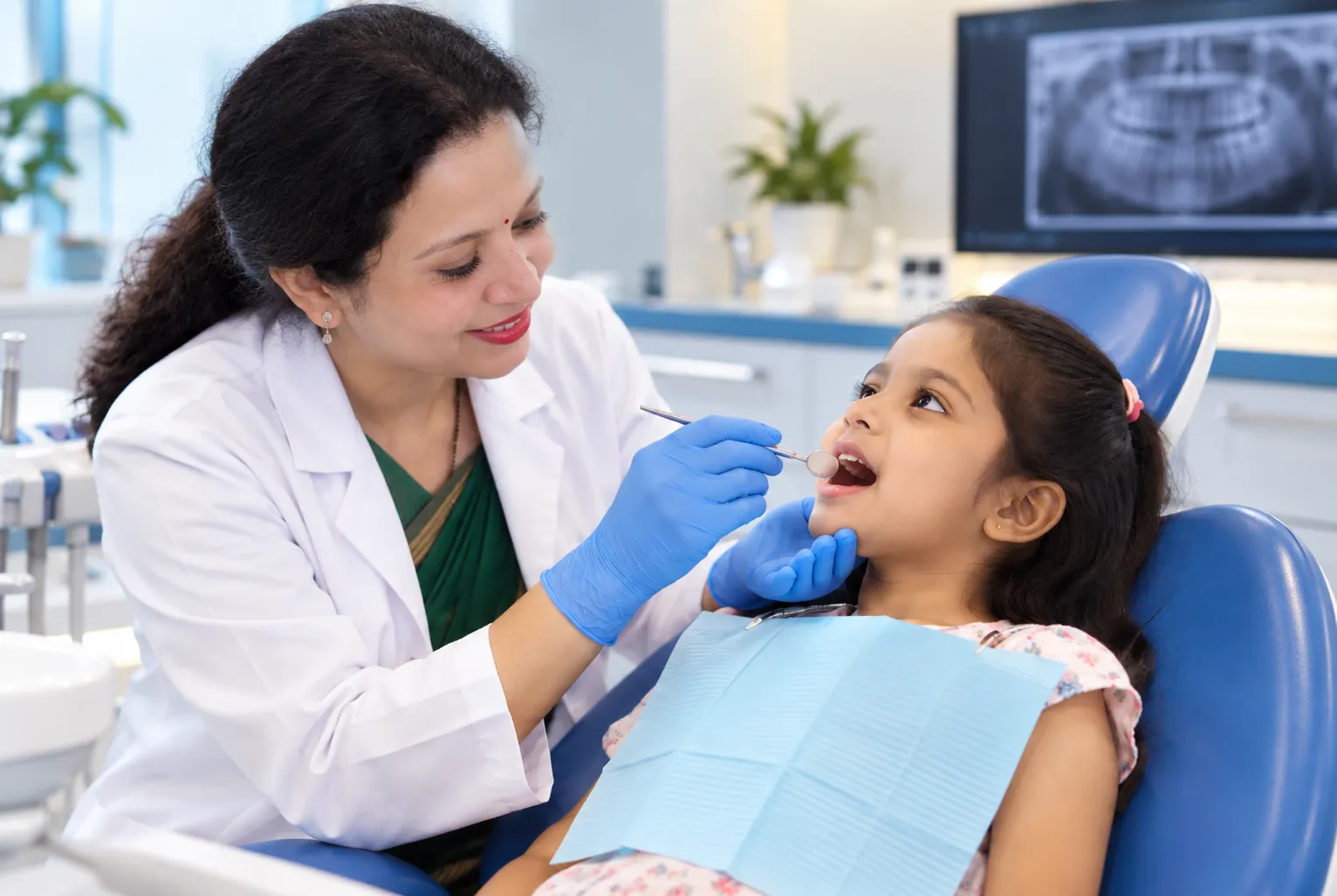
Tooth sensitivity or toothache can be related to cavities, enamel defects, eruption or other dental problems and should be assessed.
 The Problem
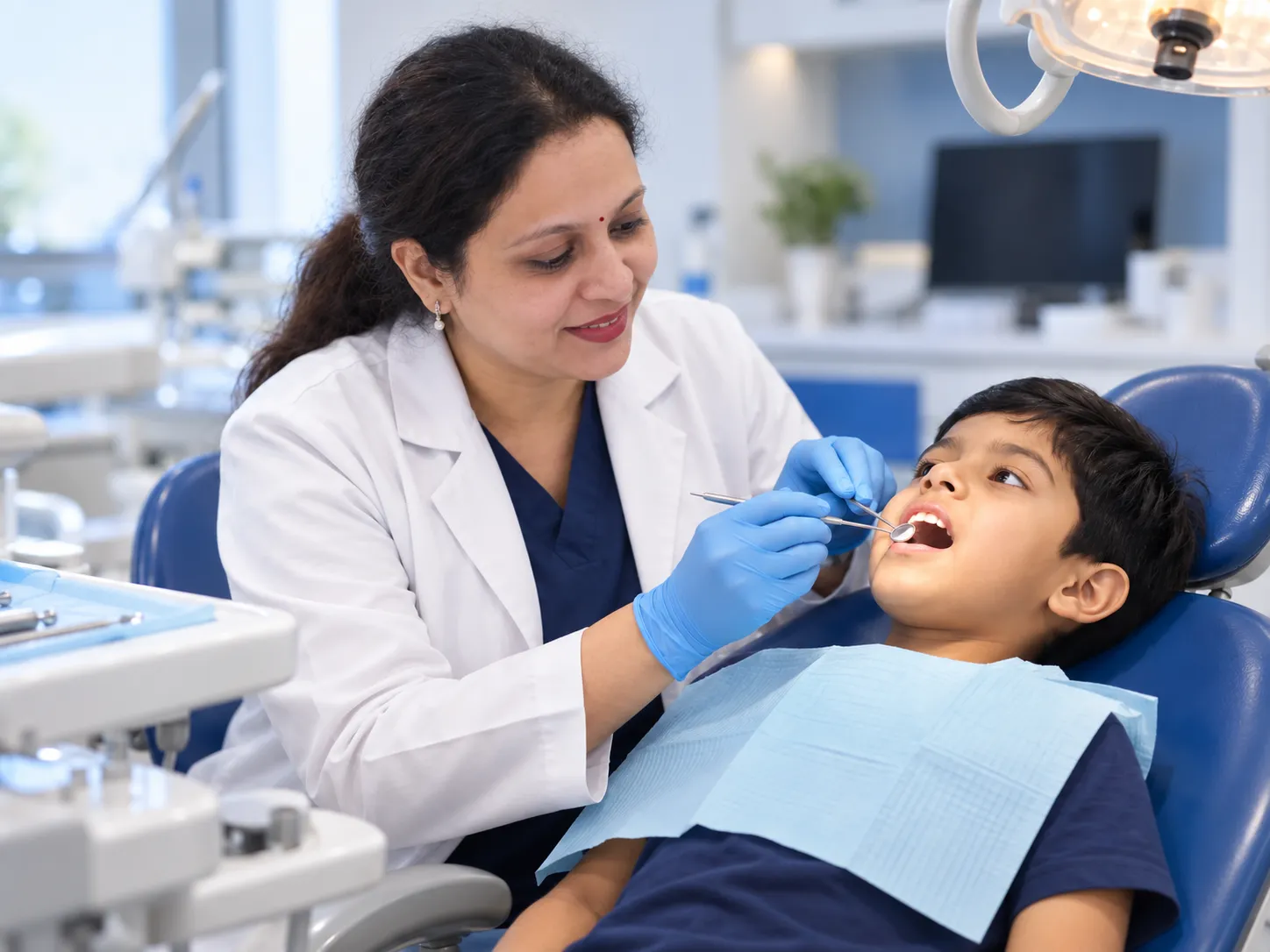
Your child has cavities or visible spots
Cavity prevention and treatment
Treatment may include preventive care, fluoride, sealants, fillings, stainless steel crowns, pulp therapy or extraction when a tooth is not predictably restorable.
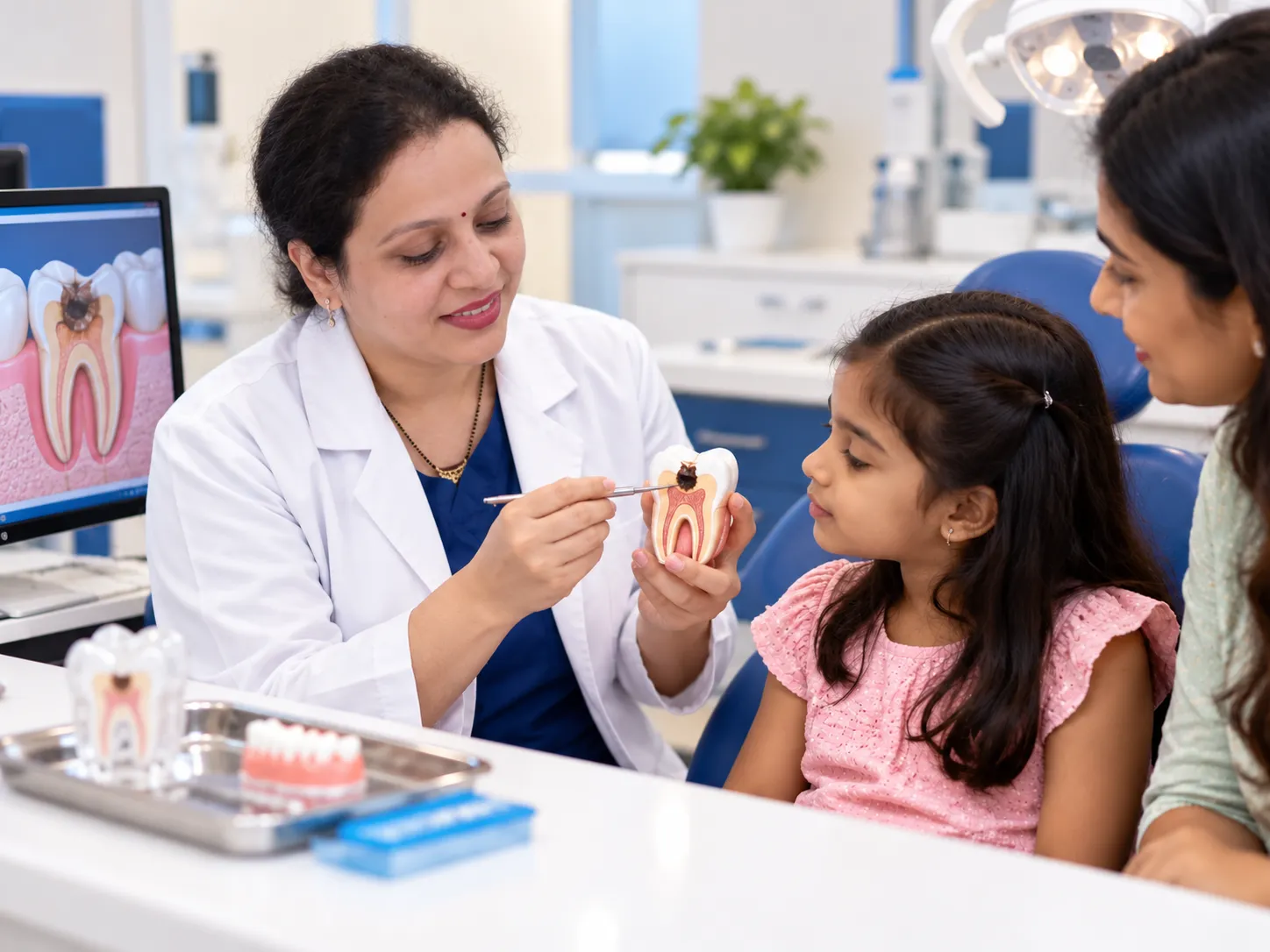
White, brown or black spots, holes, sensitivity, pain, swelling or difficulty brushing an area can be signs of tooth decay.
 The Problem
You want to monitor growing teeth
Regular pediatric dental check-ups
Regular examinations help monitor primary and permanent teeth, eruption, jaw growth, oral hygiene, cavity risk and developing bite problems.
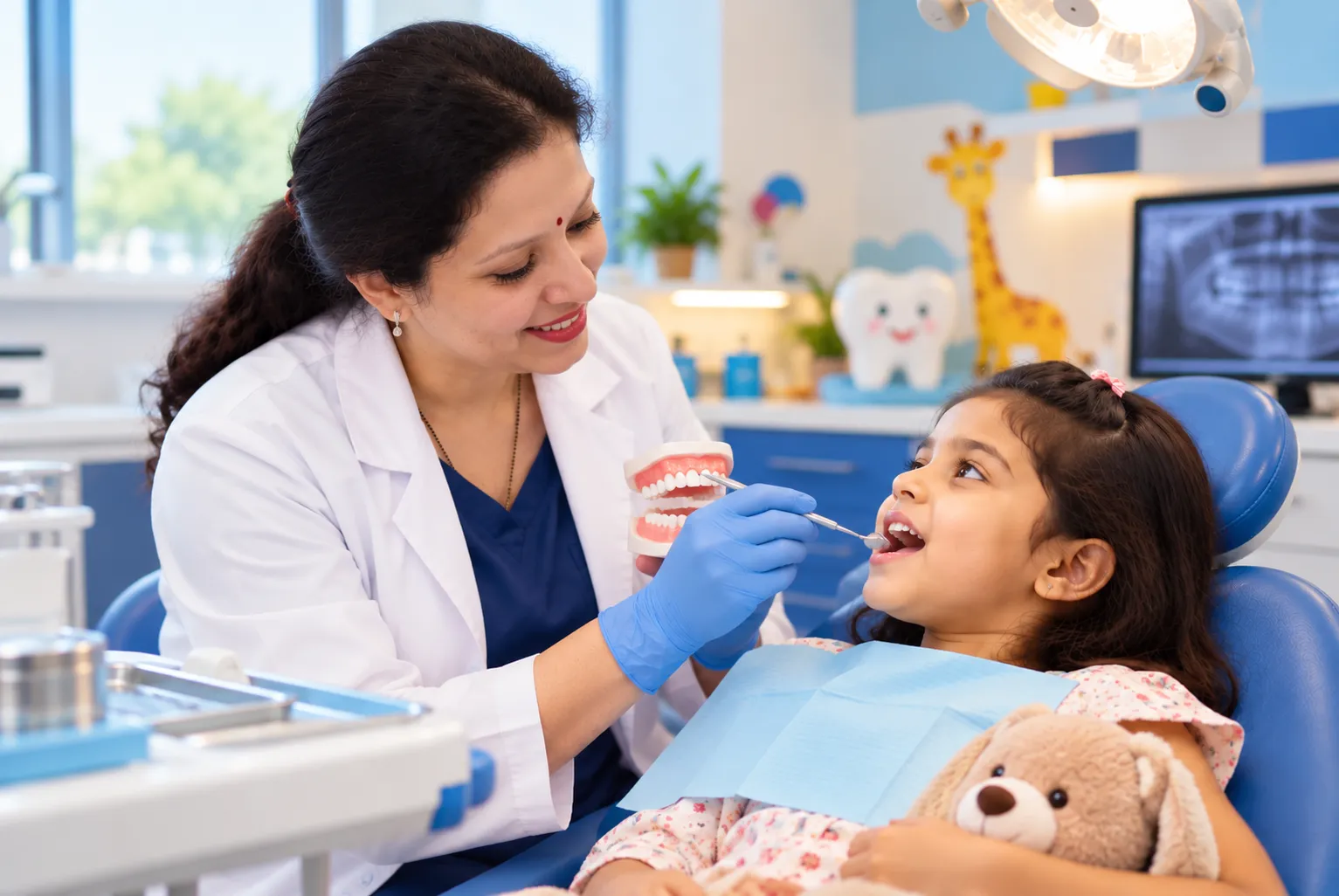
Children's teeth and jaws develop continuously, so spacing, eruption, bite, enamel, gum health and oral habits can change with age.
 The Problem
Your child has a developing bite concern
Pediatric orthodontic assessment
The AAO recommends an initial orthodontic evaluation by age 7. Depending on the findings, monitoring, interceptive treatment or later comprehensive orthodontic treatment may be discussed.

Crowding, spacing, crossbite, overbite, underbite, open bite, protruding teeth or unusual eruption may need monitoring.
What Are Pediatric Dentistry Treatment Options?
Dentures can replace missing teeth with complete, partial, flexible or implant-supported options. The appropriate choice depends on the number of missing teeth, remaining teeth, gum and bone health, bite, aesthetics, comfort, medical factors, time and budget.
Children's Dental Care Can Help With
The right denture depends on your anatomy, number of missing teeth, remaining teeth, bone and gum health, bite, expectations and long-term maintenance needs.

Gentle Dental Care for Growing Smiles
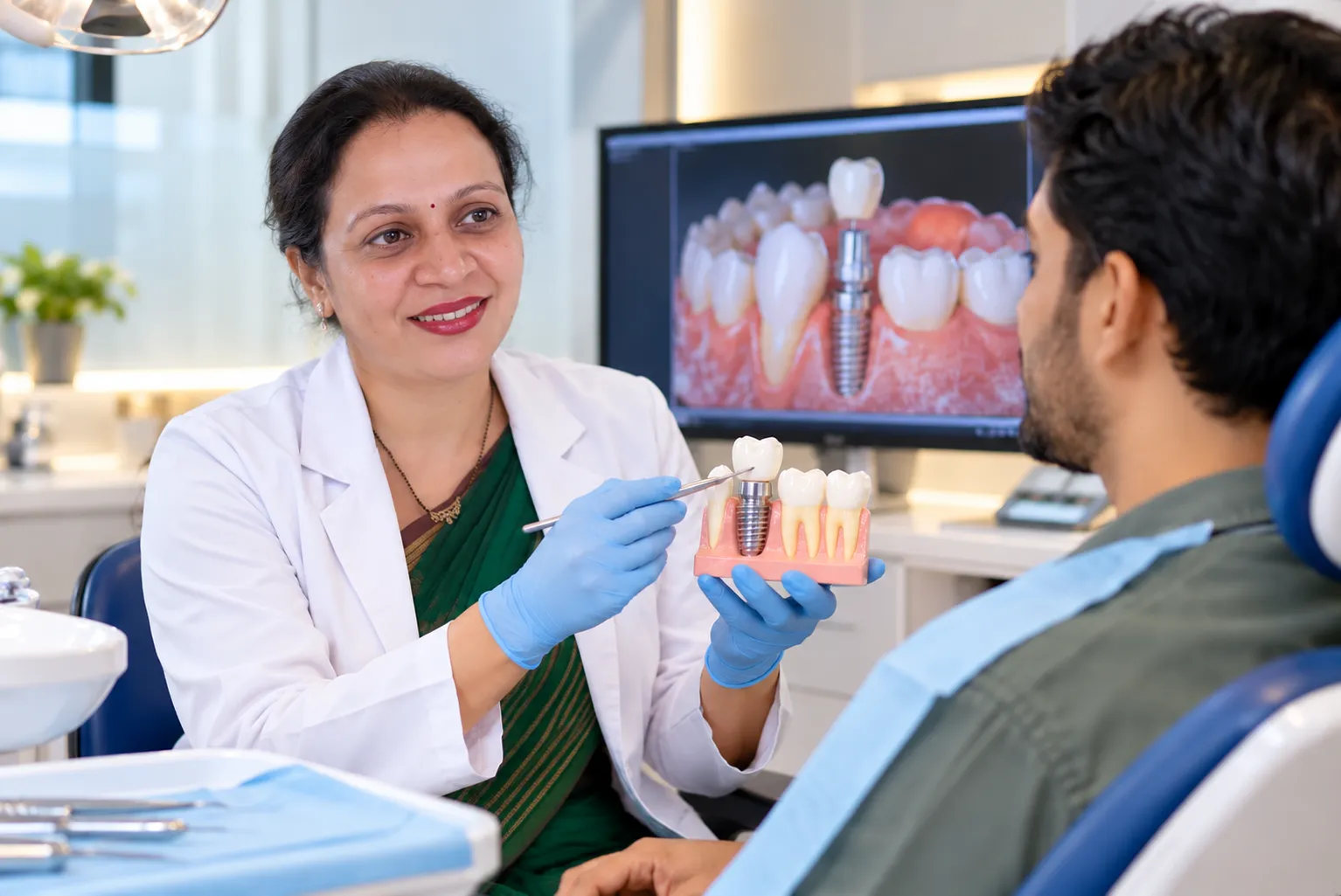
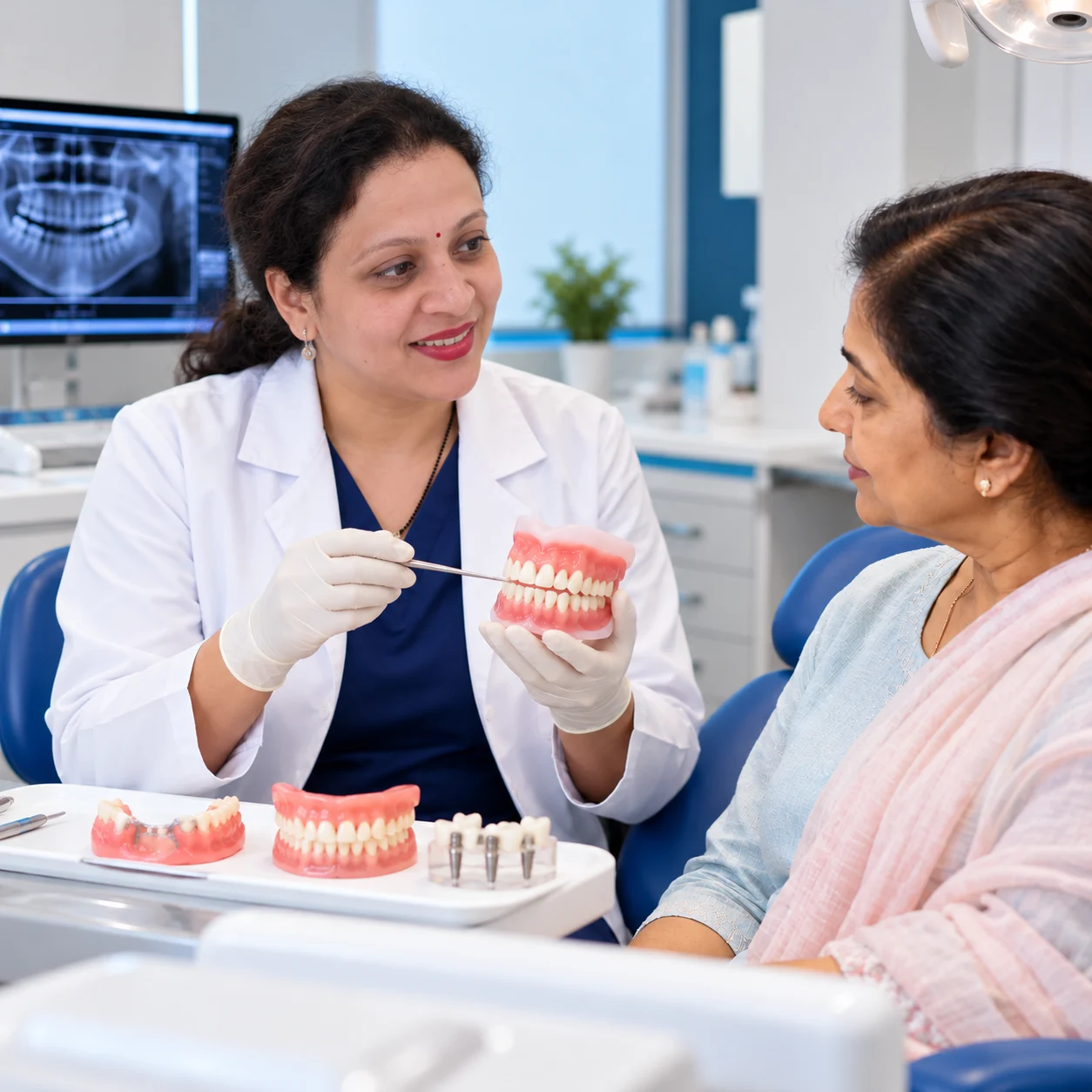
Complete, partial, flexible and implant-supported dentures can be considered according to your missing teeth, remaining teeth, gums, bone, bite, comfort, aesthetics and individual treatment needs.

Kids Dental Check-Up
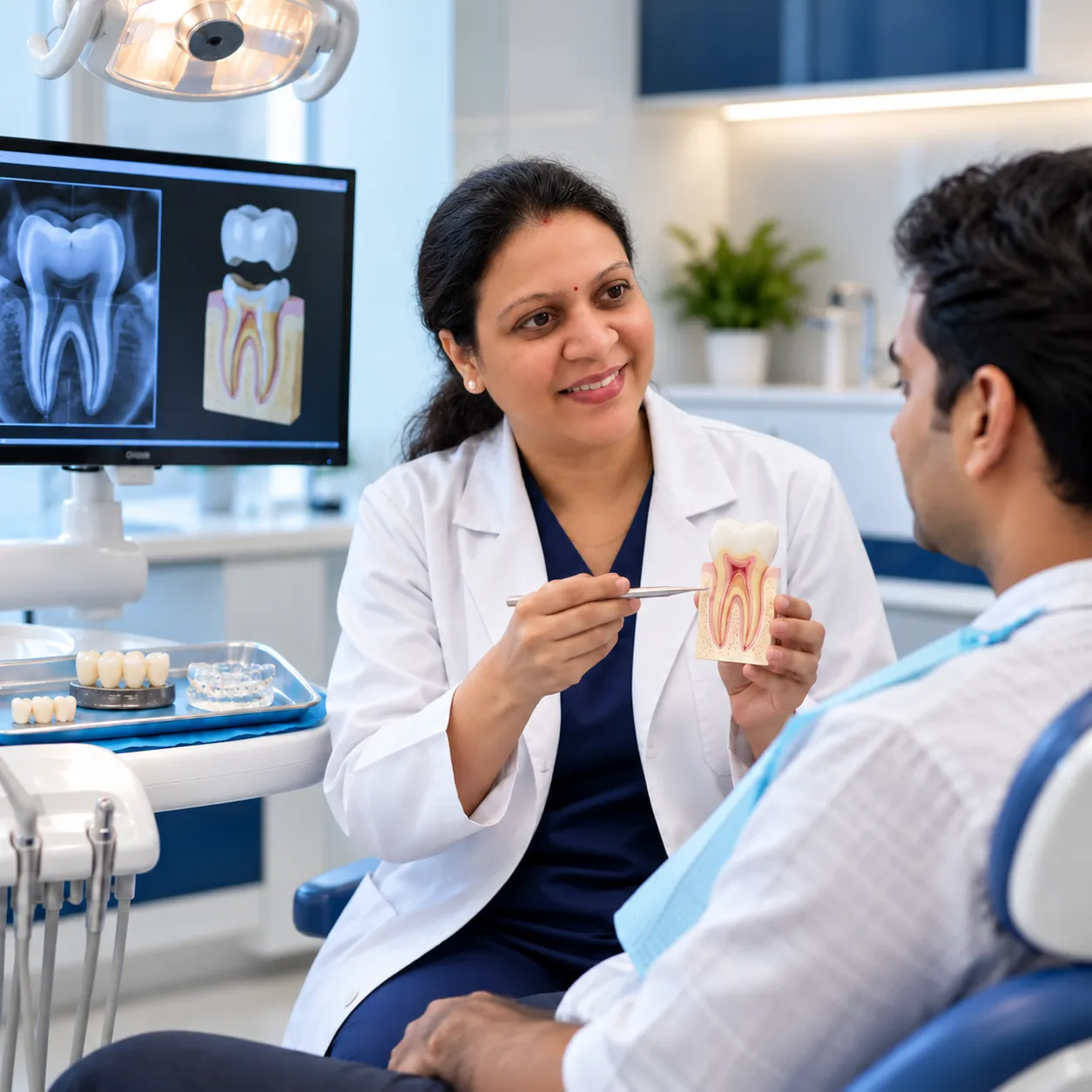
Regular dental examinations monitor primary and permanent teeth, cavities, plaque, gum health, eruption, spacing, bite, jaw growth, enamel defects, trauma and oral habits.

Children's Cavity Treatment
Depending on the tooth and extent of decay, treatment may include fluoride and preventive care, sealants, fillings, stainless steel crowns, pulp therapy or extraction when necessary.

Fluoride & Preventive Care
Fluoride strengthens enamel and supports remineralisation. Preventive care also includes brushing guidance, diet advice, sealants where appropriate and regular examinations.
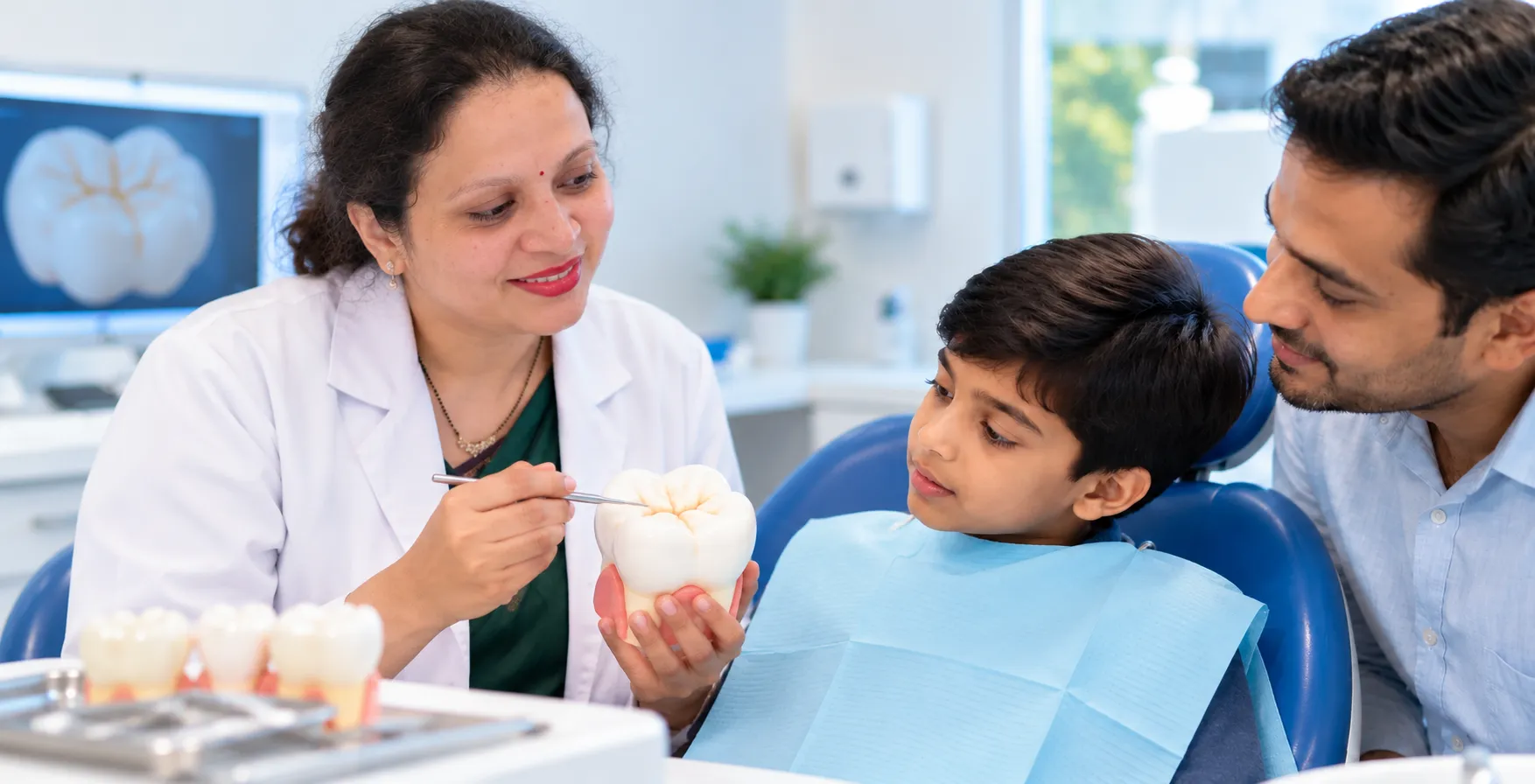
Dental Sealants
Sealants can create a protective barrier over deep pits and fissures, especially on newly erupted permanent molars and in children with elevated cavity risk.
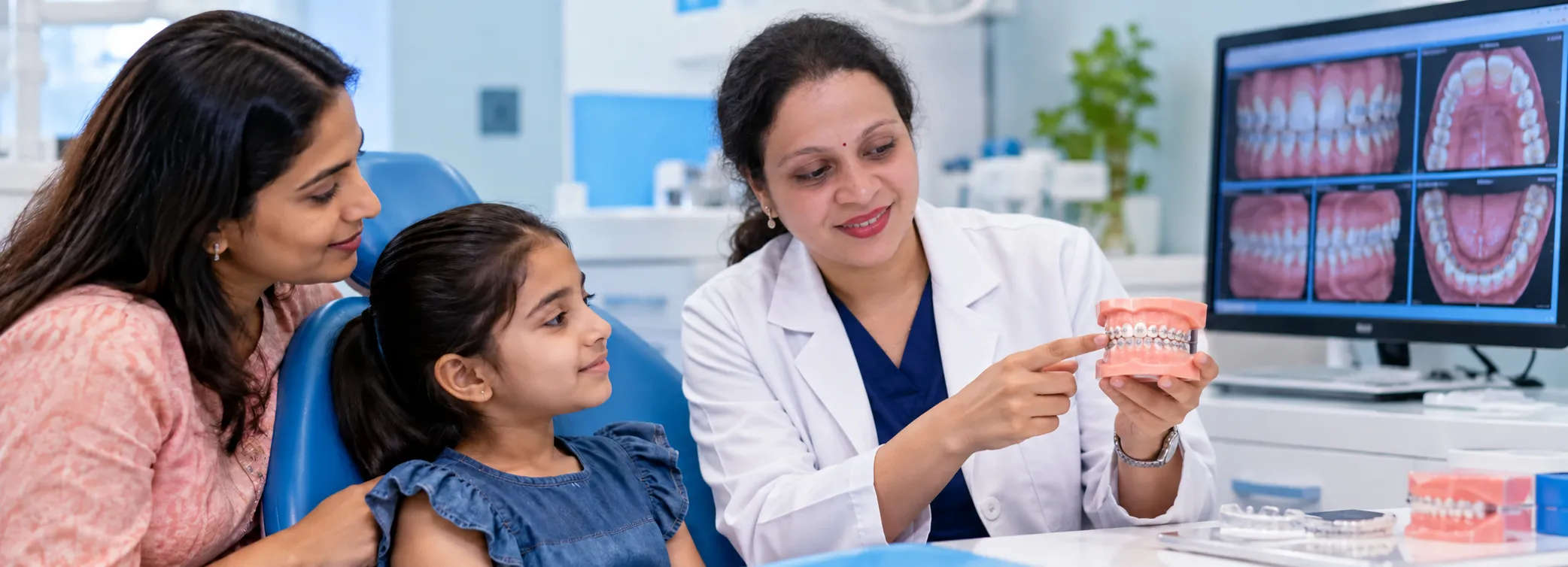
Pediatric Braces & Orthodontic Assessment
Growing children can be assessed for crowding, spacing, crossbite, overbite, underbite, open bite, protruding teeth, abnormal eruption and selected jaw-development problems.

Dental Emergencies & Trauma
Prompt assessment is important for severe toothache, facial swelling, dental trauma, significant bleeding and knocked-out permanent teeth. Breathing or swallowing difficulty with swelling requires emergency medical care.
Planning the Right Care for Your Child
Denture planning may include clinical examination, periodontal assessment, X-rays when indicated, CBCT when 3D information is needed, intraoral scanning or impressions, occlusal analysis, photographs and assessment of remaining teeth and bone support.
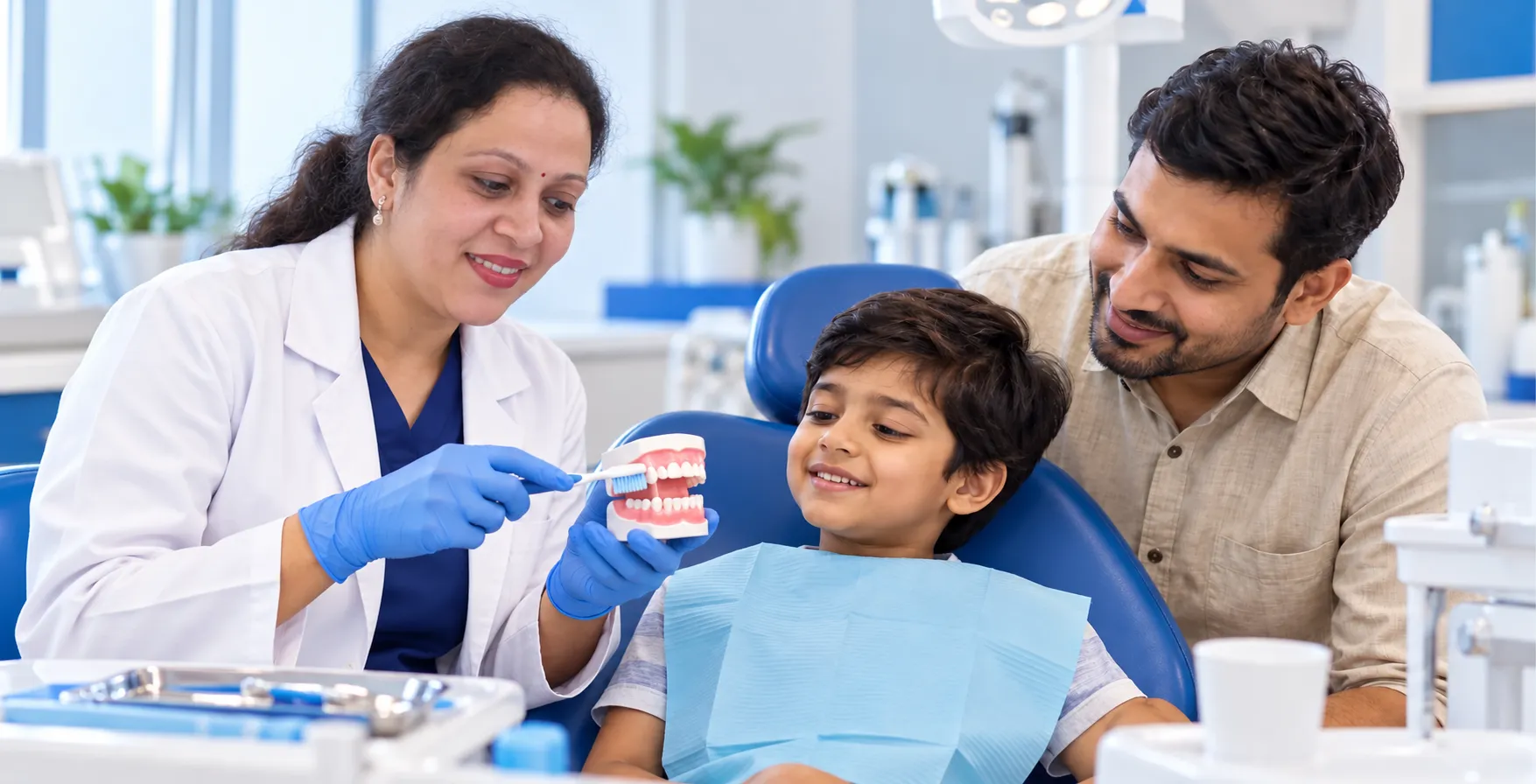
Fluoride Protection
Fluoride strengthens enamel, supports remineralisation and reduces demineralisation and cavity risk. Sources can include fluoride toothpaste and professionally applied fluoride varnish when appropriate.
Dental Sealants
Sealants create a physical barrier over deep grooves and fissures, especially on newly erupted permanent molars and in children with elevated cavity risk.

Clinical Assessment
Assessment may include clinical examination, photographs, X-rays or other investigations when clinically necessary. Radiation exposure is kept as low as reasonably necessary.

Worried About Your Child's Dental Visit?
Choosing a denture can feel difficult when you are unsure about comfort, appearance, retention or the differences between treatment options. An assessment can help you understand the choices available for your individual situation.
If You’re Unsure About Your Child’s Dental Care
If Your Child Feels Concerned
What Happens During a Pediatric Dental Visit
Seven stages, from discussing your child's concern to planning preventive care, treatment or follow-up.
Discuss Your Child's Concern
Parents and the child explain why they have come and describe any symptoms.
Your child is heard first. No assumptions.
Review Relevant Information
The dentist asks about medical and dental history, diet, habits, brushing and fluoride.
Full picture. Before we look.
Examine Teeth & Gums
The teeth, gums, bite and development are assessed at a pace suited to the child.
Gentle assessment. Child-friendly pace.
Investigate When Necessary
X-rays or other investigations may be recommended when clinically indicated.
Only when information is needed.
Explain the Findings
The dentist explains what has been found in terms parents and children can understand.
Clear findings. Plain language.

When Should Your Child See a Dentist?
Missing teeth can affect chewing, speech, bite support and facial or lip support. A denture assessment helps determine which replacement options may be suitable for your individual situation.
Will I Need X-Rays or Other Records?
Depending on your case, assessment may include X-rays, panoramic imaging, CBCT when 3D information is needed, intraoral scanning or impressions, occlusal analysis and photographs.
Dental Problems That May Need Attention
Looseness, sore spots, worn artificial teeth, fractures, changes in bite and altered fit can affect denture comfort and function and may need assessment.
When Urgent Medical Care Is Needed
If you have severe swelling that affects breathing or swallowing, seek immediate medical attention. These symptoms require urgent medical care rather than waiting for a routine denture appointment.
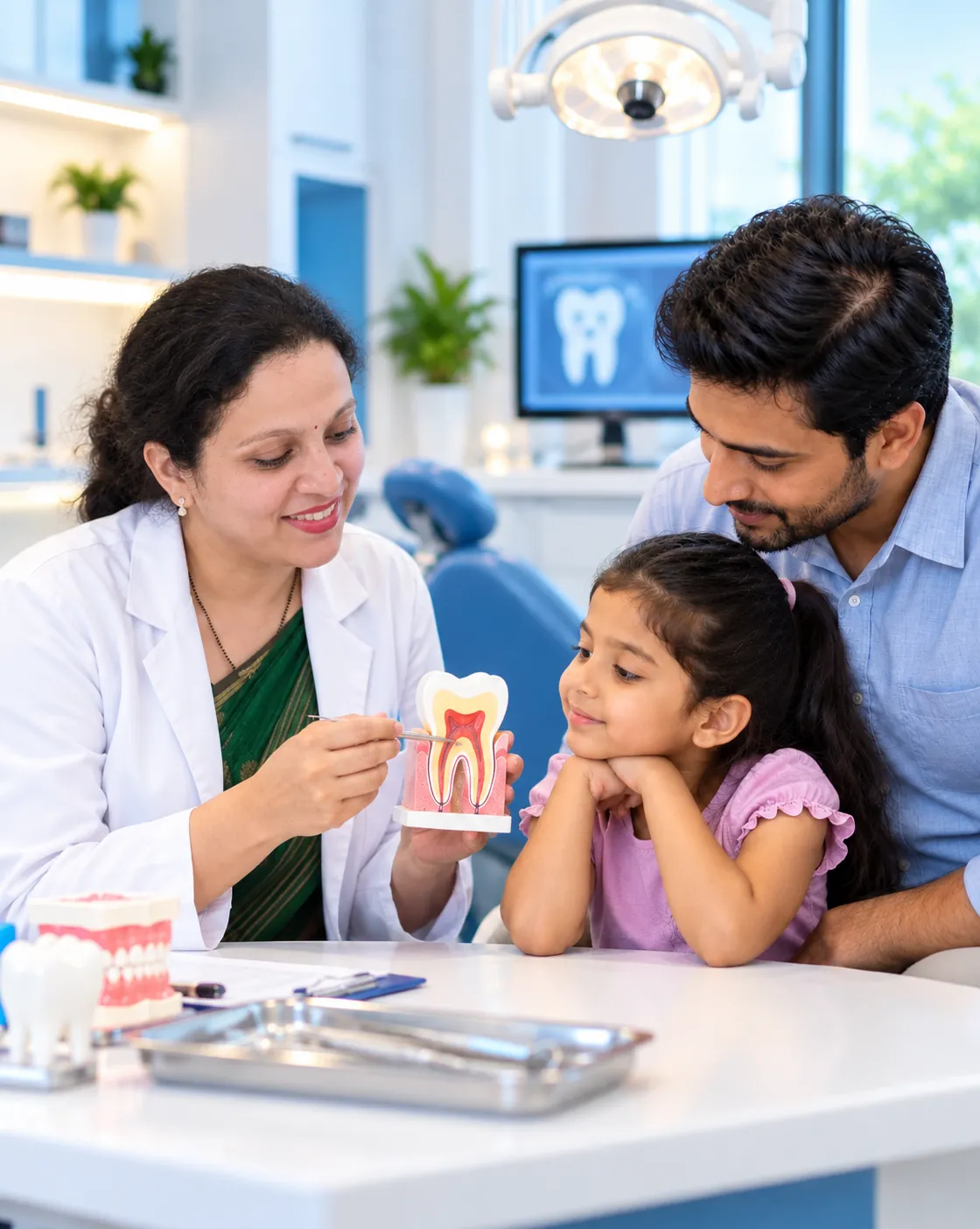
Common Pediatric Dental Concerns
Denture problems can develop as tissues and ridge shape change, artificial teeth wear or the fit of the denture changes. Assessment helps determine whether adjustment, relining, rebasing, repair or replacement is appropriate.

What Happens During a Pediatric Dental Visit?
Denture treatment begins with an individual assessment of your missing teeth, remaining teeth, gums, bone, bite and expectations. The appropriate denture option and follow-up needs are then discussed.
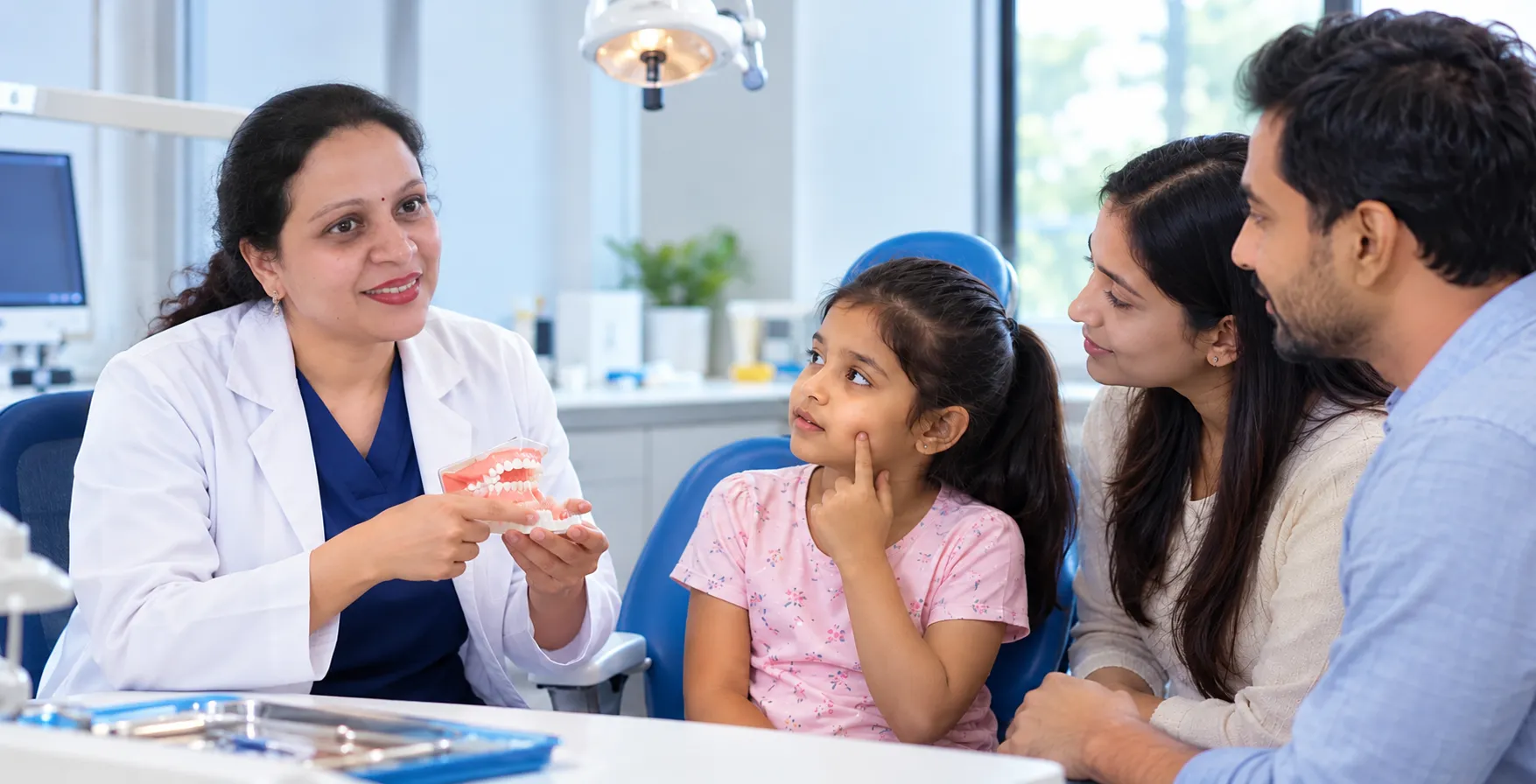
Discuss Your Child's Concern
Parents and the child explain why they have come and describe any symptoms or concerns.

Review Relevant Information
The dentist asks about medical and dental history, diet, habits, brushing and fluoride exposure.

Examine Teeth, Gums & Development
The teeth, gums, bite and developing dentition are assessed at a pace suited to the child.
Assessment, Fit & Next Steps
If additional information is needed, X-rays, CBCT, intraoral scanning, impressions, photographs or occlusal records may be used. The findings help determine the appropriate denture design and follow-up plan.
Different Missing-Tooth Situations May Need Different Approaches
Missing teeth can be managed with complete, partial, flexible or implant-supported dentures, as well as other replacement options. The appropriate approach depends on your anatomy, remaining teeth, gums, bone, bite, expectations, time and budget.
| Option | Suitable For | Advantages | Limitations | Treatment Time | Maintenance |
|---|---|---|---|---|---|
| Kids Dental Check-Up | Infants, children and adolescents needing routine monitoring or assessment | Monitors teeth, gums, eruption, bite, jaw growth, oral hygiene, cavity risk and developing concerns | A check-up does not replace daily brushing, fluoride use, healthy diet and appropriate preventive care | Depends on the child's age, cooperation and clinical needs | Regular examinations according to the child's individual risk and development |
| Cavity Prevention | Children with cavity risk or developing teeth needing preventive care | Includes fluoride, brushing guidance, diet advice, sealants where appropriate and monitoring | Prevention cannot guarantee that a child will never develop a cavity | Ongoing through regular home care and dental visits | Twice-daily fluoride brushing, healthy habits and regular dental examinations |
| Cavity Treatment | Children with cavities or teeth affected by decay | Treatment can relieve symptoms and help preserve primary or permanent teeth when appropriate | The treatment depends on the tooth, extent of decay, restorability and individual clinical findings | Depends on the tooth, treatment required and child's needs | Daily oral hygiene, fluoride, diet management and follow-up |
| Pediatric Braces / Orthodontic Assessment | Children with developing crowding, spacing, bite or eruption concerns | Allows early identification and monitoring of developing orthodontic problems | Not every child needs braces, and early treatment does not always prevent later comprehensive treatment | Depends on dental and skeletal development and the treatment approach | Regular orthodontic monitoring and good oral hygiene during treatment |
| Dental Trauma / Emergency Assessment | Children with significant toothache, swelling, trauma, bleeding or a knocked-out permanent tooth | Prompt assessment can identify urgent dental or medical needs | Breathing, swallowing or speaking difficulty with swelling requires immediate emergency medical care | Urgent assessment may be needed depending on symptoms | Follow the dental team's instructions and attend recommended follow-up |
Kids Dental Check-Up
- Suitable For
- Infants, children and adolescents needing routine monitoring or assessment
- Advantages
- Monitors teeth, gums, eruption, bite, jaw growth, oral hygiene, cavity risk and developing concerns
- Limitations
- A check-up does not replace daily brushing, fluoride use, healthy diet and appropriate preventive care
- Treatment Time
- Depends on the child's age, cooperation and clinical needs
- Maintenance
- Regular examinations according to the child's individual risk and development
Cavity Prevention
- Suitable For
- Children with cavity risk or developing teeth needing preventive care
- Advantages
- Includes fluoride, brushing guidance, diet advice, sealants where appropriate and monitoring
- Limitations
- Prevention cannot guarantee that a child will never develop a cavity
- Treatment Time
- Ongoing through regular home care and dental visits
- Maintenance
- Twice-daily fluoride brushing, healthy habits and regular dental examinations
Cavity Treatment
- Suitable For
- Children with cavities or teeth affected by decay
- Advantages
- Treatment can relieve symptoms and help preserve primary or permanent teeth when appropriate
- Limitations
- The treatment depends on the tooth, extent of decay, restorability and individual clinical findings
- Treatment Time
- Depends on the tooth, treatment required and child's needs
- Maintenance
- Daily oral hygiene, fluoride, diet management and follow-up
Pediatric Braces / Orthodontic Assessment
- Suitable For
- Children with developing crowding, spacing, bite or eruption concerns
- Advantages
- Allows early identification and monitoring of developing orthodontic problems
- Limitations
- Not every child needs braces, and early treatment does not always prevent later comprehensive treatment
- Treatment Time
- Depends on dental and skeletal development and the treatment approach
- Maintenance
- Regular orthodontic monitoring and good oral hygiene during treatment
Dental Trauma / Emergency Assessment
- Suitable For
- Children with significant toothache, swelling, trauma, bleeding or a knocked-out permanent tooth
- Advantages
- Prompt assessment can identify urgent dental or medical needs
- Limitations
- Breathing, swallowing or speaking difficulty with swelling requires immediate emergency medical care
- Treatment Time
- Urgent assessment may be needed depending on symptoms
- Maintenance
- Follow the dental team's instructions and attend recommended follow-up
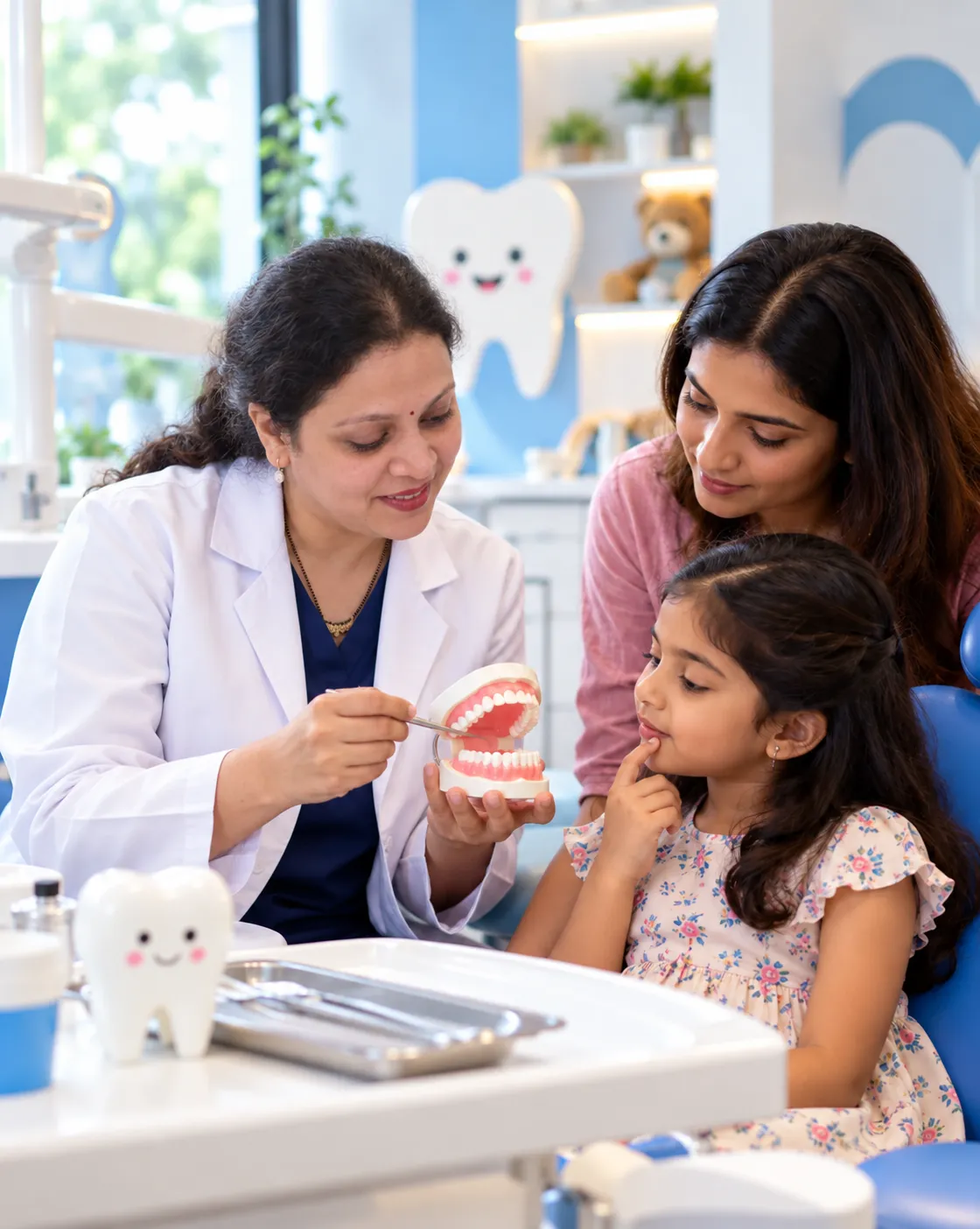
A Personalized Approach to Denture Care
No two missing-tooth situations are exactly the same. Denture planning is influenced by the number of missing teeth, remaining teeth, gum and bone health, bite, facial support, aesthetics, medical factors, expectations, time and budget. For this reason, the denture should be planned after individual assessment.
Factors We Consider
- • Child's age
- • Primary or permanent teeth
- • Oral hygiene
- • Fluoride exposure
- • Dental history
- • Diet and sugar exposure
Individual Denture Factors
- • Tooth development
- • Bite and jaw growth
- • Dental anxiety
- • Oral habits
- • Cavity risk
- • Individual treatment needs
Your denture should be based on your individual needs. At Dr. Kashmira Jathar Dental Clinic, denture planning focuses on understanding the missing teeth, remaining teeth, gums, bone, bite, comfort, aesthetics and long-term maintenance needs before selecting an appropriate option.
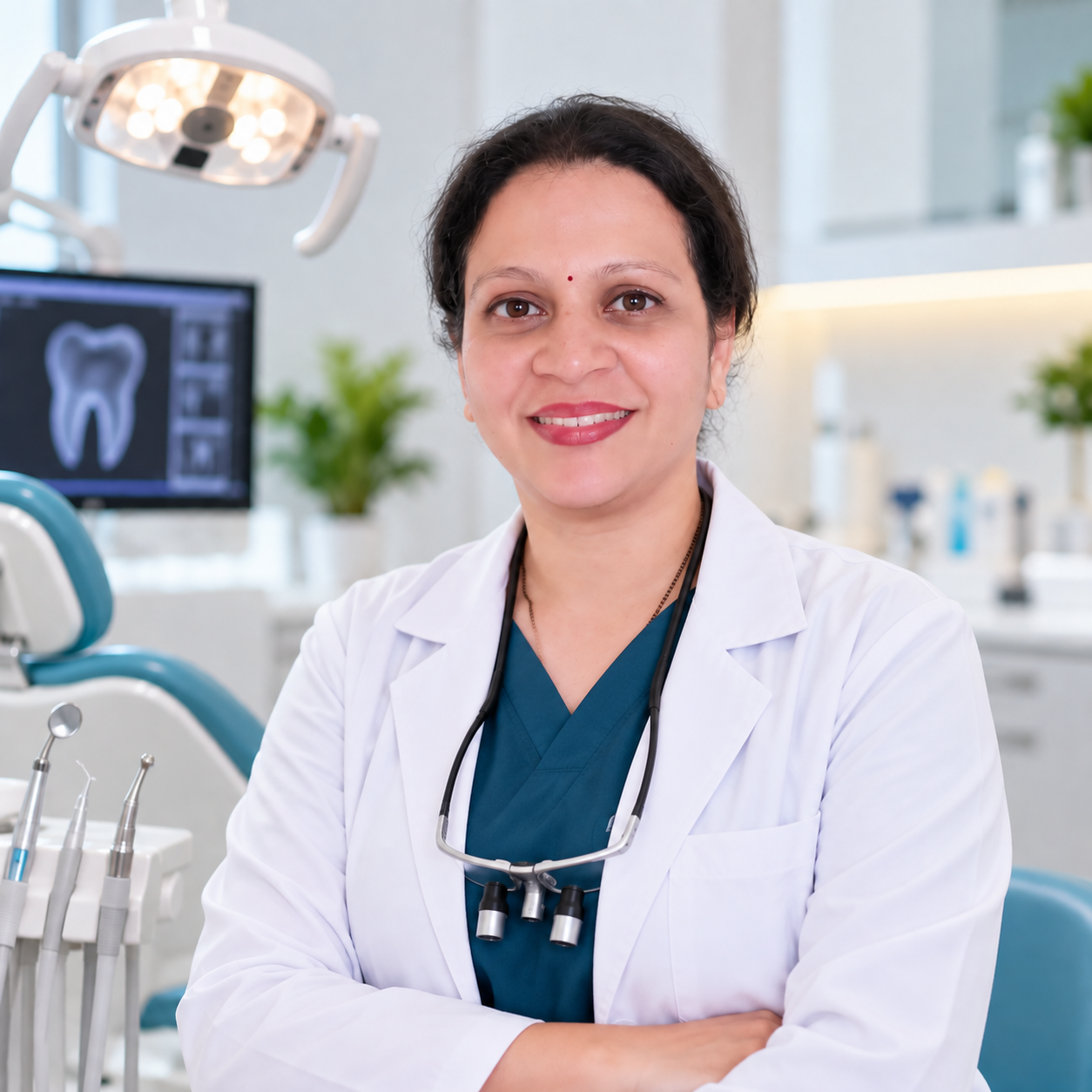
Meet Dr. Kashmira Jathar, BDS
Dr. Kashmira Jathar is a BDS-qualified dentist with more than 20 years of dental practice experience, registered with the Maharashtra State Dental Council (Reg. No. A-14093 M, 2007). She is a member of the Indian Dental Association and the Saturday Club.
Her practice focuses on individual assessment and planning for missing teeth, including complete, partial, flexible and implant-supported denture options where appropriate.
Pediatric Dentistry FAQs
By 12 months of age or within 6 months of the first tooth appearing, whichever comes first.
Visiting the Clinic
Elegance Smile Studio is located in Pimple Saudagar, Pune, serving patients across Pimpri-Chinchwad and the surrounding areas for missing-tooth and denture care.
Related Services

Book a Pediatric Dentistry Appointment
Whether you are missing one or several teeth, need a complete or partial denture, are considering a flexible or implant-supported option, or have an existing denture that needs attention, the first step is an individual assessment. Call or WhatsApp to arrange a consultation with Dr. Kashmira Jathar, BDS.
Sources & Review
Information on complete, partial, flexible and implant-supported dentures, denture fit, maintenance, relining, rebasing and treatment planning is based on the Pediatric Dentistry patient guide. Treatment suitability varies by individual anatomy, remaining teeth, gums, bone, bite, expectations and clinical findings. Page content reviewed by Dr. Kashmira Jathar, BDS.